Practice explaining the stages of the cell cycle, the role of checkpoints, and how mutations can lead to cancer.
Read each problem carefully. Answer in complete sentences and show your thinking when needed.
How normal cell division is controlled and how cancer can develop
Biology - Grade 9-12
- 1
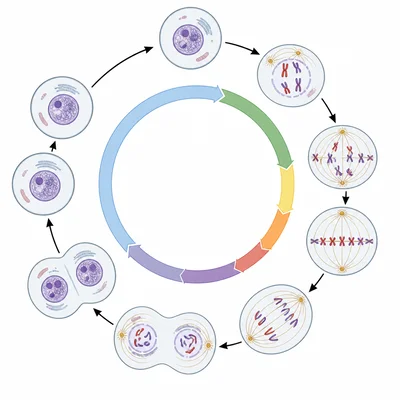
List the main stages of the eukaryotic cell cycle in order, including interphase and the stage when the cell splits.
- 2
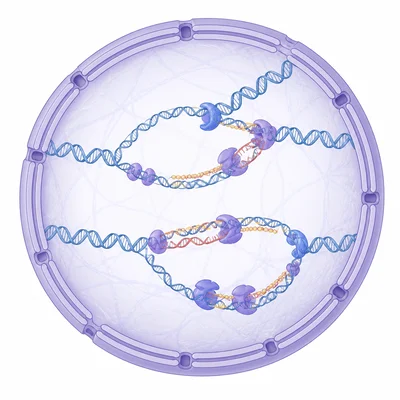
Describe what happens during the S phase of interphase.
- 3
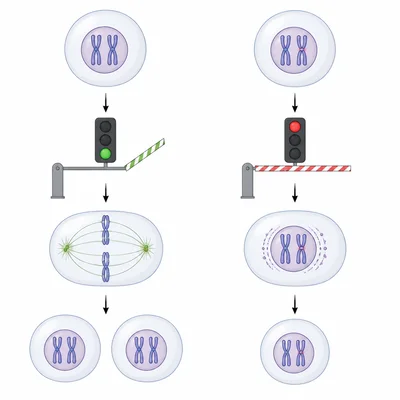
Explain the purpose of a cell cycle checkpoint.
- 4
What is the difference between a proto-oncogene and an oncogene?
- 5
Tumor suppressor genes are often compared to brakes in a car. Explain this comparison.
- 6
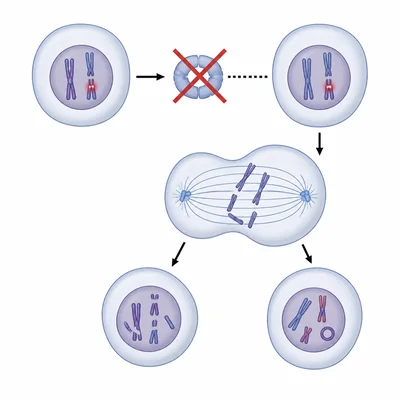
A mutation prevents a cell from repairing damaged DNA at a checkpoint. Explain how this can increase the chance of cancer.
- 7
Define cancer in terms of cell cycle regulation.
- 8
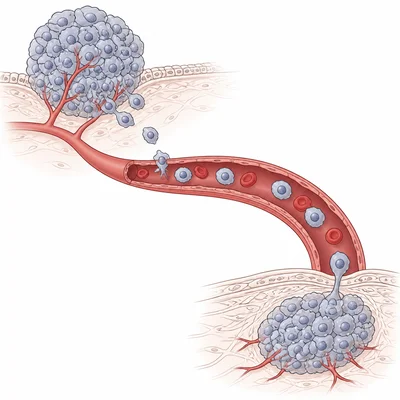
How is metastasis different from the formation of a primary tumor?
- 9
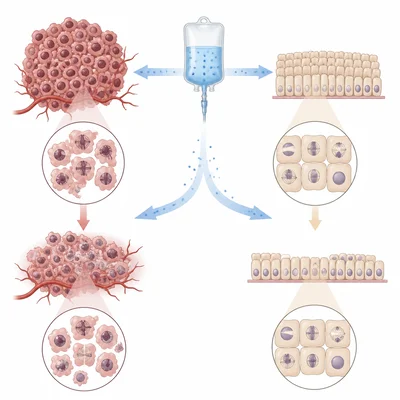
Why do rapidly dividing cancer cells often respond to chemotherapy, and why can healthy cells also be harmed?
- 10
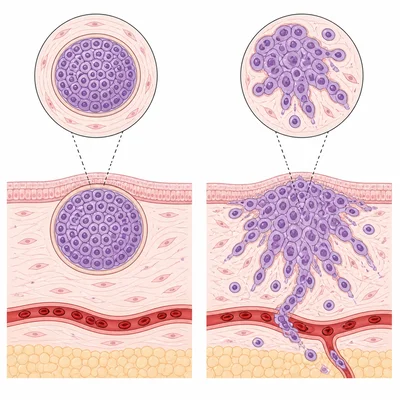
Compare benign tumors and malignant tumors.
- 11
A scientist finds that a cell has ignored signals to stop dividing and has activated genes that promote constant growth. What does this suggest about the cell, and why?
- 12
Explain why studying the cell cycle helps scientists develop cancer treatments.