Why Do You Need to Sleep?
A nightly reset for your brain and body
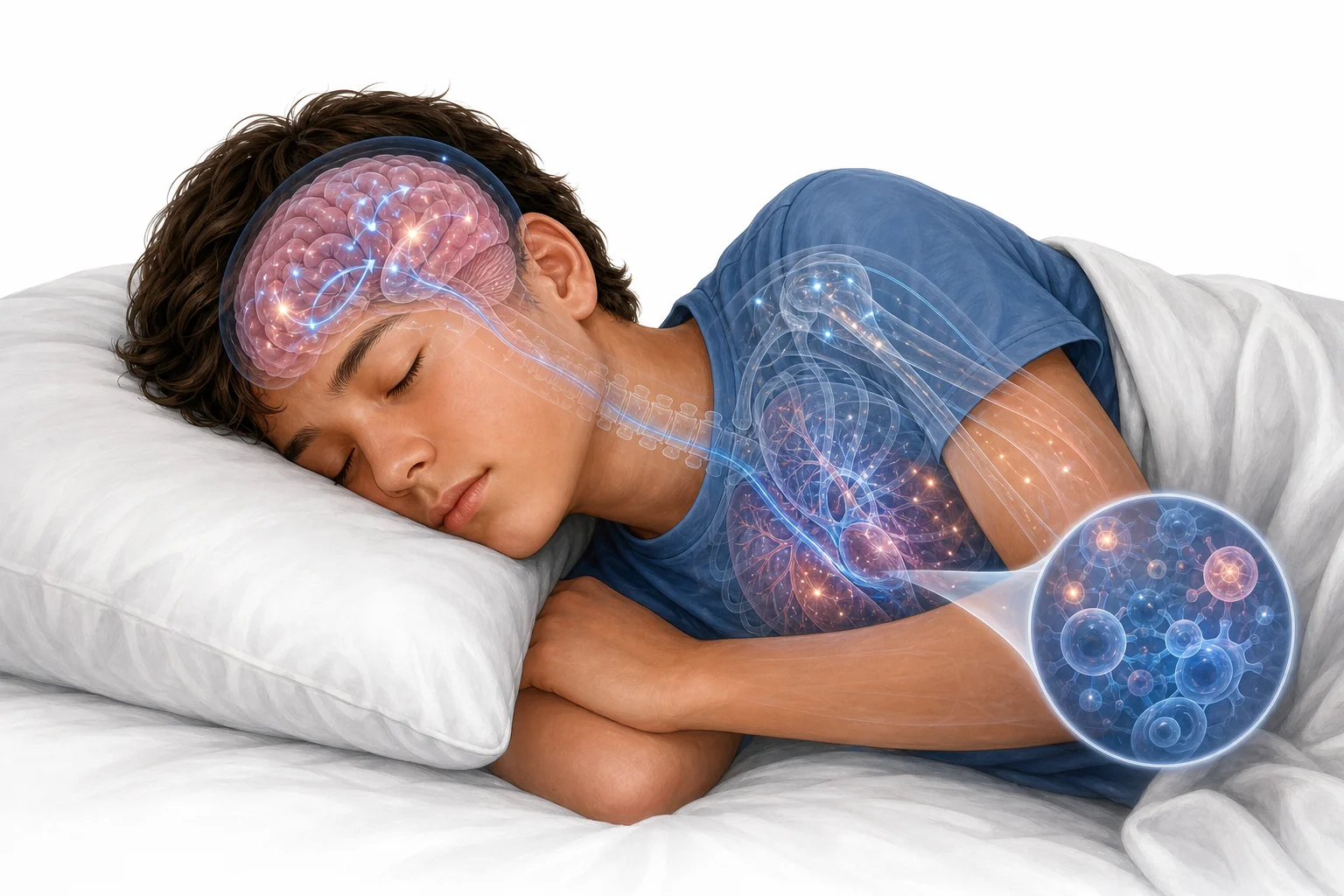
You need sleep because your brain and body do important work while you rest. Sleep helps you remember what you learned, repair tissues, manage hormones, and clear waste from the brain. Missing sleep can make it harder to focus, control emotions, learn, and stay healthy.
Sleep can feel like doing nothing, but your body is busy all night. Your brain sorts parts of the day, strengthens useful memories, and trims away some weaker connections. Your body releases hormones that help with growth, tissue repair, and energy balance. Your brain also moves fluid through spaces around cells, which helps wash away waste. Scientists call this cleanup system the glymphatic system. Sleep is not one steady state. You cycle through lighter sleep, deep sleep, and REM sleep many times each night. Each stage supports different jobs. Deep sleep is important for body repair and some memory work. REM sleep is linked to dreams, emotions, and learning. A simple overview is in the Sleep Stages & Sleep Hygiene cheat sheet. Good sleep is not extra. It is part of how a healthy nervous system works.
Sleep is active work
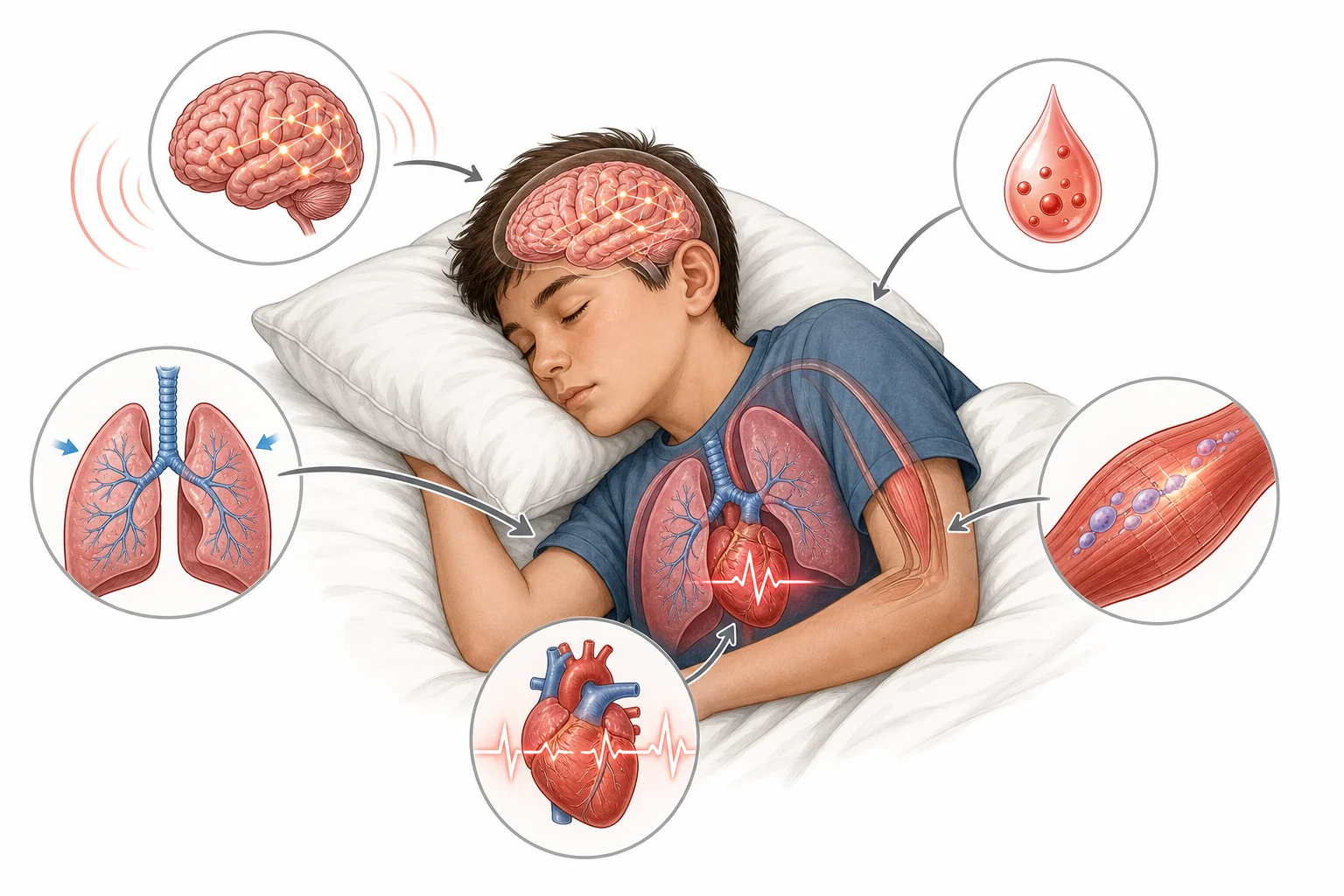
Sleep is a different kind of activity, not a pause button.
Memories get sorted
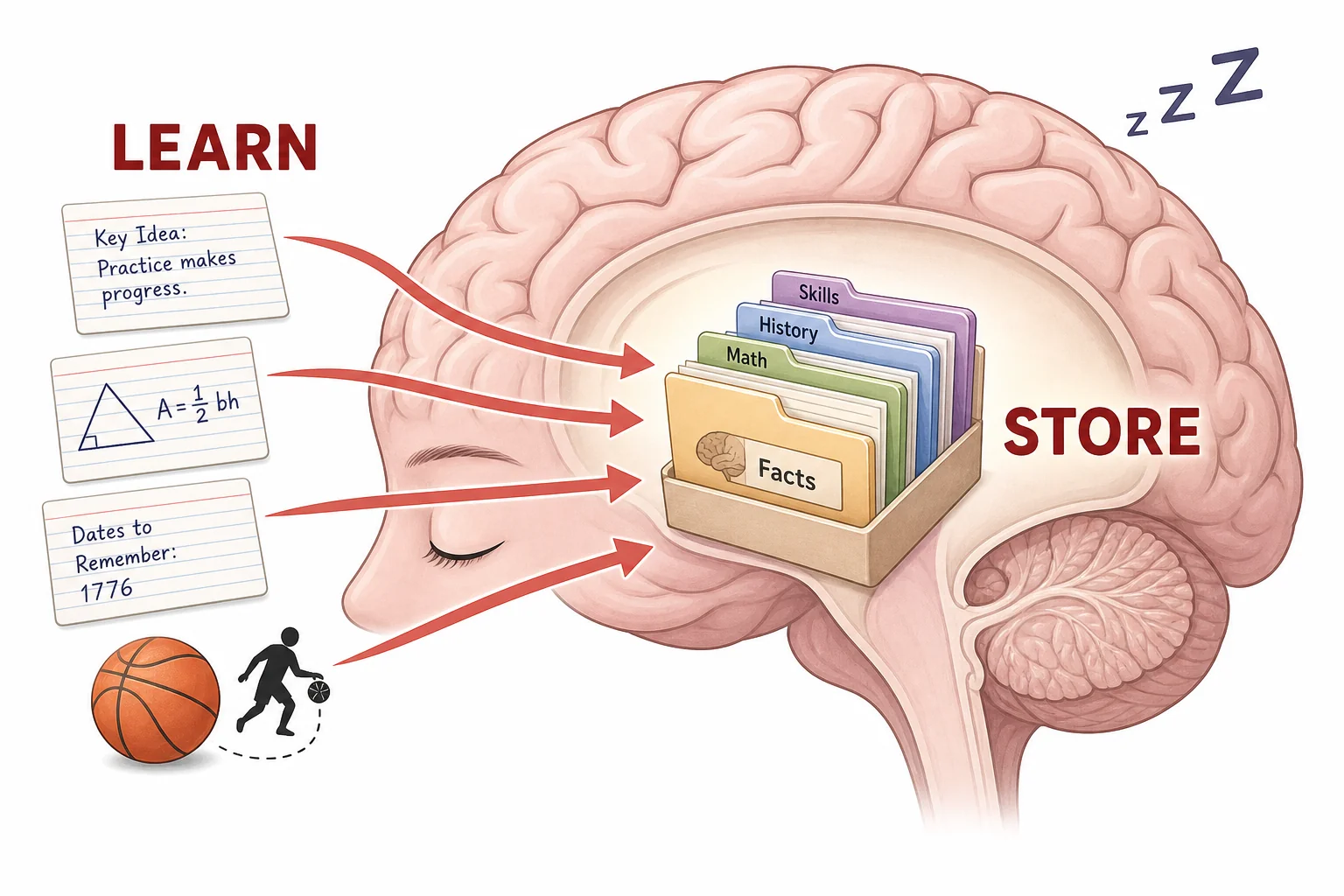
Sleep helps turn practice and study into stronger memories.
The brain cleans up
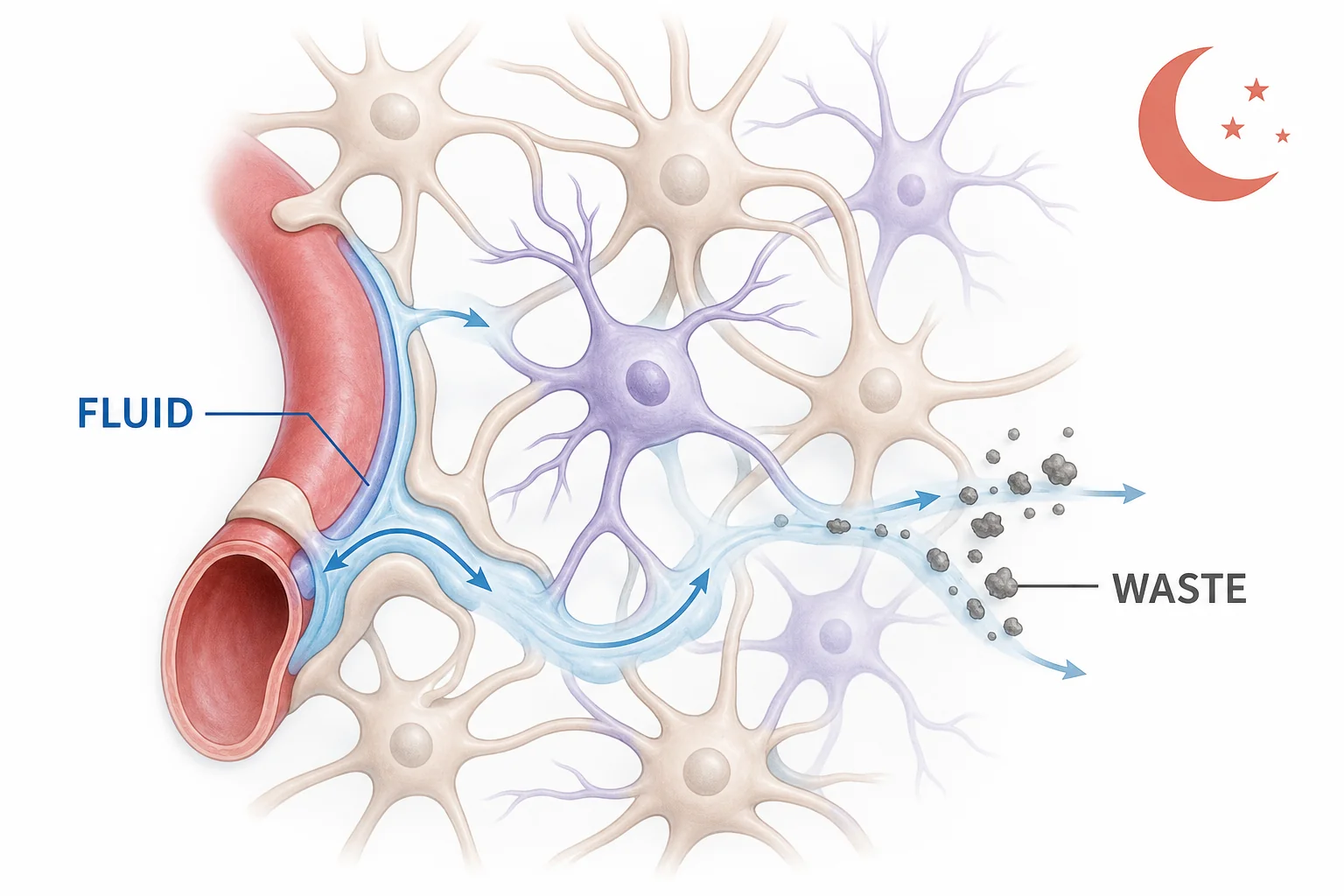
Sleep gives the brain time for chemical housekeeping.
Stages have different jobs
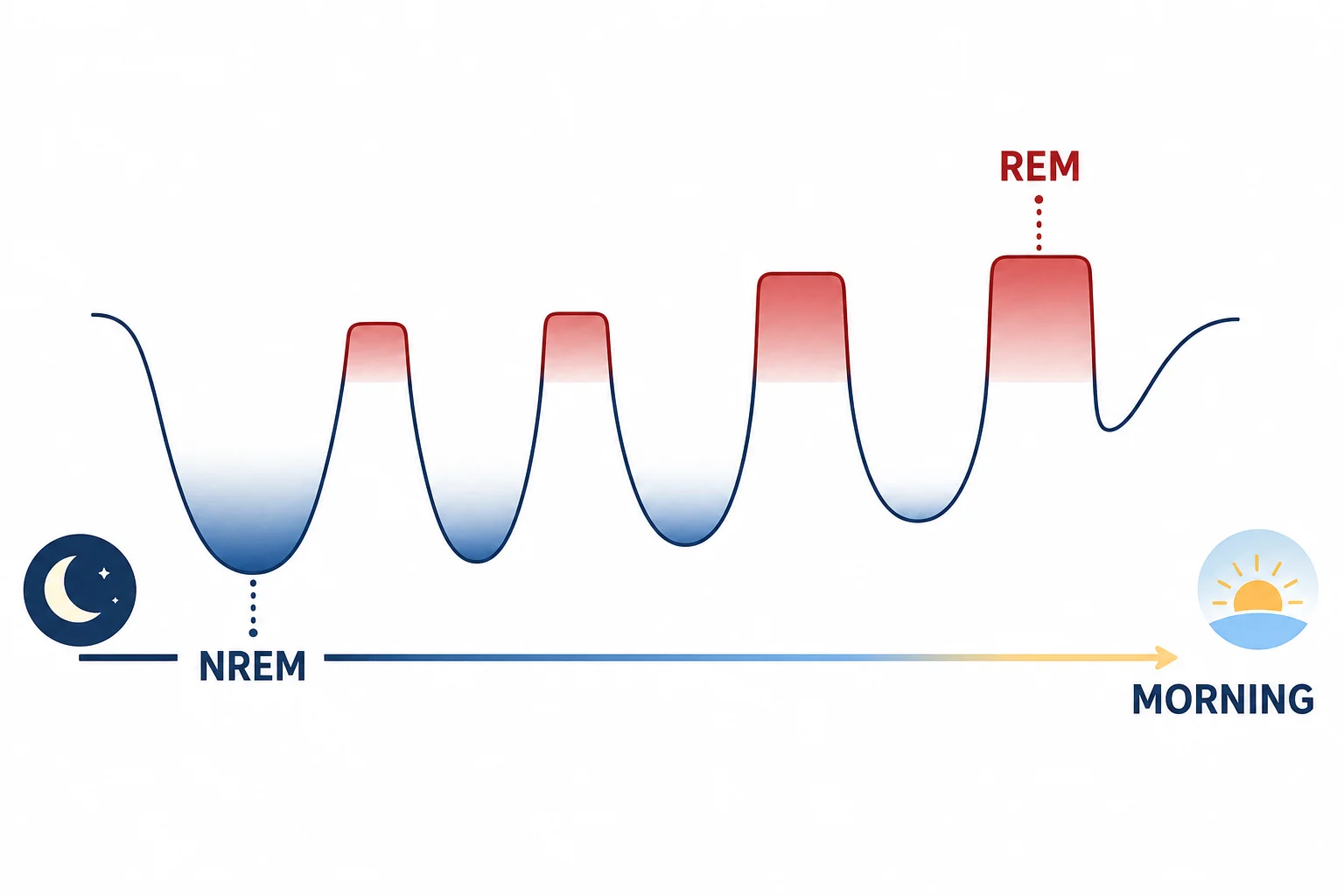
A full night matters because sleep stages are spread across time.
Sleep supports growth
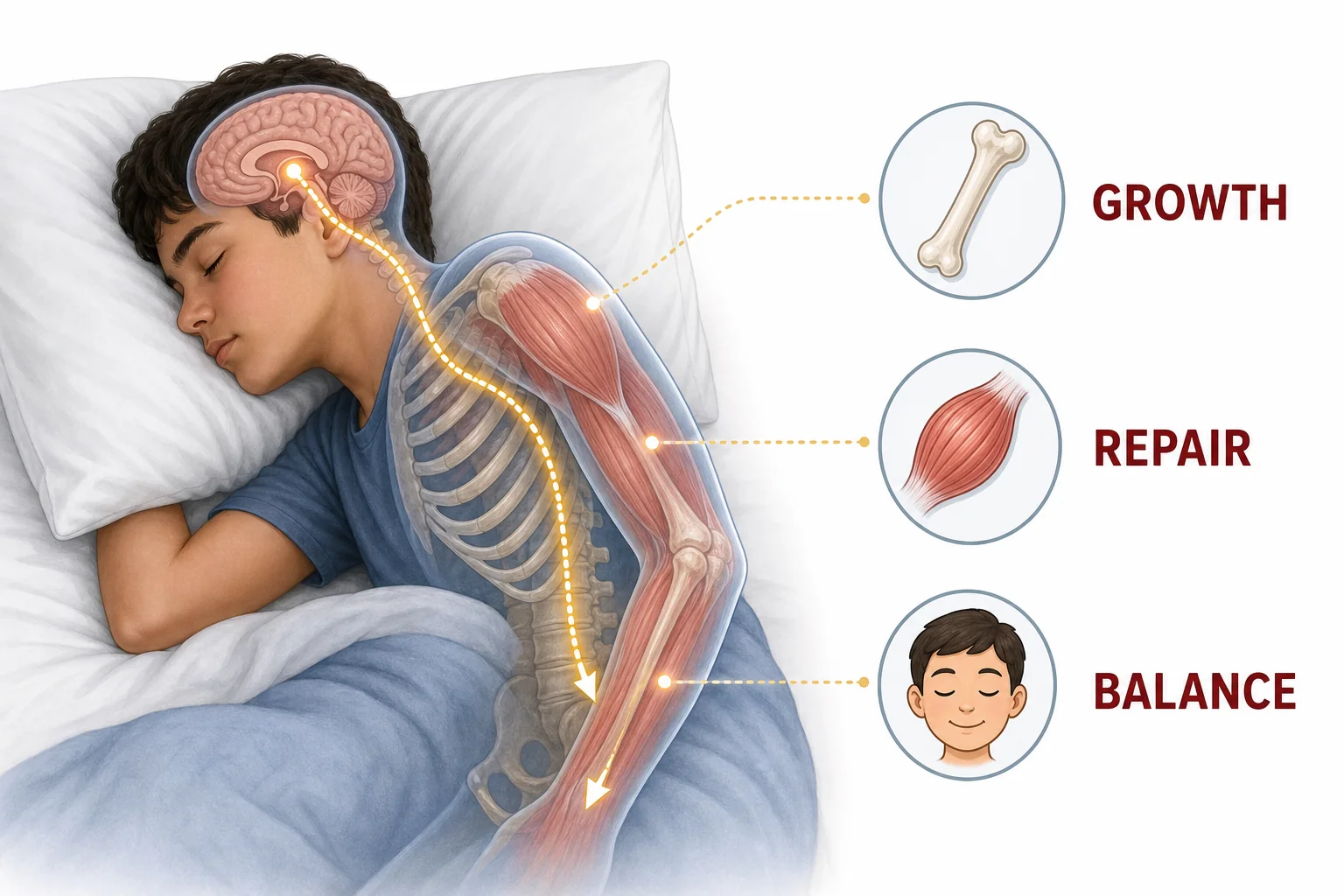
Sleep helps the body grow, repair, and regulate signals.
Vocabulary
- NREM sleep
- Sleep stages without rapid eye movement. Deep NREM sleep is linked to body repair and some memory processes.
- REM sleep
- A sleep stage with rapid eye movements, active brain patterns, and common dreaming. It is linked to emotions and learning.
- Memory consolidation
- The process of making some memories more stable and easier to use later.
- Glymphatic system
- A cleanup system in the brain that helps move fluid and carry away some waste products during sleep.
- Growth hormone
- A chemical signal that helps the body grow and repair tissues. More of it is released during deep sleep.
- Sleep hygiene
- Habits and routines that make healthy sleep more likely.
In the Classroom
Sleep cycle model
25 minutes | Grades 6-8
Students draw a one-night timeline with repeated NREM and REM cycles. They add short notes showing which body or brain jobs are linked to each stage.
Memory and rest discussion
20 minutes | Grades 6-8
Students compare two study plans, one with late-night cramming and one with study followed by sleep. They explain which plan better supports memory consolidation and why.
Sleep hygiene audit
30 minutes | Grades 6-8
Students list common evening habits and sort them into sleep helpers or sleep blockers. They choose one realistic change that could improve sleep without blaming students for schedules they cannot control.
Key Takeaways
- • Sleep is an active state where the brain and body do important work.
- • Memory consolidation during sleep helps learning become more stable.
- • The glymphatic system helps move waste out of the brain during sleep.
- • NREM and REM sleep have different roles, and both repeat across the night.
- • Good sleep supports growth, repair, attention, mood, and overall health.