Practice recognizing mental health concepts, healthy coping strategies, stress signs, and ways to seek support.
Read each problem carefully. Write complete answers and include examples when asked. If a situation describes danger or self-harm, identify a trusted adult or emergency support as part of your answer.
Understanding emotions, stress, coping skills, and support
Health - Grade 6-8
- 1
Define mental health in your own words. Include at least two parts of life that mental health can affect.
- 2
Sort each item as a feeling, a thought, or a behavior: feeling nervous before a test, thinking "I can study one section at a time," taking three deep breaths, feeling angry after an argument, avoiding homework.
- 3
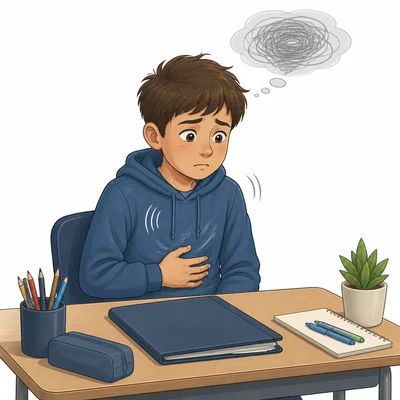
A student has a big project due tomorrow and feels their heart beating fast, their stomach hurting, and their thoughts racing. Name the likely emotion or condition the student is experiencing and list two healthy coping strategies.
- 4
Explain the difference between everyday stress and stress that may need extra support.
- 5
Read the situation: Maya feels left out because her friends made plans without her. Write one unhelpful thought Maya might have and one more balanced thought she could try instead.
- 6
List three healthy coping skills a person could use when they feel overwhelmed. For each one, explain why it might help.
- 7
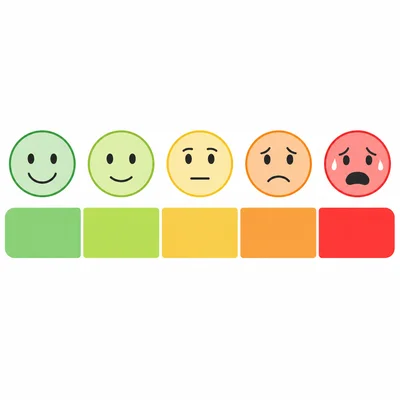
Use the stress scale from 1 to 5. A 1 means calm, a 3 means stressed but able to cope, and a 5 means overwhelmed and needing help. Give one example of what a student might do at level 2, level 4, and level 5.
- 8
A classmate says, "I have not slept well for weeks, and I do not enjoy anything anymore." What are two supportive things you could say or do?
- 9
Identify whether each response is healthy or unhealthy coping: going for a walk, yelling insults at someone, writing in a journal, staying up all night scrolling, asking a counselor for help.
- 10
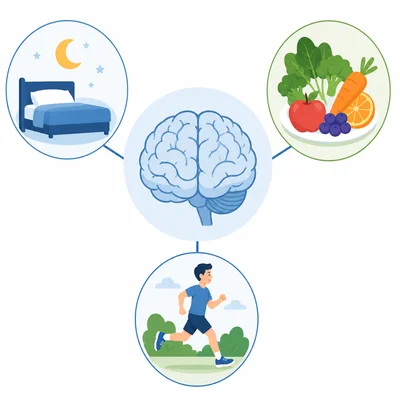
Describe how sleep, nutrition, and physical activity can affect mental health.
- 11
Write a short plan for handling test anxiety before a quiz. Include one action to take the night before, one action right before the quiz, and one helpful thought.
- 12
What is stigma related to mental health, and why can it be harmful?
- 13
A friend tells you, "Do not tell anyone, but I have been thinking about hurting myself." Explain what you should do and why keeping this secret is not the right choice.
- 14

Create a personal support network by naming four types of trusted people a middle school student could go to for help with stress or emotions.
- 15
Read the statement: "People who ask for help with mental health are weak." Explain why this statement is inaccurate and write a more accurate statement.