Why Does Sugar Give You Quick Energy?
How your body turns sweet food into fast fuel
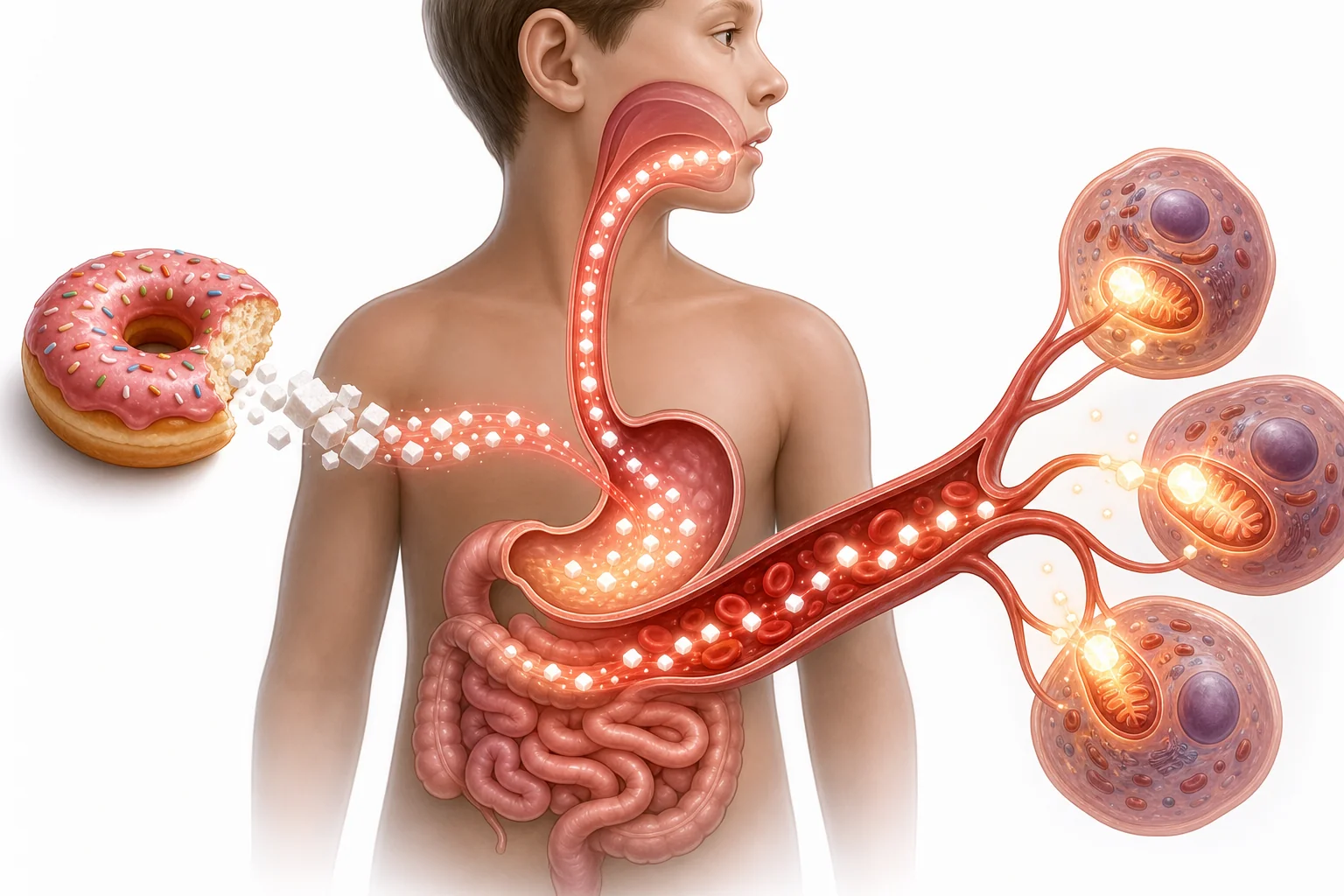
Sugar is broken into a simple fuel that moves into your blood fast. Your cells can use that fuel quickly, so you may feel more awake or active for a short time. Your body then works to lower the extra sugar in your blood, which can make your energy drop.
A candy bar, sports drink, or sweet cereal can feel like fast fuel because sugar is easy for your body to break apart. During digestion, many sugars become glucose. Glucose is a small molecule that can pass from the small intestine into the bloodstream. Blood carries it to cells all over the body. Cells use glucose in a process called cellular respiration, which releases energy for movement, thinking, body temperature, and repair. This does not mean sugar creates energy from nothing. It means sugar stores chemical energy that your cells can unlock. The fast part comes from speed. Simple sugars enter the blood faster than many other foods. Your body then has to keep blood sugar in a safe range. Insulin helps move glucose out of the blood and into cells. If blood sugar falls quickly afterward, a person may feel tired or hungry again.
Sugar becomes glucose
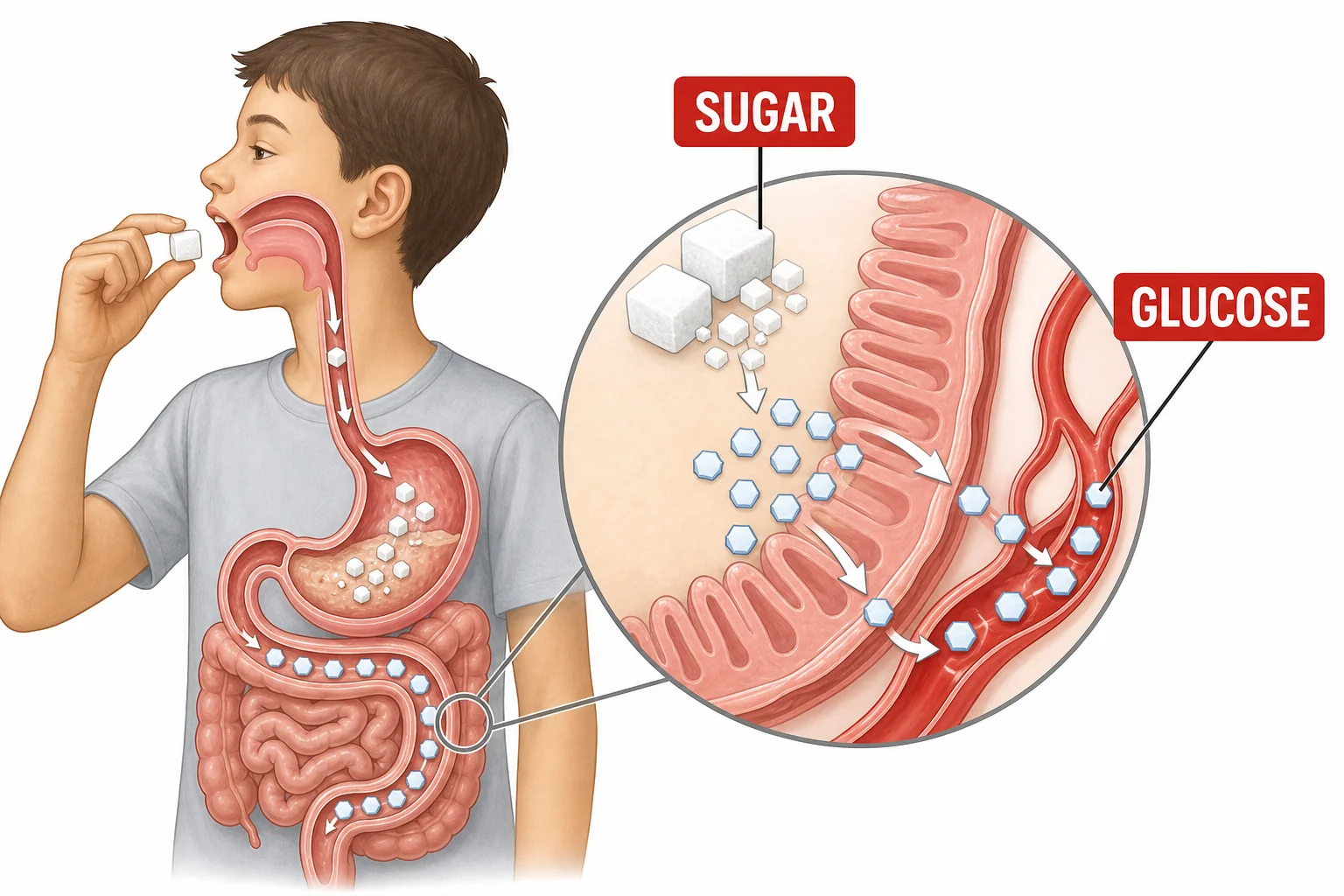
Simple sugars are absorbed quickly because they need fewer digestion steps.
Blood carries fast fuel
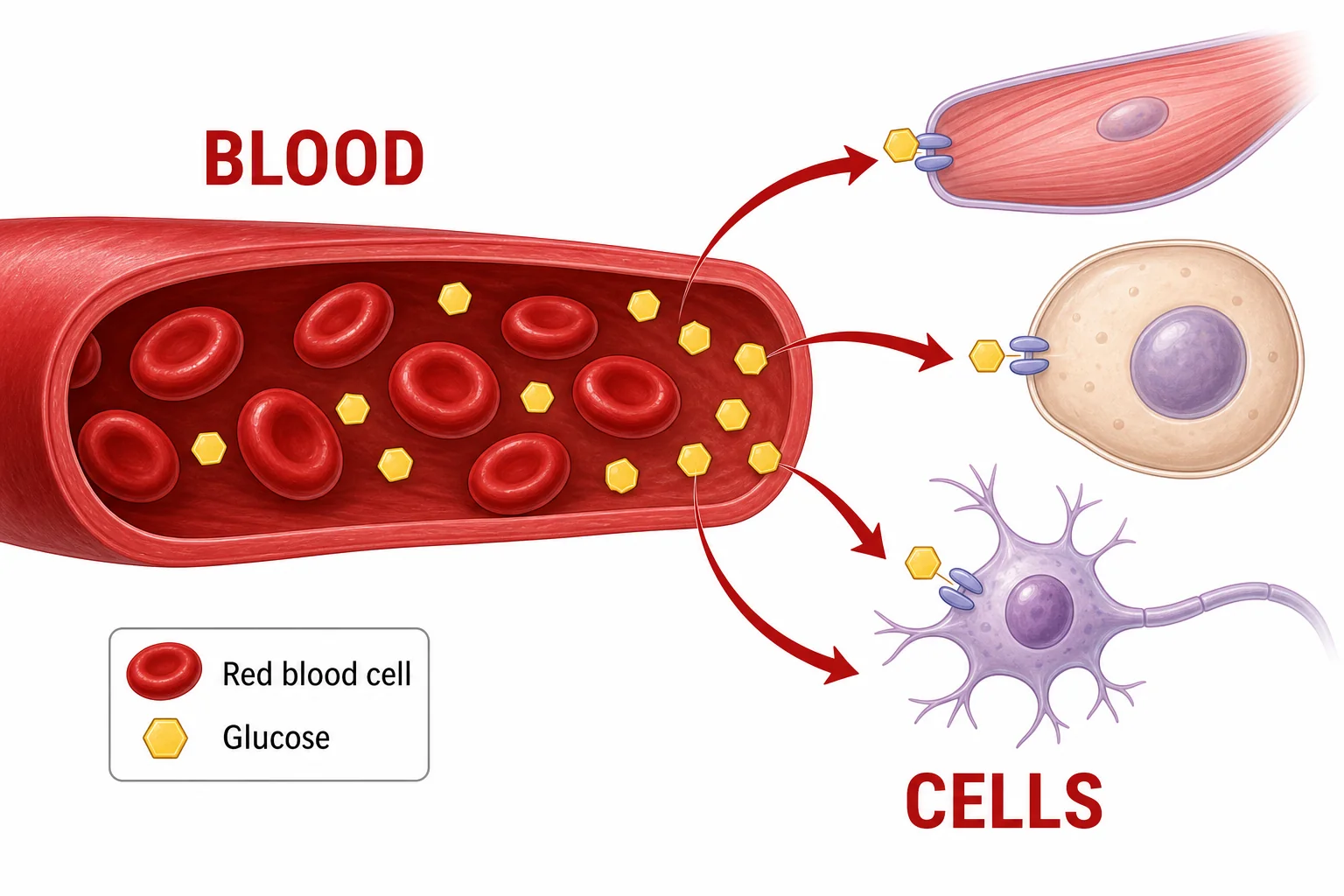
Glucose feels quick because blood can deliver it to many cells at once.
Insulin opens the door
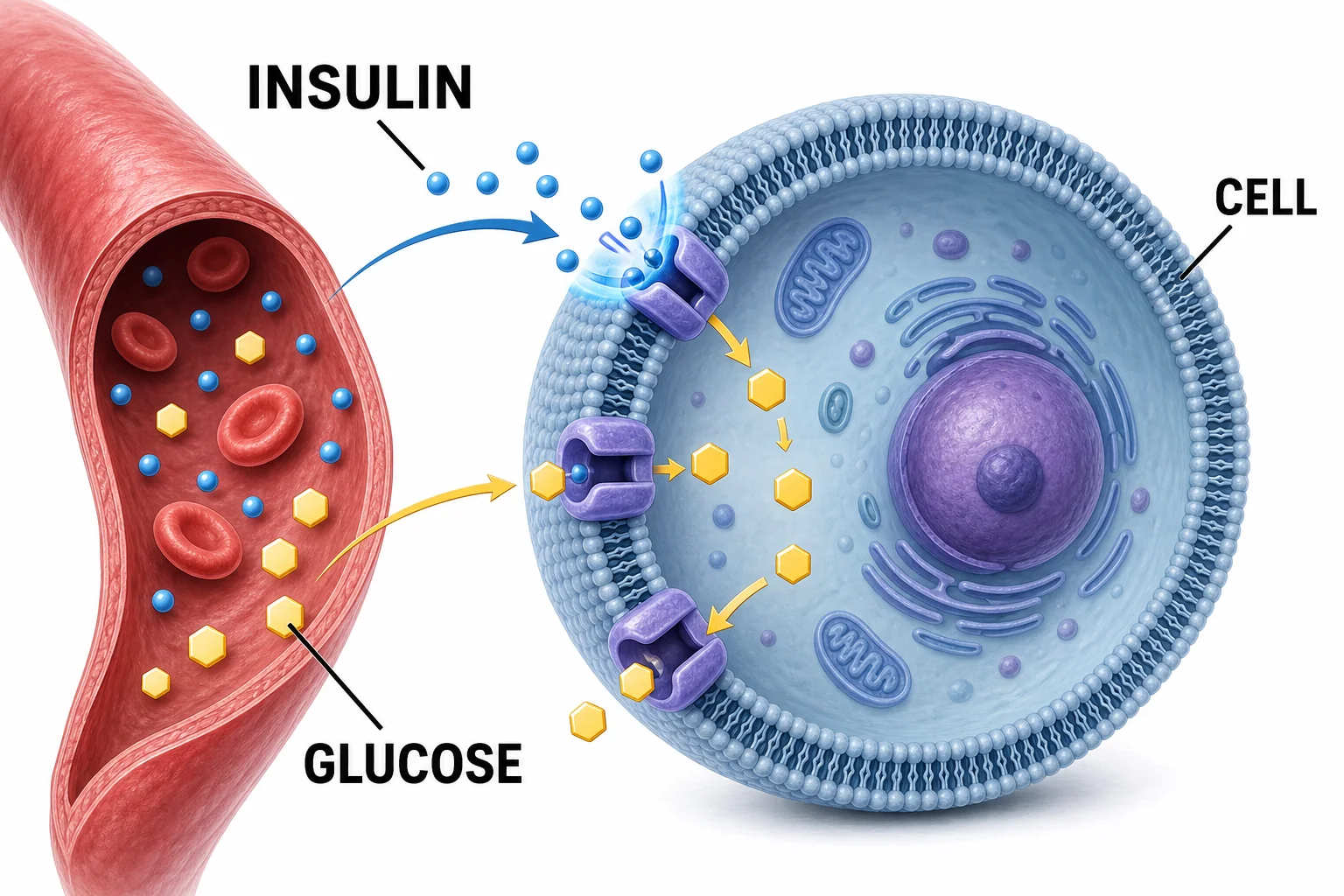
Insulin is a signal that helps lower blood sugar by moving glucose into cells.
The sugar crash
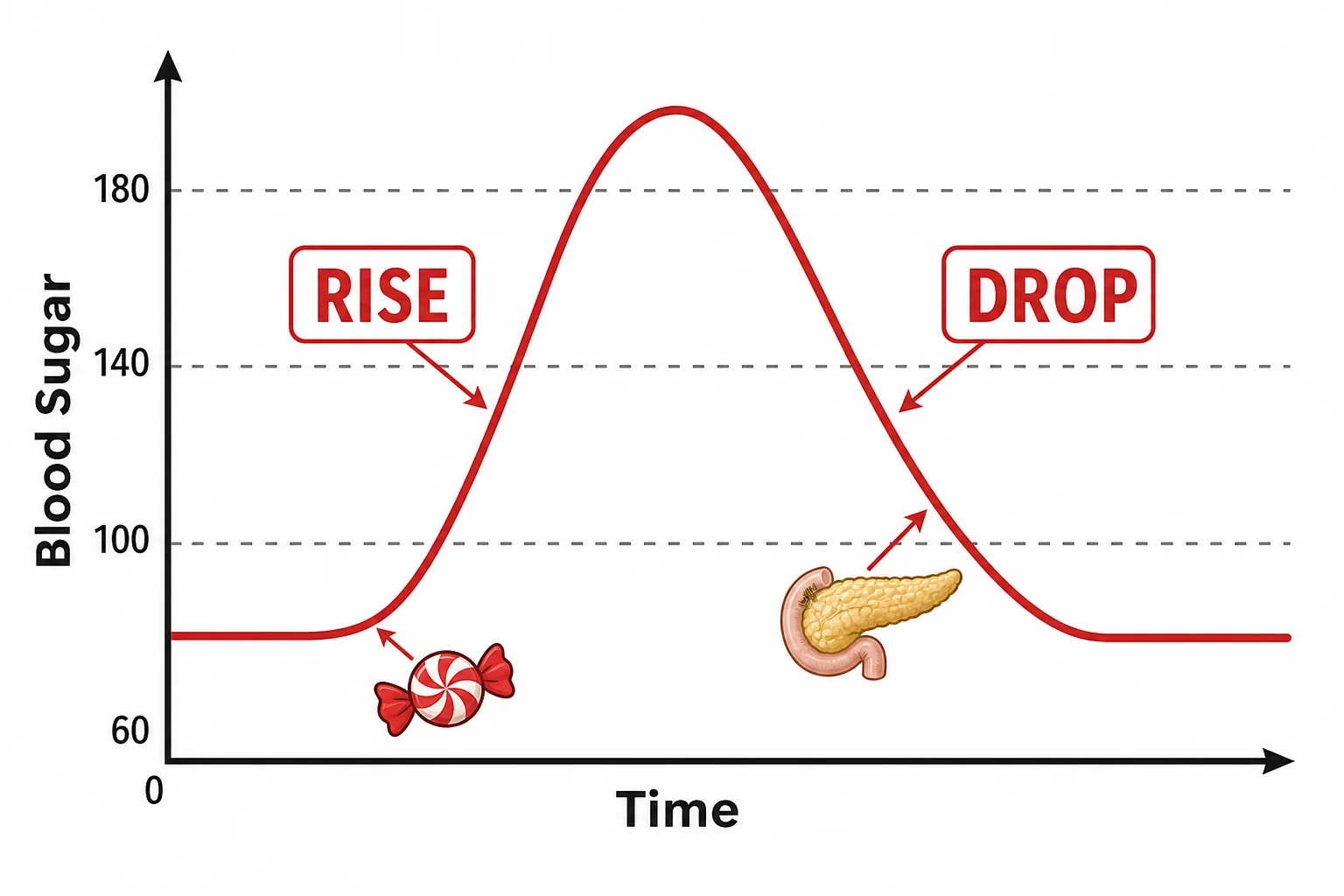
A crash can happen when blood sugar changes quickly, not because the energy disappeared.
Why complex carbs last longer
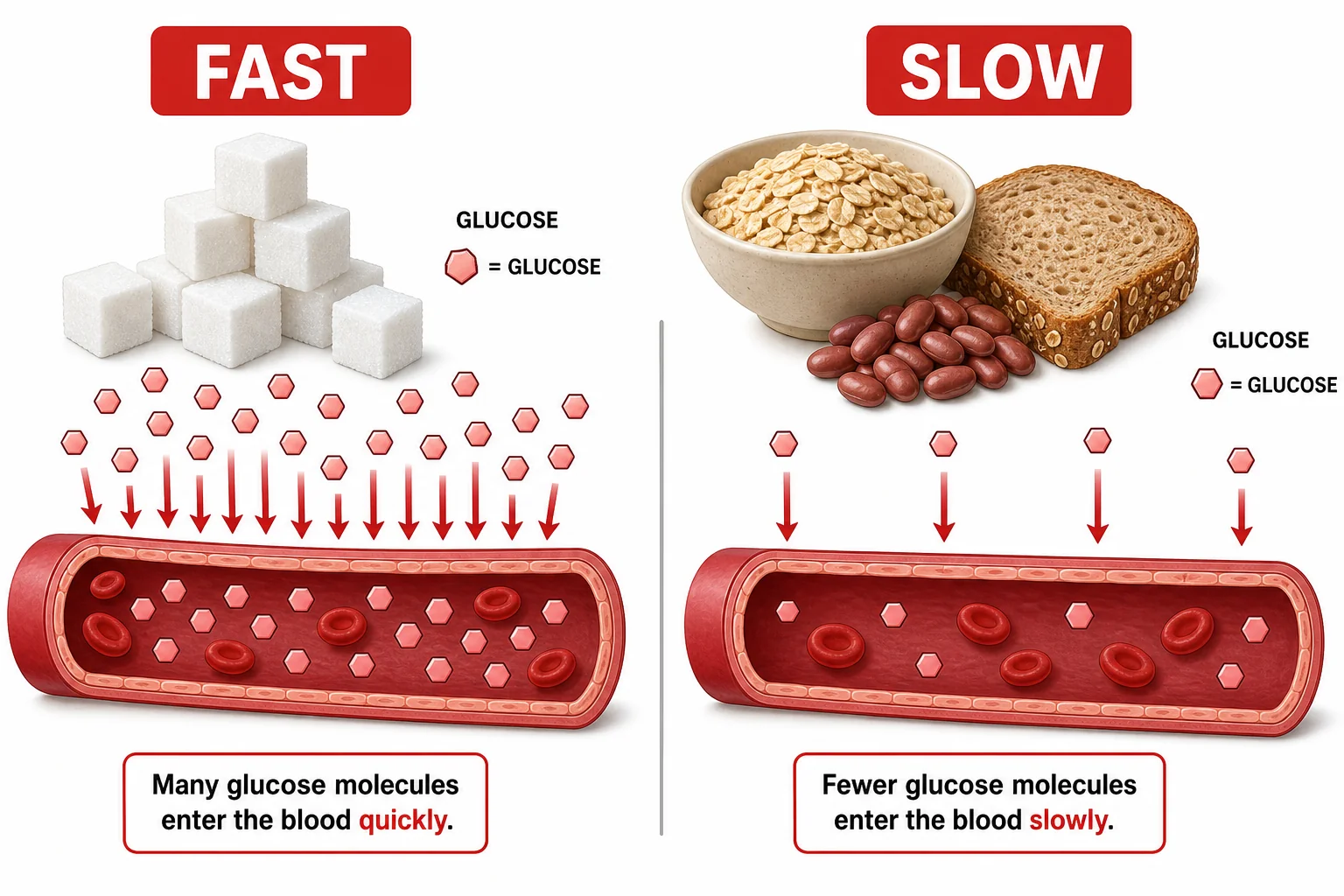
Fiber and long carbohydrate chains help spread glucose delivery over time.
Vocabulary
- Glucose
- A simple sugar that travels in the blood and is used by cells as a major fuel.
- Insulin
- A hormone made by the pancreas that helps move glucose from the blood into cells.
- Blood sugar
- The amount of glucose in the blood at a given time.
- Glycogen
- A storage form of glucose kept mainly in the liver and muscles.
- Complex carbohydrate
- A carbohydrate made of long chains of sugar units that usually takes longer to digest.
- Fiber
- A type of carbohydrate humans do not fully digest, which can slow digestion and support steady energy.
In the Classroom
Snack digestion sort
20 minutes | Grades 6-8
Students sort food cards by how quickly they think each food might raise blood sugar. Then they revise their choices after identifying sugar, starch, protein, fat, and fiber in each example.
Graph the energy curve
25 minutes | Grades 6-8
Students draw simple line graphs for a sugary drink, oatmeal, and a balanced meal. They compare slope, peak height, and how long glucose delivery might last.
Model insulin with doors
30 minutes | Grades 6-8
Students use paper glucose tokens and cell door cards to model how insulin helps glucose enter cells. The class connects the model to homeostasis and explains one way the model is limited.
Key Takeaways
- • Sugar gives quick energy because it is digested and absorbed into the blood quickly.
- • Glucose is carried by blood to cells, where it can be used for energy.
- • Insulin helps move glucose out of the blood and into cells.
- • A sugar crash can happen when blood sugar rises and then drops quickly.
- • Complex carbohydrates and fiber usually support steadier energy because digestion takes longer.