Circulatory System Flow Lab
Investigate how heart rate controls the delivery of oxygen to body tissues. Adjust BPM, observe blood flow through the heart and vessels, record cardiac output at different activity levels, and analyze the relationship.
Controls
Normal resting 60–100 BPM
Stroke volume 70 mL per beat
Max cardiac output 14.0 L/min at 200 BPM
Blood Flow Simulation
Data Table
(0 rows)| # | Heart Rate(BPM) | Cardiac Output(L/min) | O₂ Delivery(mL/min) | Activity Level | Observations |
|---|
Reference Guide
Cardiac Output
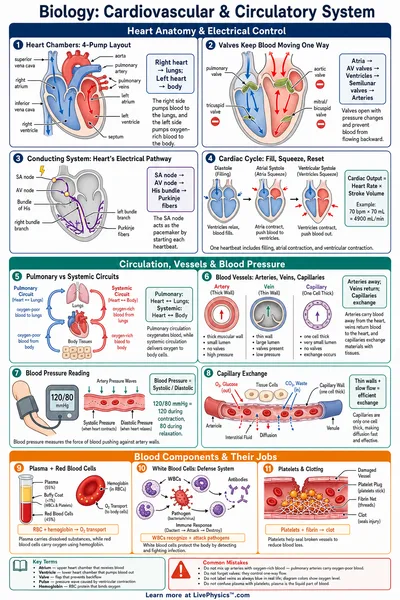
Cardiac output is the volume of blood pumped by the heart per minute. It is the product of heart rate and stroke volume.
- CO - Cardiac output (L/min)
- SV - Stroke volume, typically 70 mL per beat at rest
- HR - Heart rate (beats per minute)
A resting adult at 72 BPM has a cardiac output of about 5 L/min, roughly equal to the total blood volume. During vigorous exercise this can rise to 20-25 L/min in trained athletes.
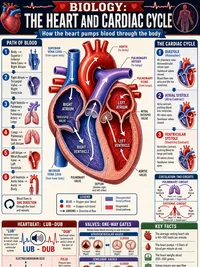
The Cardiac Cycle
Each heartbeat consists of two phases that together pump blood through both circulatory loops.
Systole (Contraction)
The ventricles contract and force blood out. The aortic valve opens to let oxygenated blood into the body. The pulmonary valve opens to send deoxygenated blood to the lungs.
Diastole (Relaxation)
The ventricles relax and fill with blood. The mitral (left) and tricuspid (right) valves open, allowing blood from the atria to flow in.
Four valves prevent backflow. The mitral and tricuspid valves separate atria from ventricles. The aortic and pulmonary valves separate ventricles from the outgoing vessels.
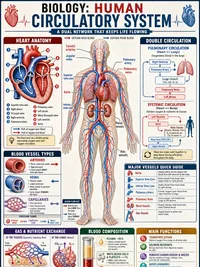
Circulatory Pathways
The heart runs two parallel circuits simultaneously, keeping oxygenated and deoxygenated blood separate.
Pulmonary Circulation
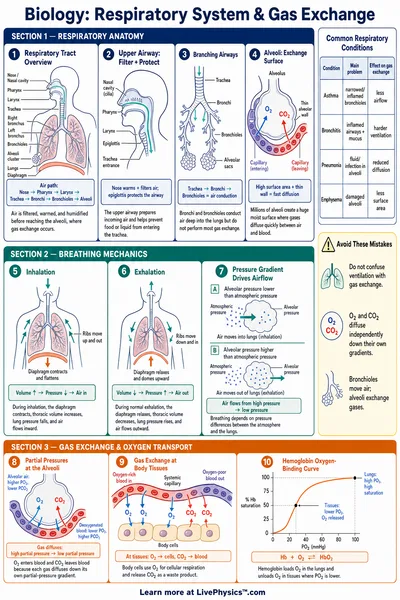
Right heart sends deoxygenated blood to the lungs. Carbon dioxide is released and oxygen is absorbed at the alveoli. Oxygenated blood returns to the left heart.
Systemic Circulation
Left heart pumps oxygenated blood to all body tissues. Oxygen is delivered and carbon dioxide is picked up. Deoxygenated blood returns via the veins to the right heart.
At rest, blood completes one full circuit in about 60 seconds. During exercise, increased cardiac output can circulate the entire blood volume in under 15 seconds.