Magnet Strength Lab
Move a magnet closer and farther from a pile of paperclips, observe how many it attracts, and record your measurements. Compare three different magnet types to discover how distance and magnet strength affect magnetic force.
Guided Experiment How Does Distance Affect Magnet Strength?
What do you predict will happen to the number of paperclips attracted as the magnet moves farther away? Will the drop be gradual or sudden?
Write your hypothesis in the Lab Report panel, then click Next.
Controls
Magnet Type
Rare-earth magnet. Very powerful for its size. Used in speakers and motors.
Distance vs. Paperclips Graph
Data Table
(0 rows)| # | Distance (cm) | Paperclips Attracted | Magnet Type |
|---|
Reference Guide
What Is a Magnet?
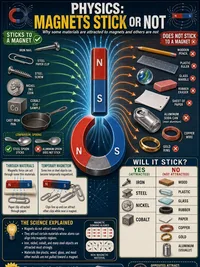
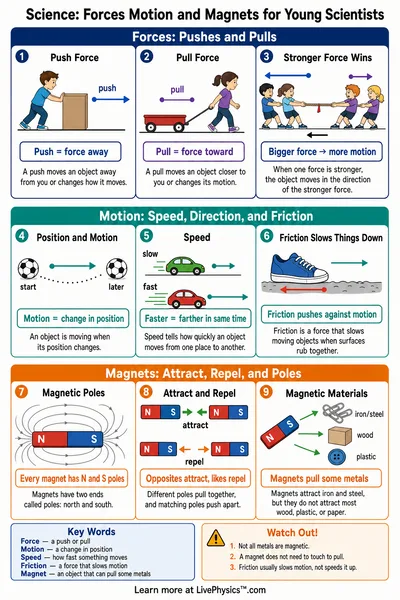
A magnet is an object that produces a magnetic field. This invisible field pulls certain metal objects, like iron and steel, toward the magnet without touching them. Paperclips are made of steel, which is why magnets attract them.
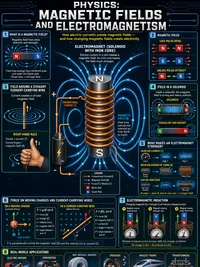
Every magnet has two poles called North and South. Opposite poles attract. Like poles repel.
Types of Magnets
Not all magnets are the same strength. The material a magnet is made from determines how powerful it is.
Distance and Magnetic Force
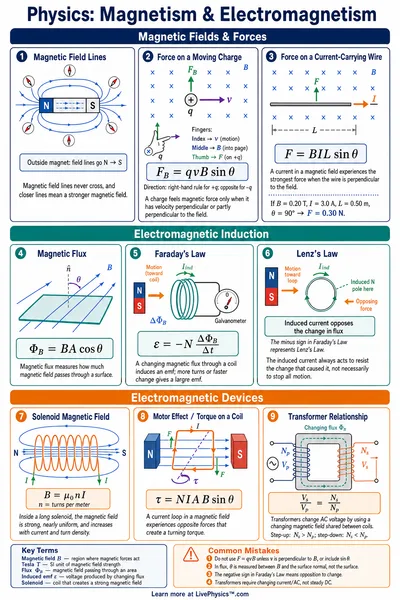
Magnetic force weakens as distance increases. This is not a simple halving. Doubling the distance causes the force to drop much more than half. Scientists describe this as an inverse relationship.
Farther away. Weaker pull. Fewer clips stay on.
Far enough away. No attraction at all.
This is why you need to hold a magnet very close to a metal object to pick it up, but cannot pick it up from across the room.
Magnets in Real Life
Understanding how magnet strength changes with distance helps engineers design reliable devices.