Understanding Heat Transfer Lab
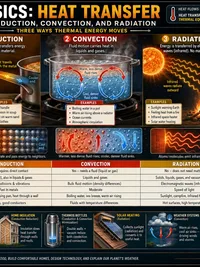
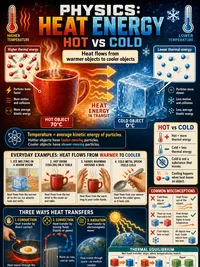
Heat transfer describes energy moving because of a temperature difference. The lab separates conduction, convection, and radiation so you can compare their effects while controlling the quantities that determine each modeled transfer rate.
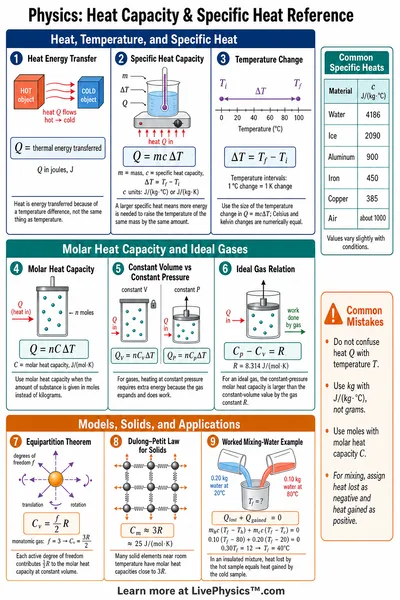
Temperature and transferred energy are different quantities. Temperature describes thermal state, while a heat transfer rate describes energy moving per unit time, so a hot object does not automatically produce the largest rate in every setup.
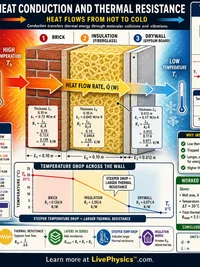
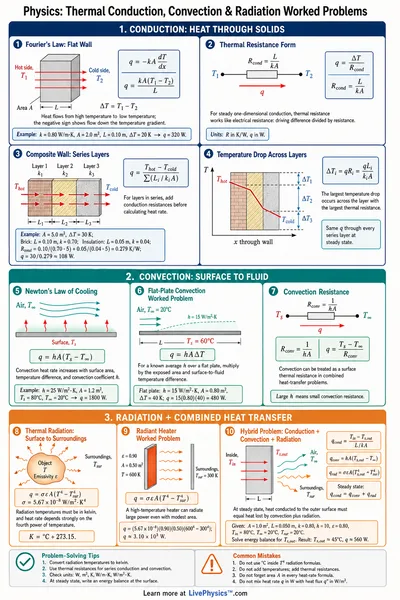
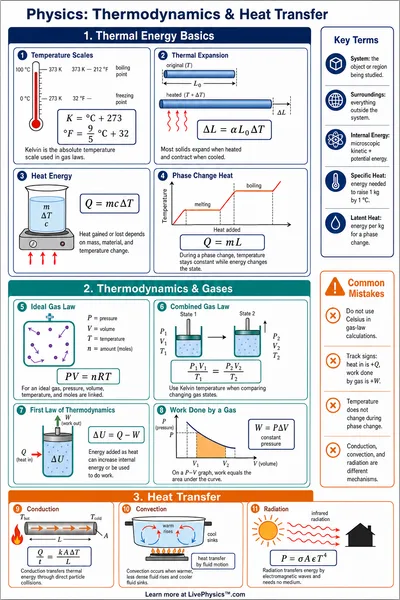
In conduction mode, the two ends of a material are held at different temperatures. Energy passes through the material from the hotter end toward the colder end, producing a temperature profile between those boundaries.
Thermal conductivity controls how readily the material conducts energy. Compare copper with glass while keeping the end temperatures and rod length fixed, then use the calculated rates to explain why metals and insulating materials serve different purposes.
Length matters as well as material. For the same end temperatures, increasing the modeled conduction distance reduces the temperature gradient and lowers the transfer rate per unit area through the material.
A fair investigation changes one quantity at a time. Record several lengths for one material, or several conductivities at one length, so that differences in the output can be connected to the variable you deliberately changed.
Convection describes transfer between a surface and a moving fluid such as air or water. In this model, a heat transfer coefficient represents the combined effect of conditions near that surface rather than explicitly simulating individual fluid currents.
A larger convection coefficient increases the magnitude of transfer for a fixed temperature difference. Air motion can affect this coefficient in real situations, but the coefficient is a model input rather than a direct reading of wind speed.
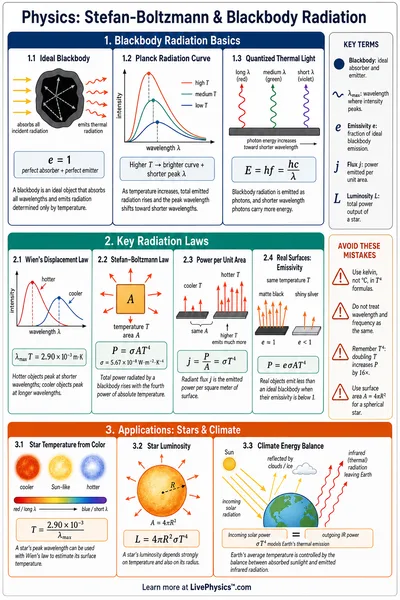
Radiation transfers energy through electromagnetic waves and does not require surrounding matter. The calculation uses absolute temperatures in kelvin, and its strong temperature dependence means equal increases in temperature need not produce equal increases in transfer rate.
Emissivity describes how effectively a surface emits thermal radiation compared with an ideal emitter. Compare two emissivities at the same temperatures to isolate the surface effect, keeping in mind that real materials can behave differently across wavelengths.
The direction of net energy flow depends on which region is hotter. If the surroundings are hotter than the object, energy can flow into it, so examine the sign convention and temperature labels before interpreting a negative calculated result.
Use the data table for conduction comparisons, and note displayed radiation results separately with the emissivity and temperatures used. State which variables stayed fixed and acknowledge that real objects often exchange energy by all three mechanisms at once, while this lab separates them to make the individual relationships easier to study.