Natural Resources & Conservation Lab
Sort renewable and nonrenewable resources, plan community conservation actions for your virtual town, and use the footprint calculator to see how everyday habits affect the environment.
Guided ExperimentHow Can Communities Protect Natural Resources?
Which conservation actions do you think will have the biggest impact on protecting natural resources in your community?
Write your hypothesis in the Lab Report panel, then click Next.
Controls
Renewable or Nonrenewable?
Read each resource card and choose whether it is renewable (can be replaced naturally) or nonrenewable (takes millions of years to form). Sort all 10 cards, then check your answers.
Solar Energy
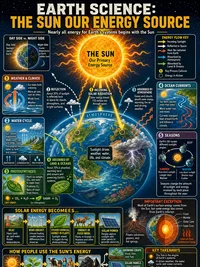
Energy from sunlight that can be captured by solar panels.
Wind
Moving air that can spin turbines to make electricity.
Fresh Water
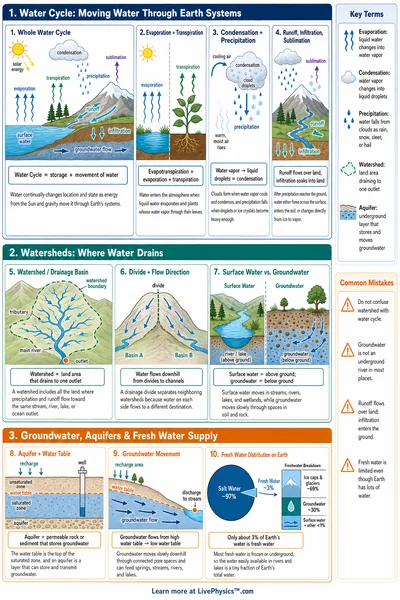
Clean water in rivers, lakes, and rain that living things need.
Trees / Wood
Wood from forests used for building and paper.
Soil
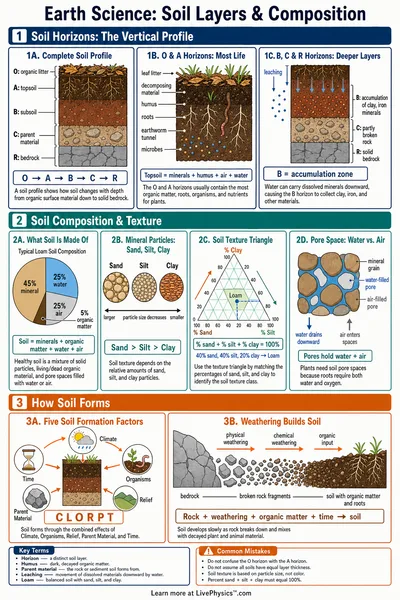
Fertile ground that plants grow in.
Coal
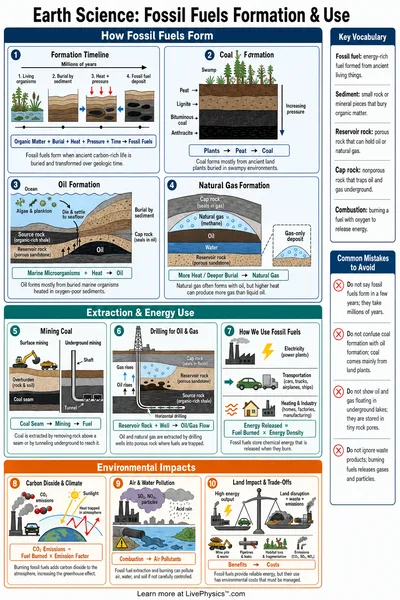
A black rock that formed from ancient plants over millions of years.
Oil / Petroleum
A liquid fossil fuel pumped from underground and used for gasoline.
Natural Gas
A gas fossil fuel burned for heating and cooking.
Iron Ore
A metal-bearing rock mined to make steel.
Aluminum
A lightweight metal made from bauxite ore found in the ground.
Data Table
(0 rows)| # | Resource | Type | Conservation Action |
|---|
Reference Guide
What Are Natural Resources?
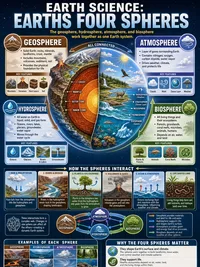
Natural resources are materials and energy found in nature that people use to survive and build things. Examples include water, soil, air, wood, metals, and fossil fuels.
Humans depend on natural resources for food, shelter, energy, and manufacturing. How we use these resources today affects how much will be available for future generations.
Renewable vs. Nonrenewable
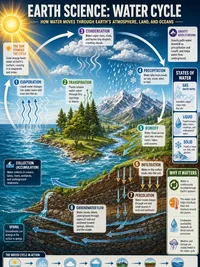
Renewable resources can be replenished naturally in a human lifetime. Examples include solar energy, wind, fresh water (through the water cycle), trees (if replanted), and soil.
Nonrenewable resources form over millions of years and cannot be replaced once used up. Fossil fuels (coal, oil, natural gas) and most metals fall into this category.
- Renewable does not mean unlimited - water and soil need careful management
- Some nonrenewable materials like aluminum can be recycled to reduce consumption
The 3 Rs - Reduce, Reuse, Recycle
The 3 Rs are a simple framework for conserving natural resources and reducing waste.
- Reduce - use less to start with (shorter showers, turning off lights)
- Reuse - use items more than once before throwing them away
- Recycle - convert waste materials into new products (paper, glass, metal, plastic)
How Communities Protect Resources
Communities can work together to protect natural resources through both individual and collective actions.
- Install renewable energy sources like solar panels and wind turbines
- Create recycling and composting programs
- Plant trees and restore natural habitats
- Protect water quality by keeping rivers and lakes clean
- Build bike lanes and public transit to reduce car use