Natural Resources & Recycling Sorter
The Earth gives us energy, water, and materials - but some run out and some can be renewed. Learn to sort resources, reduce waste, and make choices that protect our planet.
Explore Natural Resources
Click any card to learn more about a resource and its environmental impact.
Renewable 6
Nonrenewable 6
Renewable - replenishes naturally
Nonrenewable - limited supply
Resources Reference
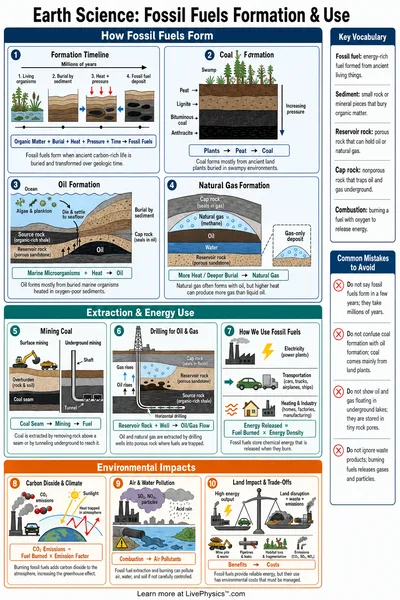
Renewable vs Nonrenewable
Renewable replenished naturally and will not run out on human timescales.
- Solar, wind, water, geothermal, wood
Nonrenewable formed over millions of years and will eventually run out.
- Coal, oil, natural gas, minerals
The 4 Rs
- Reduce use less in the first place
- Reuse use the same item again instead of throwing away
- Recycle turn old materials into new products
- Landfill last resort - items that cannot be reduced, reused, or recycled
Reduce is best - it prevents waste from being created at all.
Related Content
Related Tools
Earthquake Magnitude Calculator
Four modes, magnitude scales (Richter Mₗ, moment magnitude M𝑤, energy), energy comparison (each step = 31.6× more energy, logarithmic bar chart), Modified Mercalli Intensity I-XII with descriptions, and Richter magnitude from seismograph amplitude. Presets include Minor M3 through Great M8, 1906 San Francisco M7.9, and 2011 Japan M9.1.
Carbon Footprint Calculator
Estimate annual CO₂ emissions from transportation (car miles, fuel type, flights), home energy (electricity, heating, AC), diet (meat consumption, food waste), and lifestyle (shopping, recycling). Pie chart breakdown, country comparison bar chart, trees-to-offset and equivalent-driving metrics. Five presets, Average American, Eco-Conscious, Heavy Commuter, Frequent Flyer, Work from Home.
Star Lifecycle Visualizer
Three modes: interactive HR diagram with 23 real stars (click to see properties), stellar evolution pathway from nebula to end state (white dwarf, neutron star, or black hole based on initial mass), and star properties calculator (luminosity L∝M^3.5, radius, lifetime t∝M^-2.5, apparent magnitude). Six presets: Sun, Red Dwarf (0.3 M☉), Sirius A (2 M☉), Blue Giant (20 M☉), Betelgeuse (15 M☉), Supergiant (50 M☉). Includes spectral class colour strip and SVG star visualization.
H-R Diagram Explorer
Three modes, plot a single star on the Hertzsprung-Russell diagram from temperature, radius, and mass (Stefan-Boltzmann luminosity, spectral class O-M, absolute magnitude, HR region); compare multiple stars side by side; and browse the spectral atlas with typical properties for each class. 23 reference stars plotted, 6 presets from Proxima Centauri to Rigel.
Related Labs
Natural Resources & Conservation Lab
Sort renewable and nonrenewable resources, plan community conservation actions, and calculate your household resource footprint. NGSS 5-ESS3-1. Grades 3–5.
Recycling Route & Community Helper Lab
Sort 10 waste items into recycle, compost, landfill, and special drop-off bins. Trace each item's journey and calculate how much waste you diverted from the landfill. Grades K–3.
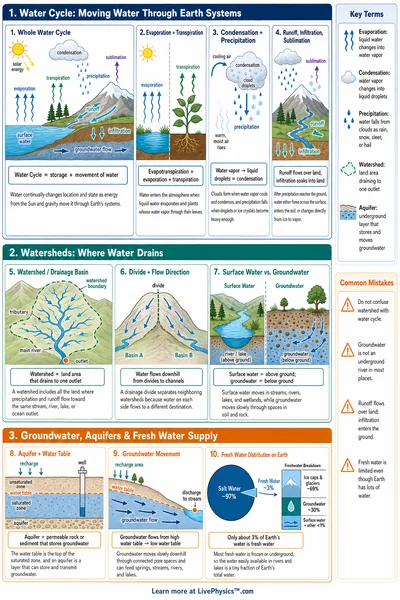
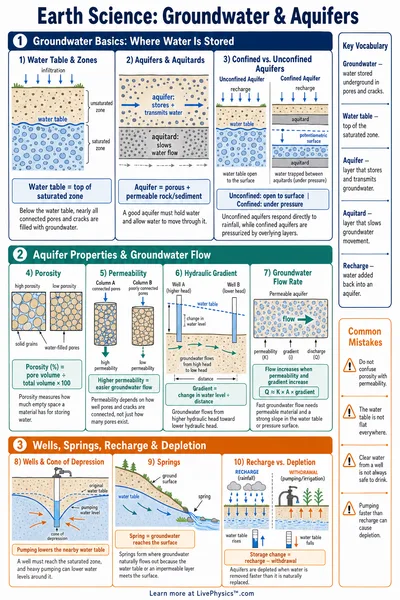
Water on Earth & Conservation Lab
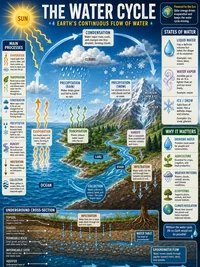
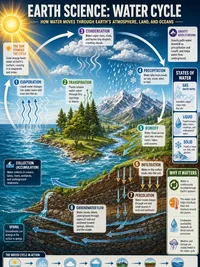
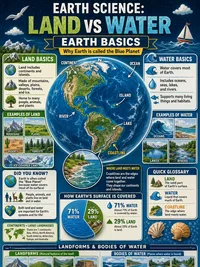
Explore Earth's water distribution, trace the water cycle, and calculate how much water your household can save through conservation actions
Energy Tradeoffs Lab
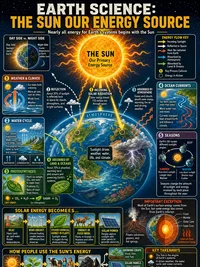
Design electricity grid mixes and compare total CO₂ emissions, land use, and cost. Run decarbonization scenarios and explore the tradeoffs between nuclear, renewables, and fossil fuels