Practice identifying cell structures and comparing plant and animal cells.
Read each problem carefully. Use complete sentences when explaining your thinking. Show your work or reasoning in the space provided.
Comparing organelles and their functions
Biology - Grade 6-8
- 1
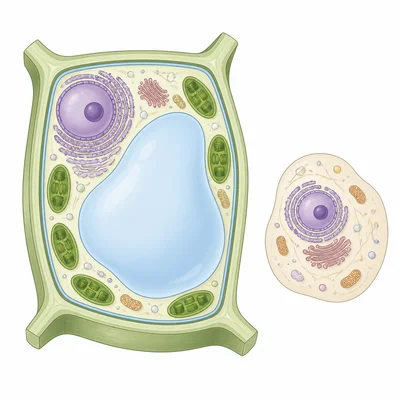
List two structures found in plant cells that are not found in animal cells. Explain the job of each structure.
- 2
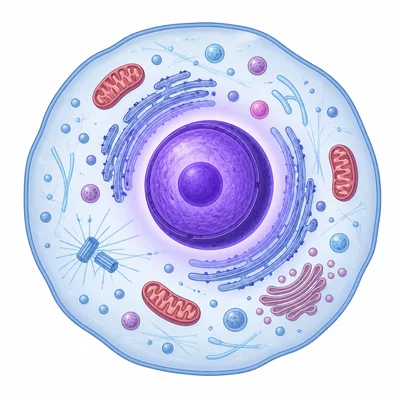
Both plant and animal cells have a nucleus. What is the main function of the nucleus?
- 3
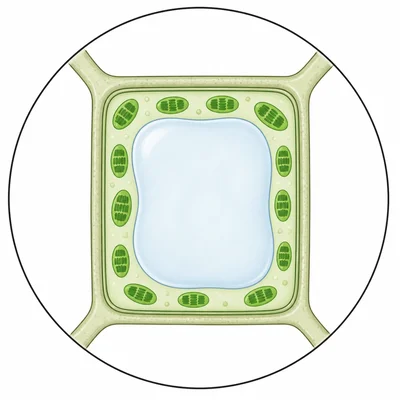
A student looks at a cell under a microscope and sees a rigid outer layer around the cell membrane. Is the cell more likely a plant cell or an animal cell? Explain your answer.
- 4
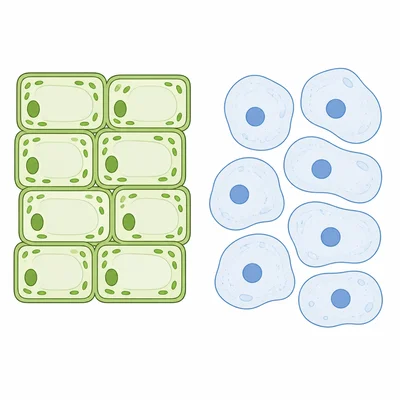
Describe one way the shape of plant cells is often different from the shape of animal cells.
- 5
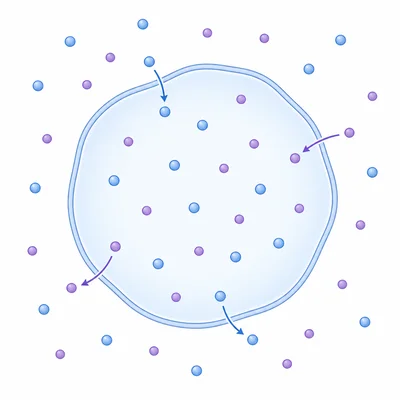
What is the function of the cell membrane in both plant and animal cells?
- 6
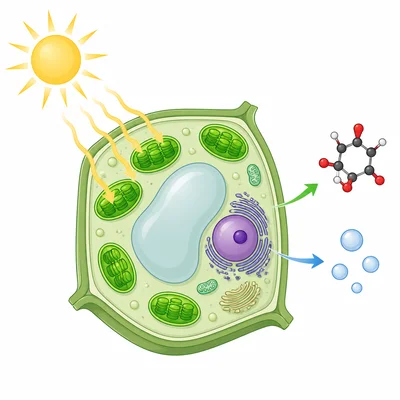
A cell contains chloroplasts. What process can this cell carry out, and why are chloroplasts important for that process?
- 7
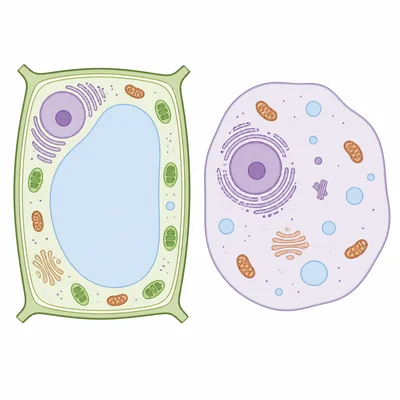
Compare the vacuoles in plant cells and animal cells.
- 8
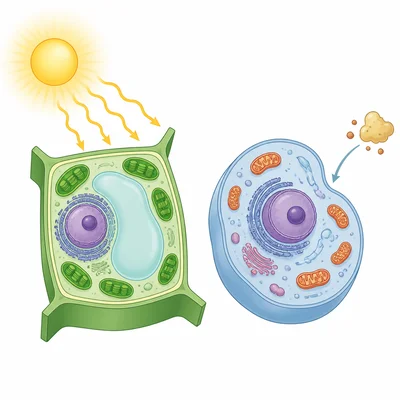
Why do plant cells need chloroplasts but animal cells do not?
- 9
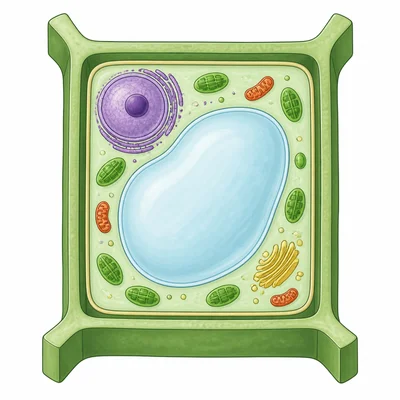
Fill in the blank and explain your answer: The cell wall is found in __________ cells and provides __________.
- 10
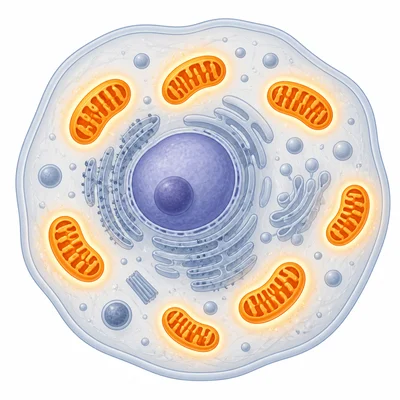
Mitochondria are found in both plant and animal cells. What do mitochondria do for the cell?
- 11
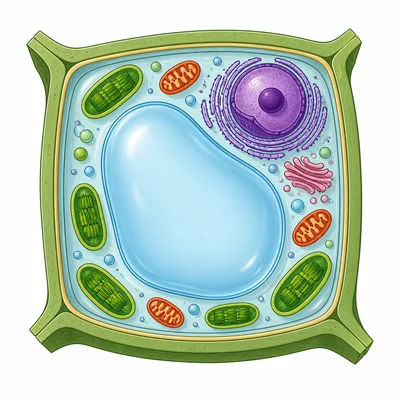
Look at a diagram of a cell with a nucleus, cell membrane, cytoplasm, mitochondria, a cell wall, chloroplasts, and a large central vacuole. Is this a plant cell or an animal cell? Explain your evidence.
- 12
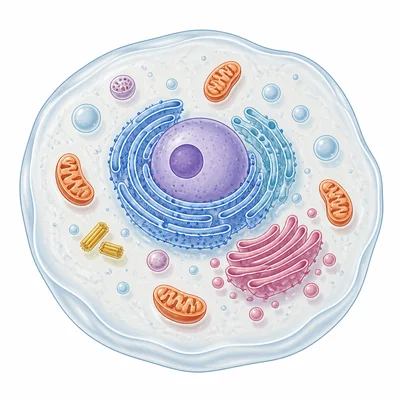
What is cytoplasm, and why is it important in both plant and animal cells?
- 13
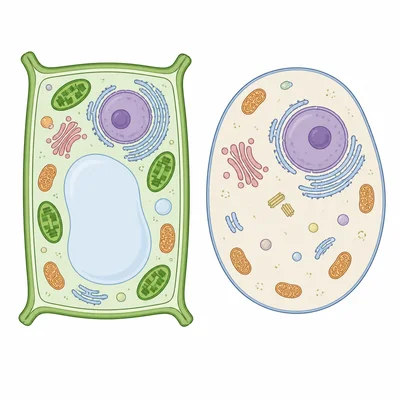
A teacher gives you two unlabeled cell diagrams. Diagram A has a cell wall and chloroplasts. Diagram B has only a cell membrane and no chloroplasts. Identify each cell type and explain your reasoning.
- 14
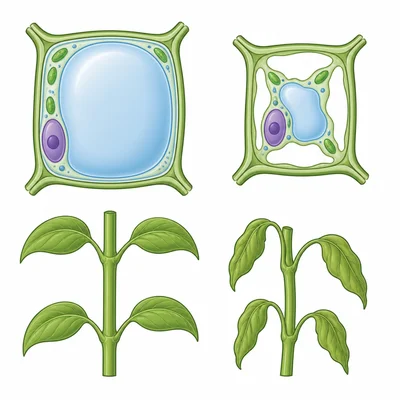
Explain why the large central vacuole helps a plant stand upright.
- 15
Create a short comparison table in words that includes three structures shared by plant and animal cells and three structures mainly found in plant cells.