Plant & Animal Structures Lab
Discover the parts of plants and animals, learn what each structure does, and practice matching structures to their functions. Based on NGSS 4-LS1-1.
Guided ExperimentHow do structures help plants and animals survive?
Pick one plant structure and one animal structure. Write what you think each one does to help the organism survive.
Write your hypothesis in the Lab Report panel, then click Next.
Controls
Explore plant and animal structures, match each structure to its function, and solve design challenges.
Plant
Click a structure to learn more
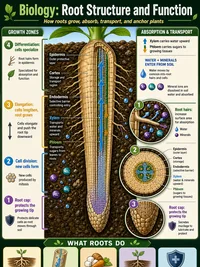
Roots
Absorb water and nutrients from the soil
Stem
Transport water and nutrients upward to leaves
Leaves
Capture sunlight to make food
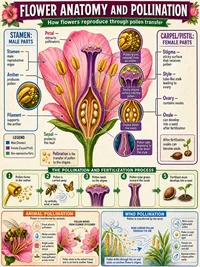
Flower
Attract pollinators for reproduction
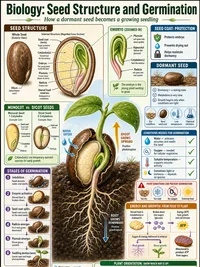
Seeds
Grow into new plants
Bird
Click a structure to learn more
Beak
Get food and eat
Wings
Fly and escape predators
Feathers
Provide insulation and help with flight
Eyes
Detect prey and watch for danger
Feet and Talons
Grip branches and catch prey
Structures explored 0 of 10
Data Table
(0 rows)| # | Organism | Structure | Function |
|---|
Reference Guide
What Is a Structure?
A structure is a part of a living thing - like a leaf, a root, a beak, or a wing. Every structure has a job called its function.
Scientists study structures to understand how plants and animals survive. The shape and size of a structure often tells us a lot about its job.
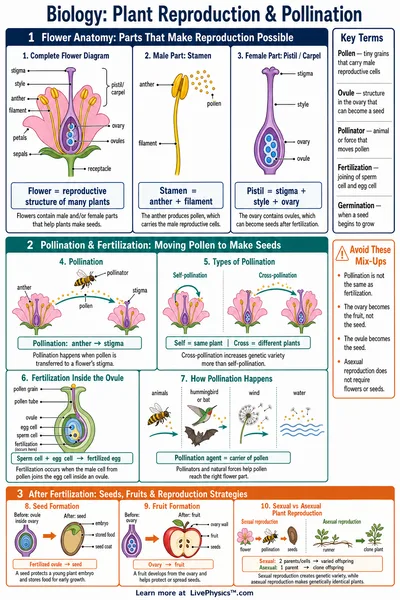
Plant Structures
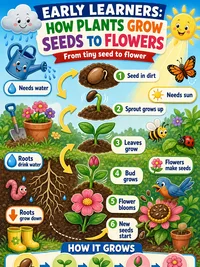
Plants have five main structures that help them survive
- Roots - absorb water and anchor the plant
- Stem - transports water upward to leaves
- Leaves - capture sunlight to make food
- Flower - attracts pollinators for reproduction
- Seeds - spread and grow into new plants
Animal Structures
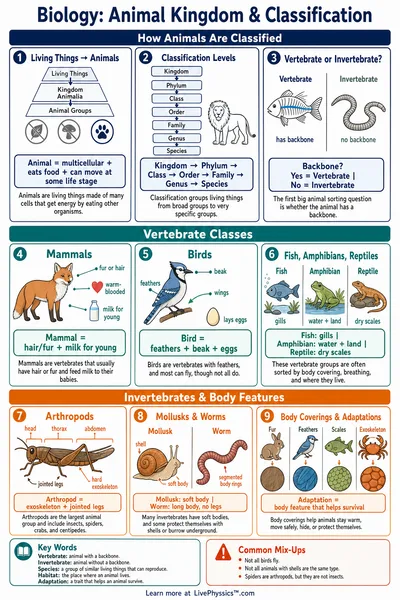
Birds have structures that help them get food, stay safe, and reproduce
- Beak - gets and eats food
- Wings - fly and escape predators
- Feathers - insulation and flight
- Eyes - detect prey and watch for danger
- Talons - grip branches and catch prey
Structure and Function
The shape of a structure often matches its function. A flat leaf captures more sunlight. A sharp talon grips prey more securely.
Internal structures are inside the body. External structures are on the outside. Both types help organisms survive, grow, and reproduce.