Practice interpreting evidence for evolution and explaining mechanisms such as natural selection, mutation, gene flow, genetic drift, and speciation.
Read each problem carefully. Use complete sentences when explaining your reasoning. Show calculations where needed.
Analyzing evidence for common ancestry and processes that change populations
Biology - Grade 9-12
- 1
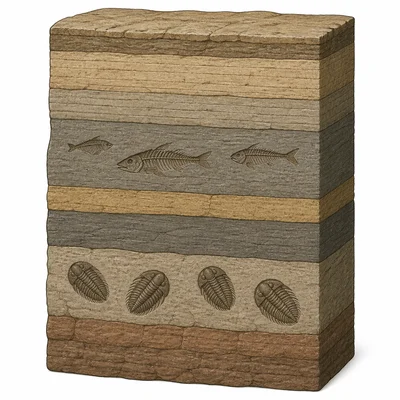
A fossil layer containing trilobites is found below a fossil layer containing early fish. Explain what this order suggests about the relative ages of these organisms and how the fossil record supports evolution.
- 2
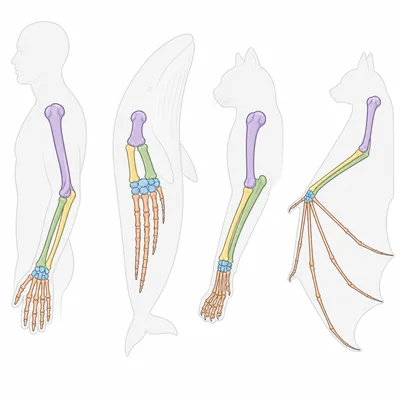
The forelimbs of humans, whales, cats, and bats contain the same basic bone pattern, even though they have different functions. Identify this type of evidence and explain what it suggests.
- 3
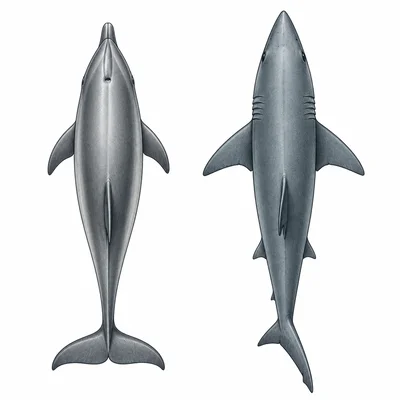
Dolphins and sharks both have streamlined bodies and fins, but dolphins are mammals and sharks are fish. Explain why this is an example of convergent evolution rather than close common ancestry.
- 4
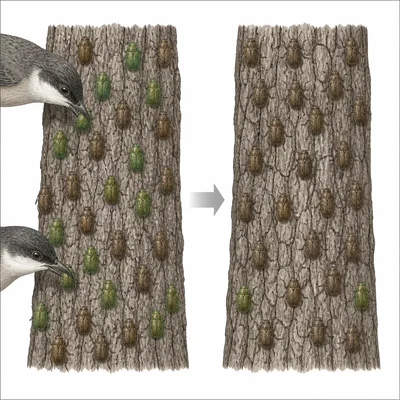
A population of beetles includes green and brown individuals. Birds can see green beetles more easily on tree bark, so they eat more green beetles. Over several generations, brown beetles become more common. Identify the mechanism of evolution and explain the change.
- 5
Explain why individual organisms do not evolve, but populations can evolve.
- 6
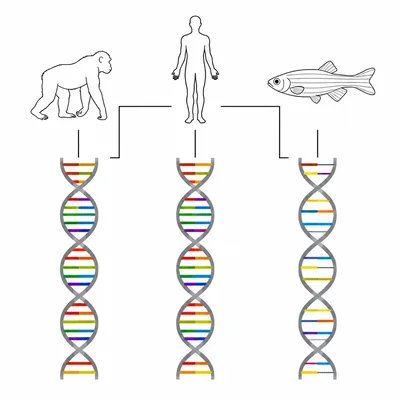
A DNA comparison shows that Species A and Species B have 98 percent of their DNA sequences in common, while Species A and Species C have 82 percent in common. Based on this evidence, which species is more closely related to Species A, and why?
- 7
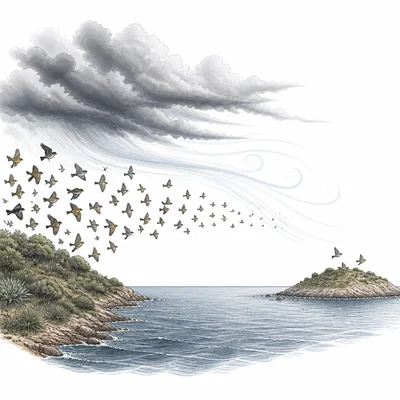
A small group of birds is blown by a storm from a mainland population to an island. The island population starts with only a few alleles from the original population. Name this form of genetic drift and explain its effect.
- 8
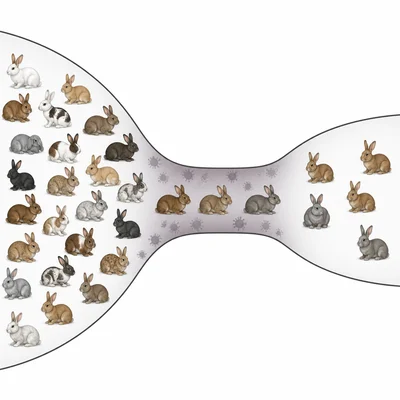
A disease kills most members of a rabbit population at random. The surviving rabbits reproduce, but the new population has less genetic variation than before. Identify the mechanism and explain why genetic variation decreased.
- 9
In a population, the frequency of allele A is 0.7 and the frequency of allele a is 0.3. Assuming Hardy-Weinberg equilibrium, calculate the expected frequency of heterozygous Aa individuals.
- 10
List two conditions required for Hardy-Weinberg equilibrium and explain why a population that violates these conditions may evolve.
- 11

A mutation changes a gene in a way that gives some bacteria resistance to an antibiotic. When the antibiotic is used, resistant bacteria survive and become common. Explain the roles of mutation and natural selection in this process.
- 12
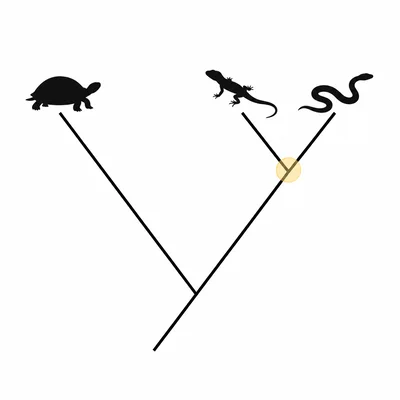
A phylogenetic tree shows that lizards and snakes share a more recent common ancestor with each other than either shares with turtles. Explain how the tree supports this conclusion.
- 13
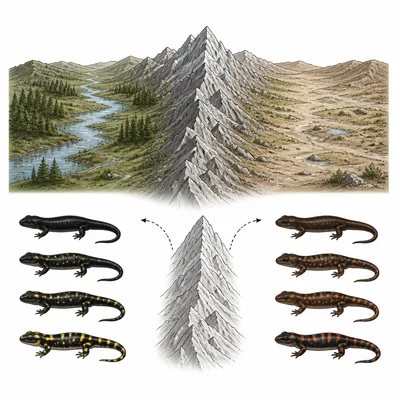
Two populations of the same salamander species are separated by a mountain range. After many generations, they can no longer interbreed successfully. Describe the type of speciation and the role of isolation.
- 14
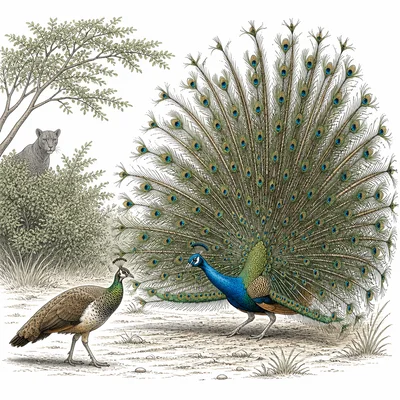
Peacocks with larger, brighter tails attract more mates, but the tails can make it harder to escape predators. Identify the evolutionary mechanism and explain the tradeoff.
- 15
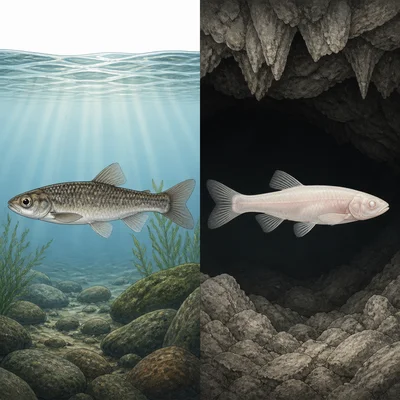
A cave fish population has reduced eyes and very pale body color compared with closely related surface fish. Give one evolutionary explanation for these traits and include a mechanism that could cause them to become common.