Practice identifying cyberbullying, choosing safe responses, supporting others, and knowing when to ask a trusted adult for help.
Read each situation carefully. Answer in complete sentences. Focus on safety, respect, and getting help when needed.
Recognizing harm, making safe choices, and getting support online
SEL - Grade 6-8
- 1
Define cyberbullying in your own words. Include at least two examples of online behavior that could be cyberbullying.
- 2
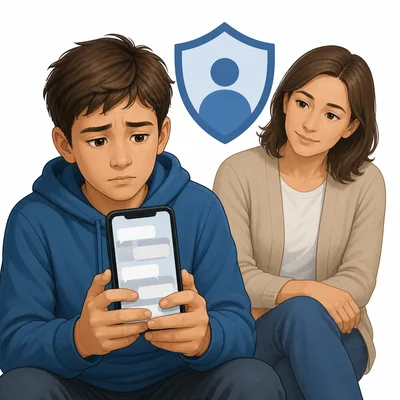
Maya receives several mean messages in a class group chat. The messages make fun of her clothes and tell others not to sit with her at lunch. What are three safe steps Maya can take?
- 3
Explain the difference between a one-time rude comment online and cyberbullying. Why can both still be harmful?
- 4
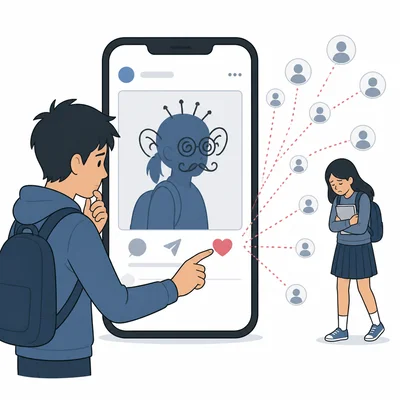
Jordan sees classmates posting an edited photo of another student to make the student look silly. Jordan does not post it, but laughs and likes the post. How might Jordan's actions affect the situation, and what could Jordan do instead?
- 5
Create a short respectful message someone could send to a friend who posted a cruel comment online. The message should ask the friend to stop without starting an argument.
- 6
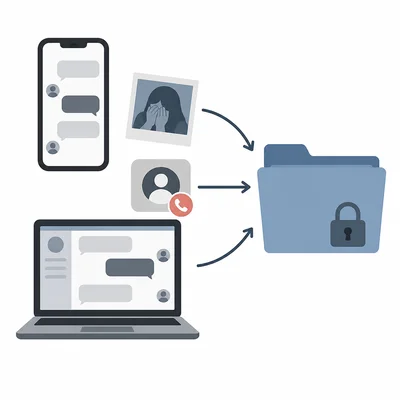
List four types of evidence someone should save if they are being cyberbullied. Explain why saving evidence is important.
- 7
A student wants to respond to a hurtful post by posting an embarrassing secret about the person who started it. Explain why this is not a safe response and suggest a better choice.
- 8
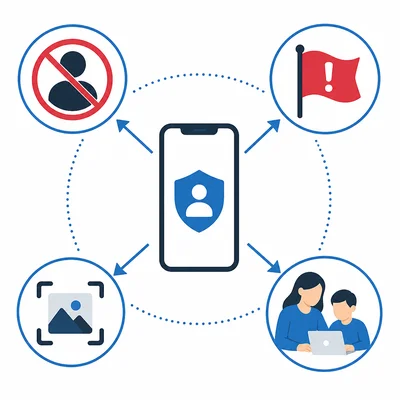
Match each response to its purpose: block, report, screenshot, tell a trusted adult. Then explain how these actions can work together.
- 9
Write two ways to be an upstander if you see cyberbullying happening to someone else. Include one action you could take online and one action you could take offline.
- 10
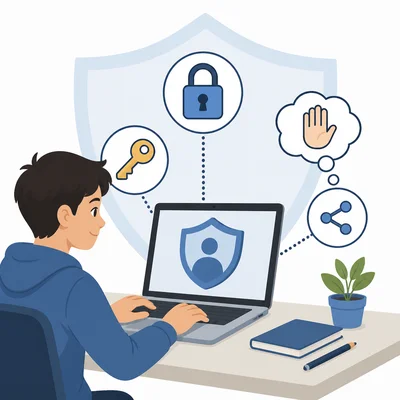
Explain why privacy settings, strong passwords, and thinking before posting can help prevent cyberbullying or reduce harm.