Students practice peaceful conflict resolution skills, including using I-statements, active listening, compromise, apologies, and problem-solving steps.
Read each situation carefully. Write a peaceful response or solution. Use respectful language and explain your thinking.
Practice calming down, listening, and finding fair solutions
SEL - Grade 4-5
- 1
Maya and Jordan both want to use the same basketball at recess. Write one peaceful solution that could help both students feel respected.
- 2
Rewrite this blaming statement as an I-statement: You always cut in front of me in line.
- 3
Sam is angry because his partner erased part of their group poster. List two things Sam can do to calm down before speaking.
- 4
A friend says, I felt left out when you did not pick me for your team. Write an active listening response that shows you understand.
- 5
Put these conflict resolution steps in a helpful order: choose a fair solution, calm down, explain the problem, listen to each person, try the solution.
- 6
Two classmates disagree about which topic to choose for a science project. One wants volcanoes, and the other wants animals. Write a compromise they could try.
- 7
Choose the response that would most likely make the conflict worse, and explain why: A. I need a minute to calm down. B. That was all your fault. C. Let us both explain what happened.
- 8
During a game, Leo says Ava cheated, but Ava says she did not understand the rules. Write one question Leo could ask to learn more before judging her.
- 9
Nia borrowed a marker and returned it with the cap missing. Write a responsible apology that includes a way to fix the problem.
- 10
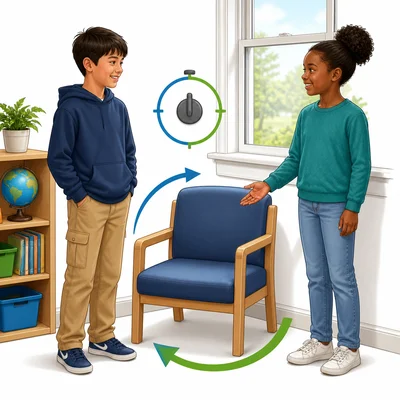
Draw or describe a win-win solution for this problem: Two students both want the same seat next to the window.
- 11
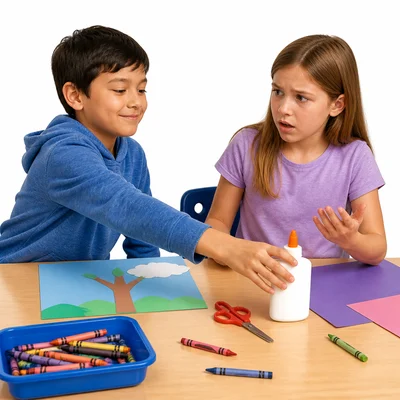
Identify the real problem in this situation: Chris grabbed the glue from Pat without asking. Pat yelled, Stop being rude. What problem needs to be solved?
- 12
Write a calm sentence Pat could use instead of yelling in the glue situation.
- 13
A group of four students must decide who will present each part of a project. One student keeps interrupting. Name one rule the group could use to make the discussion fair.
- 14

Read the solution: We will flip a coin to decide who goes first, then we will switch after five minutes. Explain why this can be a fair solution in a conflict.
- 15
Think of a time a student might need help from an adult during a conflict. Describe the situation and explain why adult help would be useful.