Practice making safe first aid decisions by recognizing emergencies, checking the scene, calling for help, and choosing basic care steps.
Read each situation carefully. Choose the safest first aid response and explain your thinking. If a situation seems serious, include how you would get help from a trusted adult or emergency services.
Practice safe choices in common first aid situations
Health - Grade 6-8
- 1
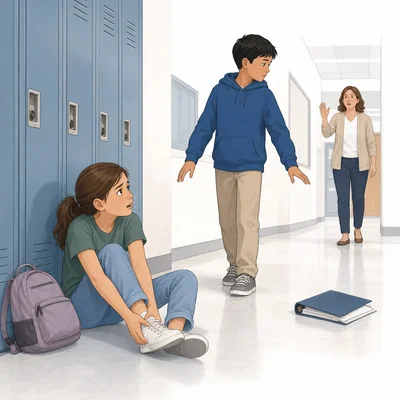
You see a student fall in the hallway. They are awake, but they look scared and say their ankle hurts. What are the first two things you should do before trying to help?
- 2
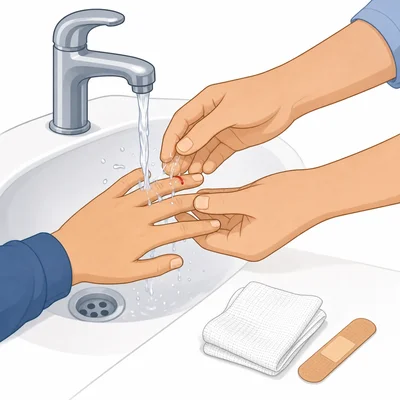
A classmate cuts their finger on a sharp edge during a project. The cut is bleeding slowly. What basic first aid steps should be taken?
- 3
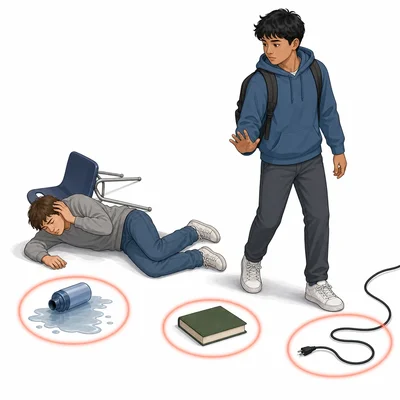
Explain why it is important to check whether a scene is safe before giving first aid.
- 4
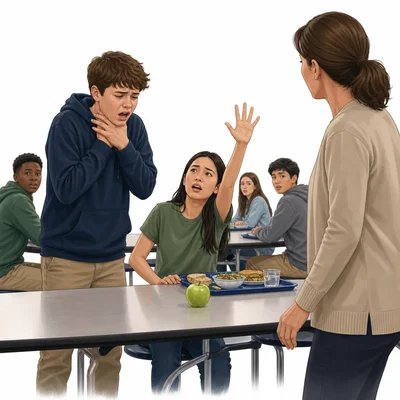
A friend is having trouble breathing after eating a snack. They cannot speak clearly and are clutching their throat. What should you do?
- 5
Sort these situations into emergency or non-emergency: a small paper cut, an unconscious person, a mild headache, severe chest pain, a scraped knee, and a person who is choking.
- 6
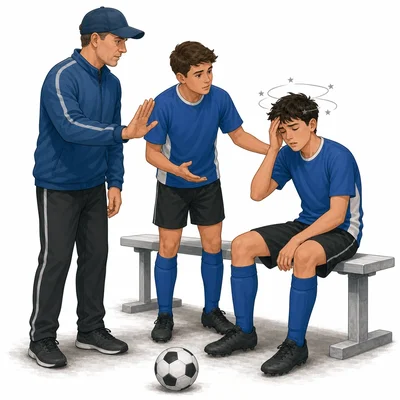
A teammate gets hit in the head by a ball. They say they feel dizzy and want to keep playing. What is the safest decision?
- 7
What information should you be ready to give if you call emergency services?
- 8
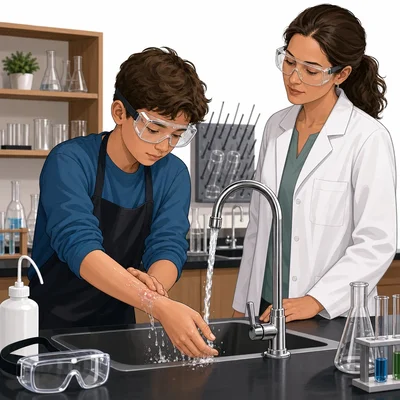
A student spills a chemical in science class and gets some on their skin. What should you do first?
- 9
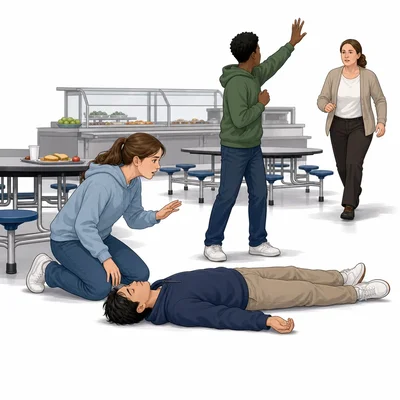
A person faints in the cafeteria. They are not responding when you talk to them. What should you do?
- 10
Why should you ask for permission before giving first aid to someone who is awake and able to respond?
- 11
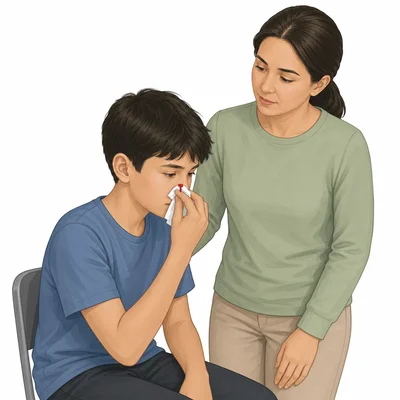
A student has a nosebleed during class. List safe basic steps they can take while an adult is notified.
- 12
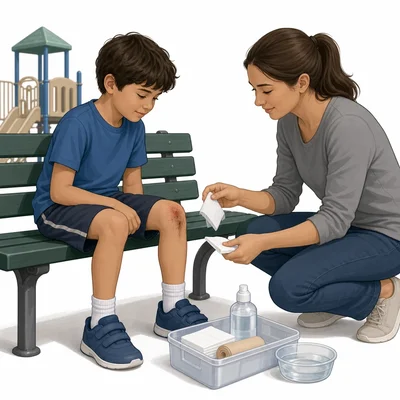
During recess, you find a student with a scraped knee and dirt on the skin. The student is calm and can walk. What first aid decision makes sense?
- 13
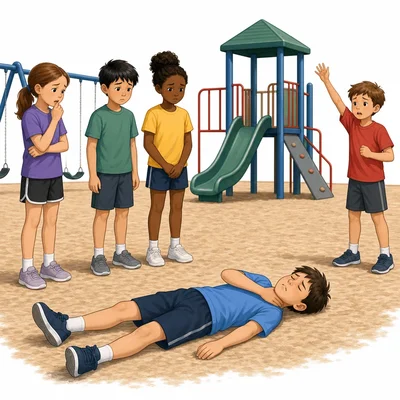
Choose the safest response: Your friend dares you to move an injured student who fell from playground equipment. The student says their neck hurts. Explain your choice.
- 14
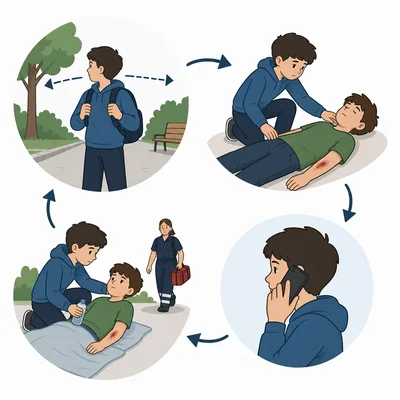
Look at this decision order: Check the scene, check the person, call for help, care until help arrives. Explain what each step means in your own words.
- 15
Name three things you should not do when you are trying to help in a first aid situation.