Practice applying basic genetics concepts to inherited conditions, family health history, and informed health choices.
Read each problem carefully. Use complete sentences when explaining your reasoning. Show your work for any probability problems.
Understanding inheritance, risk, and healthy decision-making
Health - Grade 9-12
- 1
Define the terms gene, allele, and inherited condition in your own words.
- 2
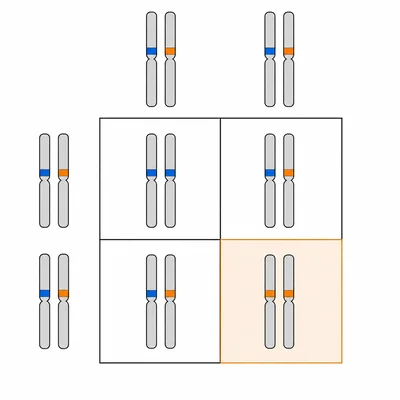
Cystic fibrosis is usually inherited in an autosomal recessive pattern. Two parents are both carriers, which means each has one normal allele and one cystic fibrosis allele. Use C for the normal allele and c for the cystic fibrosis allele. What are the possible genotypes for their child, and what is the chance the child will have cystic fibrosis?
- 3
Explain the difference between a dominant inherited condition and a recessive inherited condition.
- 4
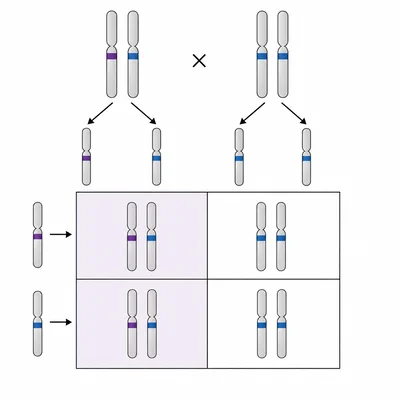
Huntington disease is often described as an autosomal dominant condition. If one parent has one Huntington allele and one normal allele, and the other parent has two normal alleles, what is the chance that each child will inherit the Huntington allele?
- 5
A person has one recessive allele for sickle cell disease and one normal allele. Explain why this person is called a carrier and whether they usually have the disease.
- 6
A couple is considering having children. One partner has a family history of Tay-Sachs disease, and the other partner does not know their family history. List two health-related steps they could take to learn more about genetic risk.
- 7
Explain why family health history can be useful even when a condition is not caused by a single gene.
- 8
Some conditions, such as type 2 diabetes and heart disease, are multifactorial. Explain what multifactorial means in genetics and health.
- 9
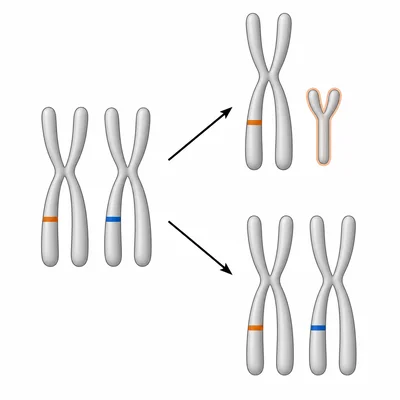
Hemophilia A is often inherited in an X-linked recessive pattern. Explain why X-linked recessive conditions are more common in males than in females.
- 10
A genetic test can show whether a person has a higher risk for certain inherited cancers. List two benefits and two possible concerns related to genetic testing.
- 11
A student says, 'If a condition is genetic, there is nothing a person can do about it.' Write a response that corrects this statement.
- 12
Create a short explanation for why genetic information should be kept private and shared carefully.