Practice identifying safe exercise habits, proper stretching choices, and injury prevention strategies for physical activity.
Read each problem carefully. Use complete sentences when explaining your answers.
Safe movement habits for active bodies
Physical Education - Grade 9-12
- 1
Explain why a warm-up should come before intense exercise or sports practice.
- 2
A student begins sprinting at full speed immediately after sitting in class for an hour. Identify two injury risks this student may face and explain why.
- 3
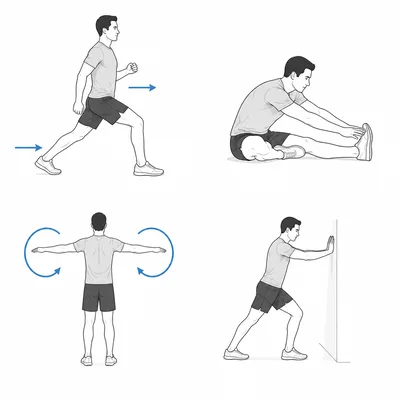
Classify each activity as a dynamic stretch or a static stretch: walking lunges, holding a hamstring stretch for 30 seconds, arm circles, holding a calf stretch against a wall.
- 4
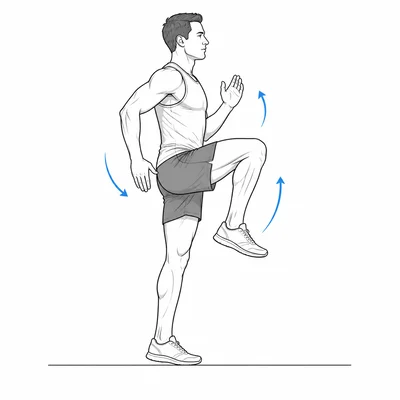
Look at a diagram of a runner doing high knees before a race. Explain why this movement is usually better before activity than holding a long static stretch.
- 5
A teammate complains of sharp pain in their ankle after landing from a jump. What should they do first, and why should they avoid playing through the pain?
- 6
Describe the difference between normal muscle soreness and a possible injury that needs attention.
- 7
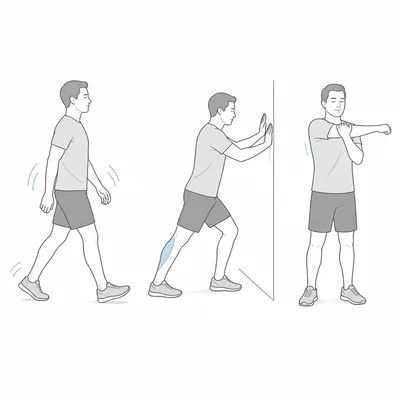
Use the image of a basic cool-down routine. Explain how cooling down after exercise can help the body recover.
- 8
A student plans to lift weights after school. List three safety steps they should take to help prevent injury.
- 9
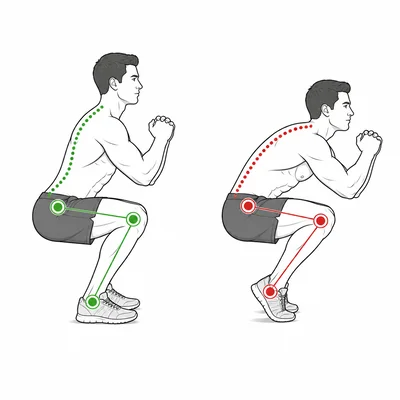
Study a diagram showing proper and improper squat form. Identify two signs of safer squat technique.
- 10
Create a short injury prevention plan for a 45-minute basketball practice. Include a warm-up, stretching choice, hydration or rest strategy, and cool-down.