Practice applying sports nutrition concepts to real athletic situations, including macronutrients, hydration, meal timing, and recovery choices.
Read each problem carefully. Use complete sentences and show your reasoning when calculations are needed.
Choosing foods and fluids that support training, recovery, and health
Physical Education - Grade 9-12
- 1
Explain why carbohydrates are an important fuel source for athletes during moderate to high intensity exercise.
- 2
A soccer player eats oatmeal with berries and a glass of milk about 2 hours before a game. Identify one carbohydrate source and one protein source in this meal, and explain how each can help performance.
- 3
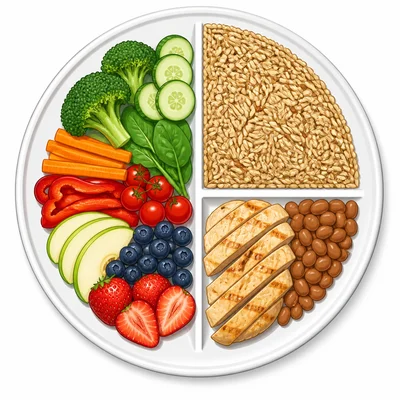
Look at the sample plate. It has one-half vegetables and fruit, one-quarter whole grains, and one-quarter lean protein. Describe how this plate could be adjusted for an athlete on a heavy training day.
- 4
An athlete loses 1.5 pounds during a long practice. A common guideline is to drink about 16 to 24 ounces of fluid for each pound lost. About how much fluid should the athlete drink after practice?
- 5
A runner has practice at 4:00 p.m. They ate lunch at 12:00 p.m. and feel hungry at 3:15 p.m. Choose a smart pre-practice snack from these options and explain your choice: a banana with yogurt, a large order of fried chicken, or only a diet soda.
- 6
Explain the role of protein in an athlete's diet. Include why eating enough protein matters after strength training or intense practice.
- 7
Use the nutrition label shown. One serving has 30 grams of carbohydrates, 8 grams of protein, 3 grams of fat, and 6 grams of added sugar. Explain whether this snack would be better before exercise, after exercise, or neither, and support your answer.
- 8
During a 90-minute basketball practice in a hot gym, an athlete drinks no water and starts to feel dizzy and tired. Identify two possible signs of dehydration and one safer hydration strategy.
- 9
Compare these two recovery meals after a hard swim practice: Meal A is chocolate milk and a turkey sandwich. Meal B is a small bag of candy only. Which meal better supports recovery, and why?
- 10
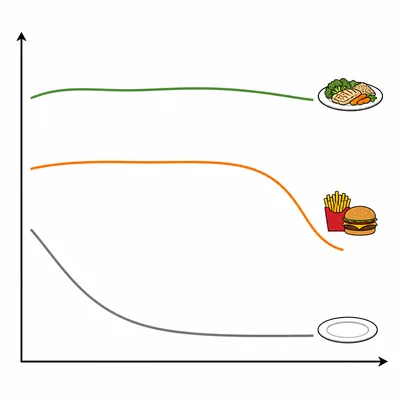
The chart shows an athlete's energy level during a game after three different pre-game choices: balanced meal, skipped meal, and very high fat meal. Describe which choice is most likely to support steady performance and explain why.
- 11
A teammate says, "Athletes should avoid all fats because fat slows them down." Write a response that corrects this misconception.
- 12
Create a one-day fueling plan for an athlete who has school, afternoon practice, and homework. Include breakfast, lunch, a pre-practice snack, a recovery choice, dinner, and fluids.