Analyze how the body produces energy, moves efficiently, adapts to training, and performs during sports and exercise.
Read each problem carefully. Use complete sentences and show calculations when needed.
Exploring energy systems, movement, fitness, and performance
Physical Education - Grade 9-12
- 1
A sprinter explodes out of the blocks and runs a 100-meter dash in about 12 seconds. Which energy system provides most of the energy at the start of the race, and why?
- 2
During a 30-minute steady jog, which energy system is used the most, and what role does oxygen play?
- 3
A basketball player performs repeated fast breaks throughout a game. Explain why both anaerobic and aerobic fitness are important for this athlete.
- 4
A student has a resting heart rate of 68 beats per minute and a maximum heart rate of 195 beats per minute. Calculate the student's heart rate reserve.
- 5
Using the student's heart rate reserve of 127 beats per minute and resting heart rate of 68 beats per minute, calculate the target heart rate at 70 percent intensity using the Karvonen formula.
- 6
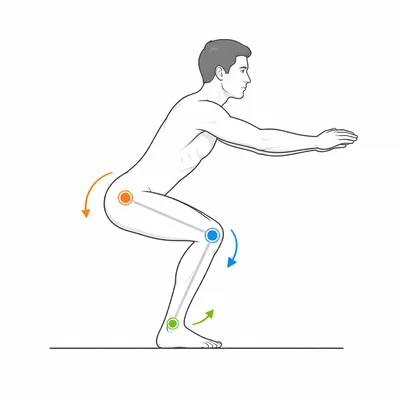
Look at a squat movement. Identify two major joints involved and describe the main movement at each joint during the lowering phase.
- 7
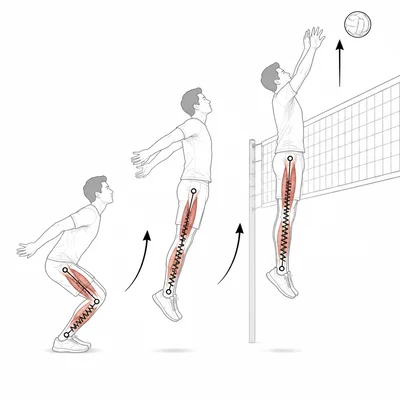
A volleyball player jumps to block a shot. Explain how force production and the stretch-shortening cycle help improve jump height.
- 8
Define muscular endurance and give one sport-specific example of why it matters.
- 9
A soccer player wants to improve acceleration over the first 10 meters. Name two training methods that could help and explain why they are useful.
- 10
Explain the difference between reaction time and movement time using an example from a sport.
- 11
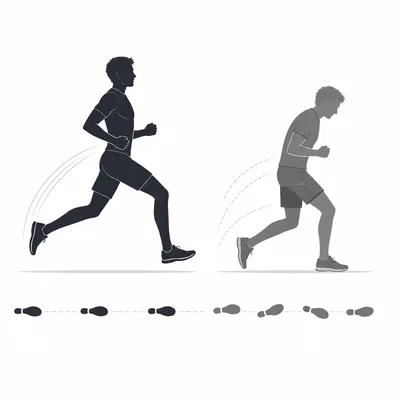
A runner's stride becomes shorter and less controlled near the end of a race. Explain how fatigue can affect biomechanics and performance.
- 12
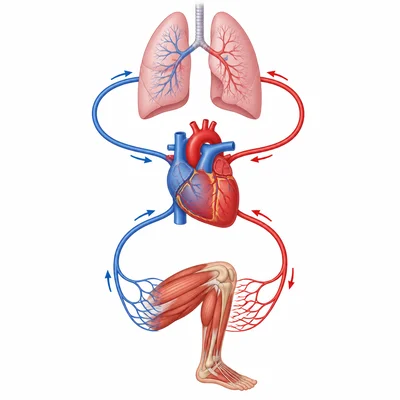
Describe how the respiratory system and circulatory system work together during intense exercise.
- 13
A coach schedules hard sprint workouts every day for two weeks with no rest days. Explain why this plan may reduce performance instead of improving it.
- 14
Explain the principle of specificity and give an example for a swimmer training for a 100-meter freestyle race.
- 15
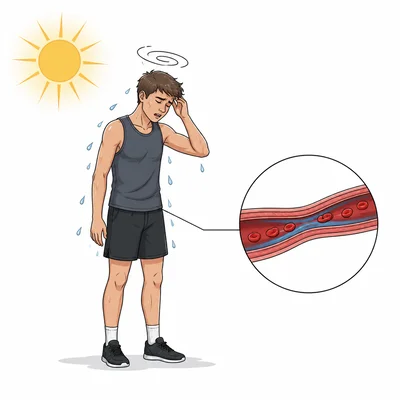
An athlete drinks little water during a hot practice and begins to feel dizzy and weak. Explain how dehydration can affect body performance and safety.