Practice evaluating the financial tradeoffs between renting and buying a home using realistic costs, benefits, and decision factors.
Read each problem carefully. Show your work in the space provided and explain your reasoning when asked.
Comparing costs, benefits, risks, and long-term financial impact
Financial Literacy - Grade 9-12
- 1
A student is comparing two housing options after graduation. Renting an apartment costs $1,400 per month. Buying a small home would require a monthly mortgage payment of $1,650, plus $250 per month for property taxes and insurance. What is the monthly cost difference between renting and buying?
- 2
A renter pays $1,250 per month. The lease also requires a one-time security deposit equal to one month of rent. How much will the renter pay in rent and deposit during the first year?
- 3
A buyer purchases a home for $240,000 and makes a 10% down payment. How much is the down payment, and how much money must be borrowed through a mortgage?
- 4
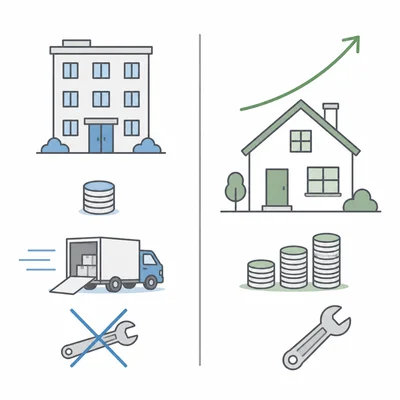
Look at a simple comparison chart with two columns labeled Renting and Buying. Renting lists lower upfront cost, easier to move, and no repair responsibility. Buying lists builds equity, possible home value increase, and owner pays repairs. Write one financial advantage of renting and one financial advantage of buying.
- 5
A homeowner pays $1,800 per month for a mortgage, $300 per month for property taxes and insurance, and $200 per month on average for maintenance. What is the homeowner's total monthly housing cost?
- 6
A renter expects to live in a city for only 18 months before moving for college or work. Explain why renting may be a better choice than buying in this situation.
- 7
A buyer pays $8,000 in closing costs when purchasing a home. If the buyer saves $300 per month compared with renting, how many months will it take for the monthly savings to equal the closing costs?
- 8
A home is worth $300,000. After five years, the homeowner still owes $260,000 on the mortgage. What is the homeowner's equity in the home?
- 9
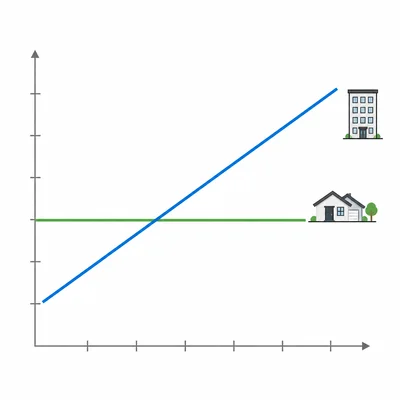
A line graph shows monthly rent increasing from $1,200 to $1,500 over five years, while a fixed mortgage payment stays at $1,350 per month. Explain one lesson the graph teaches about renting and buying.
- 10
A renter does not pay for major repairs when the apartment's water heater breaks. A homeowner with the same problem must pay $1,200 for the repair. Explain how repair responsibility affects the rent-versus-buy decision.
- 11
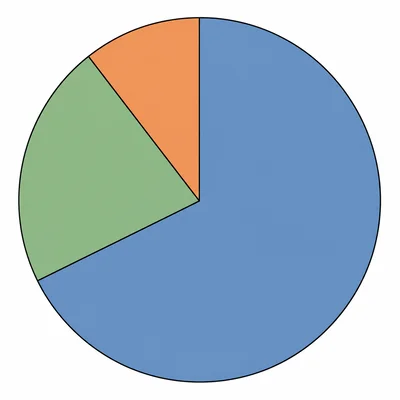
A pie chart of first-year buying costs shows a $20,000 down payment, $6,000 closing costs, and $3,000 moving and setup costs. What is the total first-year upfront cost of buying the home?
- 12
Two friends are deciding between renting and buying. Friend A wants flexibility to move within a year and has little savings. Friend B has stable income, savings for a down payment, and plans to stay in one place for at least seven years. Which friend is likely better prepared to buy a home, and why?