Learn about musical traditions from around the world by identifying instruments, listening for musical features, and connecting music to culture and community.
Read each problem carefully. Use complete sentences when explaining your thinking. Show your work or notes in the space provided.
Exploring instruments, rhythms, and cultural connections
Music - Grade 6-8
- 1
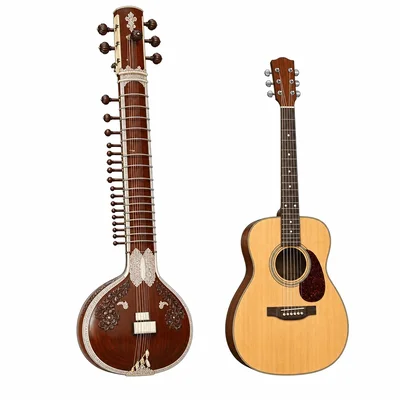
The sitar is a plucked string instrument often used in Hindustani classical music from North India. Name one way a sitar is different from a typical acoustic guitar.
- 2
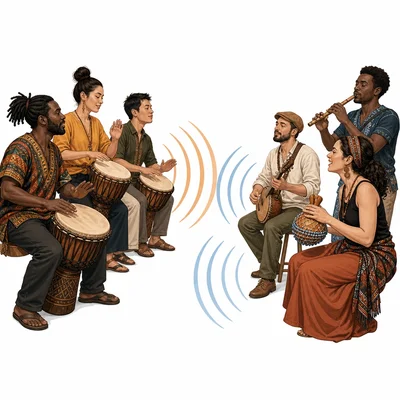
West African djembe drumming often uses call and response. Explain what call and response means in music.
- 3
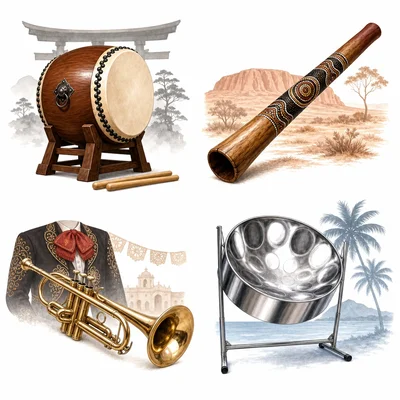
Match each instrument to its region or tradition: taiko, didgeridoo, mariachi trumpet, and steelpan. Use Japan, Australia, Mexico, and Trinidad and Tobago.
- 4
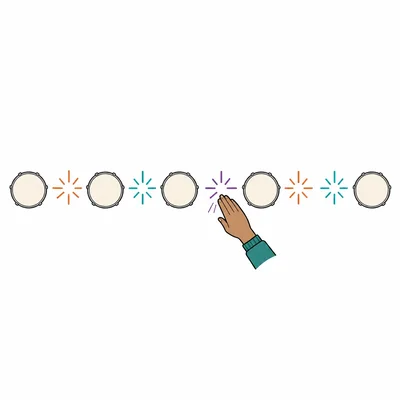
A class listens to a song from a Brazilian samba tradition. They hear layered percussion, a steady groove, and syncopated rhythms. What does syncopation mean?
- 5
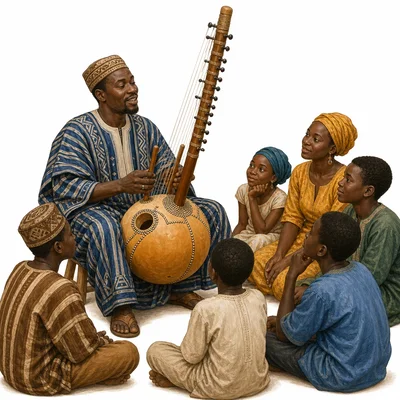
The kora is a West African instrument with strings stretched over a large resonating body. It is often played by griots. What role can a griot have in a community?
- 6
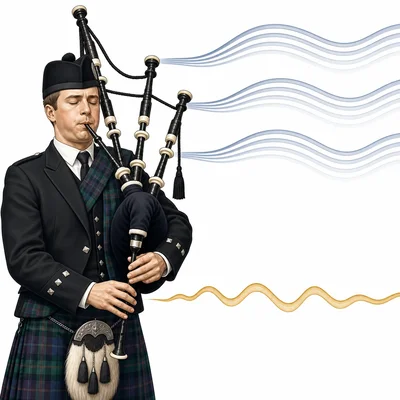
Listen to or imagine a song that uses a steady drone, such as some Indian classical music or bagpipe music. Describe what a drone is.
- 7
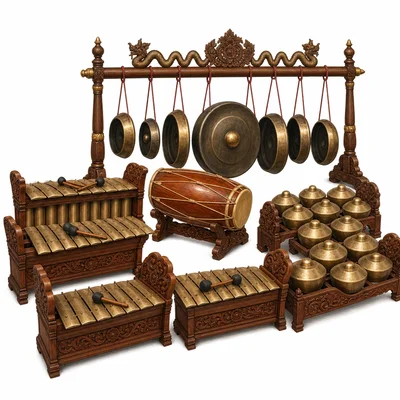
The gamelan tradition from Indonesia often includes metallophones, gongs, and drums. Describe one feature that makes gamelan music recognizable.
- 8
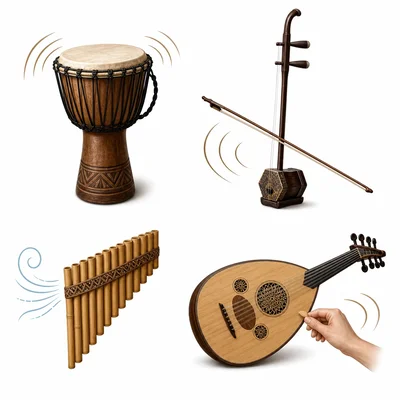
In many music traditions, instruments are grouped into families. Put these instruments into the correct family: djembe, erhu, pan flute, and oud.
- 9
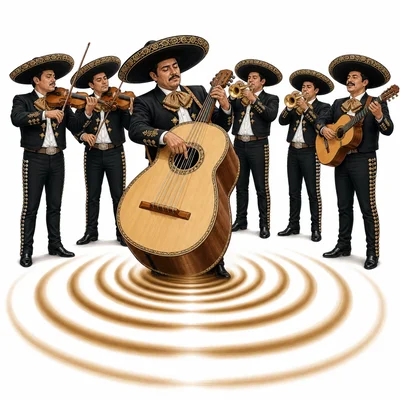
Mariachi music often includes violins, trumpets, guitars, vihuela, and guitarrón. How does the guitarrón support the ensemble?
- 10
Explain why it is important to learn about the cultural context of a musical tradition instead of only learning the names of instruments.
- 11
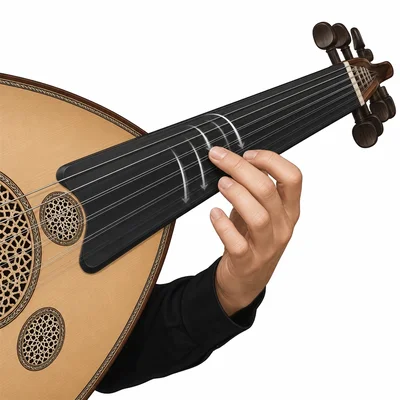
Some Middle Eastern music uses the oud, a fretless plucked string instrument. How can a fretless instrument affect the notes a musician can play?
- 12
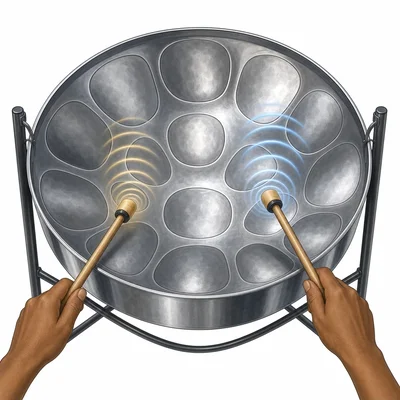
The steelpan was developed in Trinidad and Tobago. It is made from a metal drum with tuned areas. How does the player make different pitches on a steelpan?
- 13
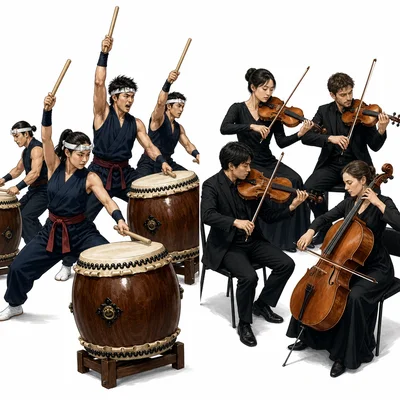
Compare a taiko drumming performance and a string quartet performance. Name one musical difference and one performance difference you might notice.
- 14
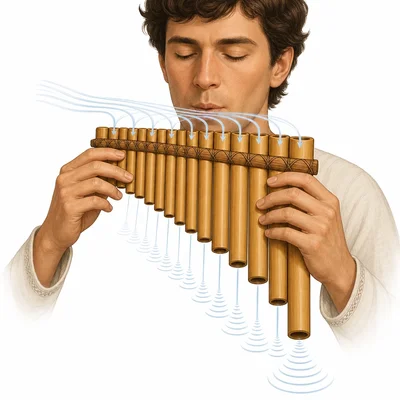
Many Andean music traditions use panpipes or pan flutes. Describe how a pan flute produces different pitches.
- 15
Choose one world music instrument from this worksheet and write two respectful questions you could ask a musician who plays it.