Practice identifying high and low pitch, following melody direction, and reading basic musical notation.
Read each problem carefully. Use music words like high, low, up, down, repeat, line, space, and beat in your answers.
Reading simple notes and describing how melodies move
Music - Grade 2-3
- 1
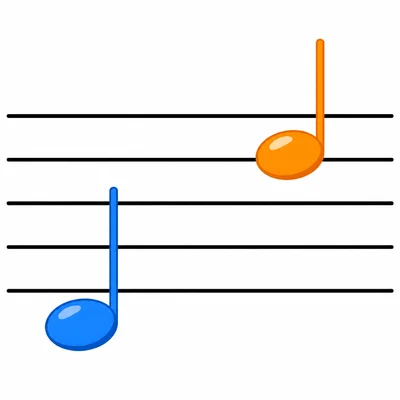
Look at the two notes. Note A is placed low on the staff, and Note B is placed higher on the staff. Which note has the higher pitch?
- 2

A melody goes from a low note to a middle note to a high note. Describe the direction of the melody.
- 3
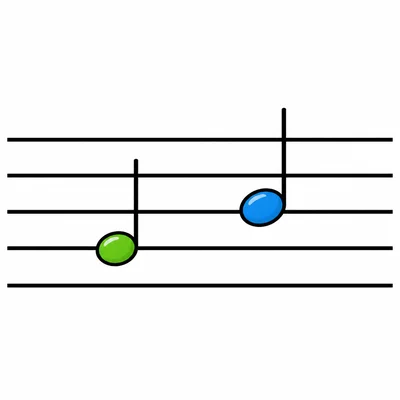
Circle the note that is on a line, not in a space.
- 4
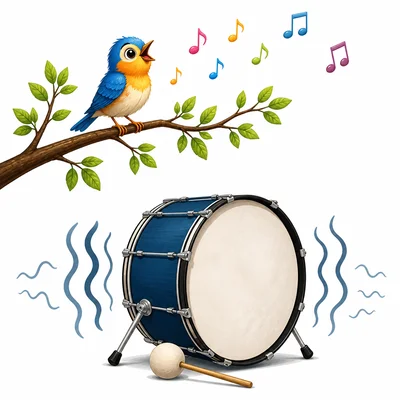
Fill in the blank: Pitch tells how high or low a sound is. A bird chirp usually has a ______ pitch than a drum boom.
- 5
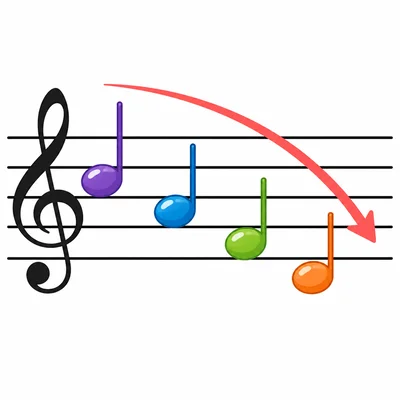
Look at the notes. Do they move up, move down, or stay the same?
- 6
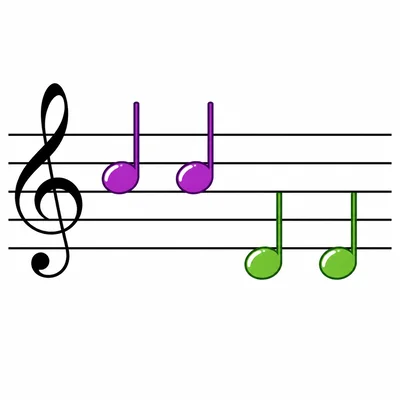
A song has this pattern of pitches: high, high, low, low. Which pitches repeat?
- 7

The treble clef is a sign that appears at the beginning of many music staffs. What does it help musicians do?
- 8
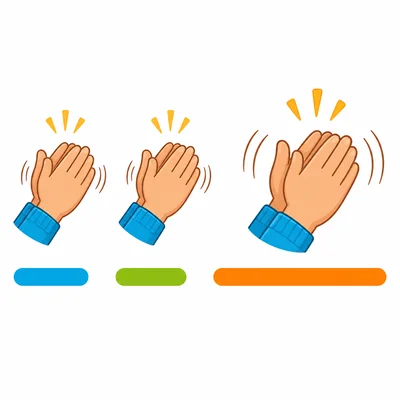
Clap this rhythm: ta, ta, ta-a. If ta is 1 beat and ta-a is 2 beats, how many beats are in the whole rhythm?
- 9
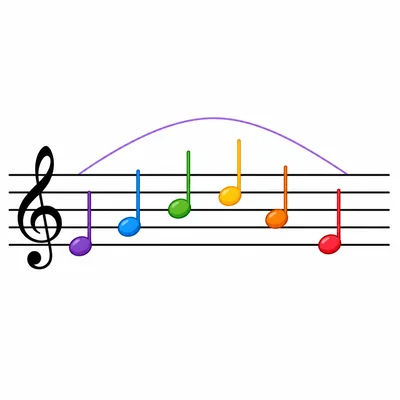
A melody uses the notes C, D, E, then E, D, C. Describe what happens to the melody.
- 10

Look at the staff. How many spaces are between the five lines?
- 11
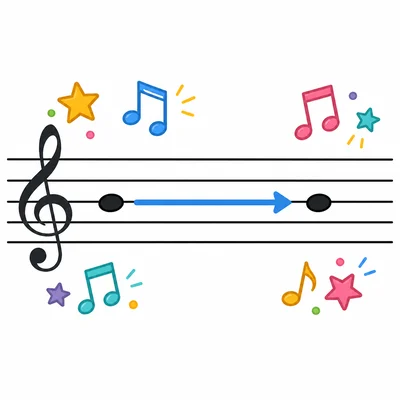
A singer sings one note, then sings the same note again. Did the pitch go up, go down, or stay the same?
- 12
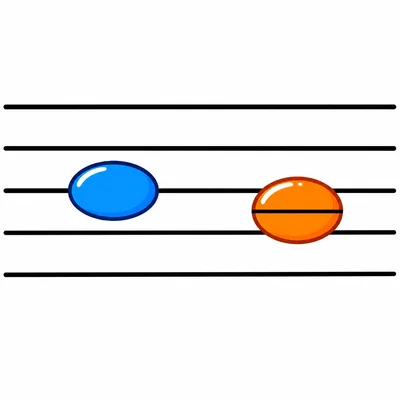
Look at the two note heads. One note is in a space and one note is on a line. Write one sentence explaining the difference.
- 13
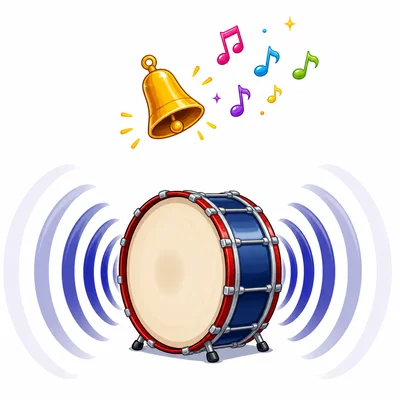
Write H for high or L for low: A tiny bell makes a bright, high sound. A large bass drum makes a deep, low sound.
- 14
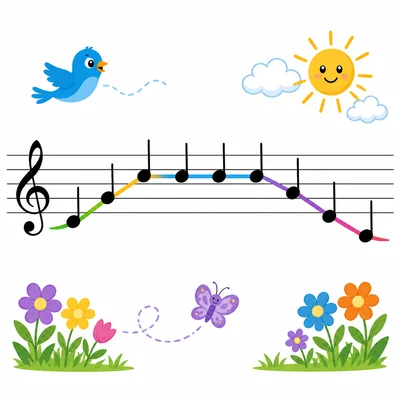
Look at the melody shape. The notes go up, then stay the same, then go down. Describe the melody in your own words.
- 15
Why do musicians use musical notation instead of only listening and remembering?