Practice identifying instrument families, explaining how instruments make sound, and describing their tone colors.
Read each problem carefully. Write complete answers and use music vocabulary when you can.
Classifying instruments and describing how they make sound
Music - Grade 4-5
- 1
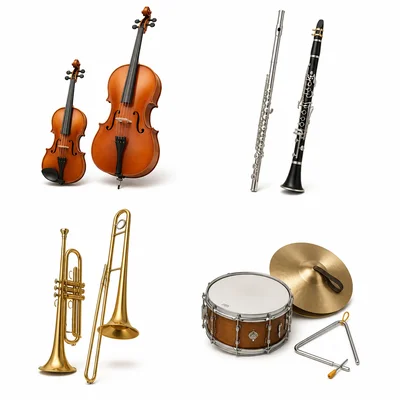
The four main instrument families in an orchestra are strings, woodwinds, brass, and percussion. Write the name of one instrument from each family.
- 2
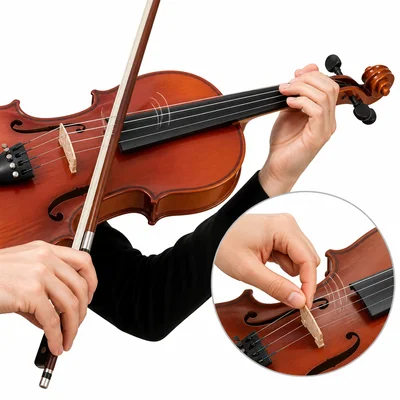
A violin makes sound when its strings vibrate. Name two ways a violin player can make the strings vibrate.
- 3
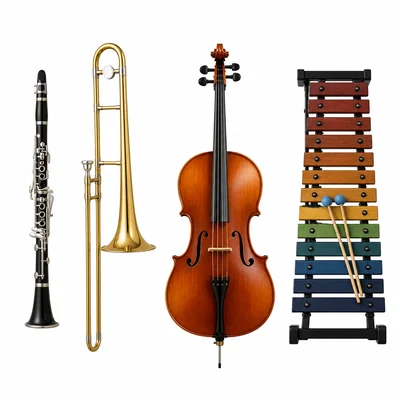
Circle the instrument that belongs to the brass family: clarinet, trombone, cello, xylophone. Explain your choice.
- 4
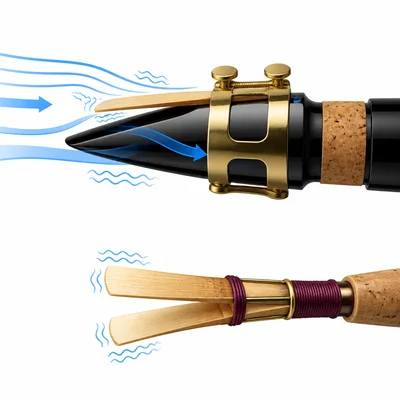
A clarinet and an oboe are both woodwind instruments, but they use different reeds. How does a reed help make sound?
- 5
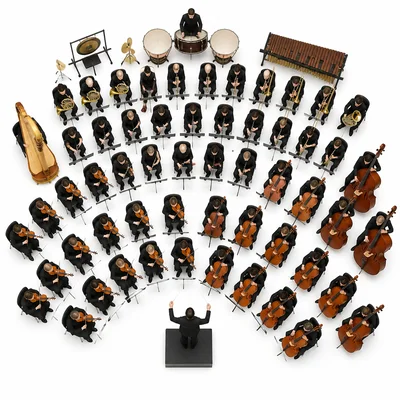
Look at a picture of an orchestra. The violins, violas, cellos, and basses sit together near the front. Which instrument family is this group, and why are they grouped together?
- 6
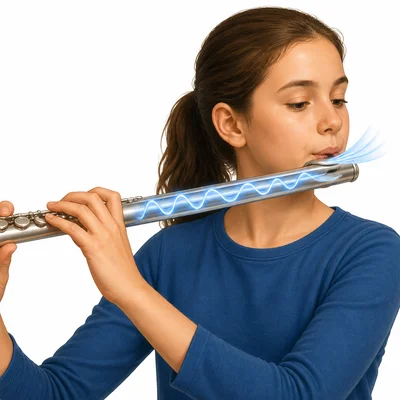
A flute is made of metal, but it is still in the woodwind family. Explain why.
- 7
Choose the best description for a trumpet's sound: soft and airy, bright and bold, low and scratchy, or clicking and wooden. Explain your answer.
- 8
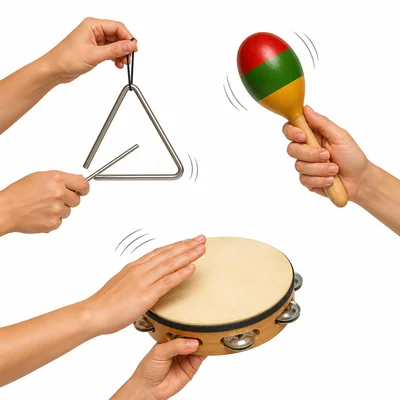
A student hits a triangle, shakes a maraca, and taps a tambourine. What instrument family do these instruments belong to, and what do they have in common?
- 9
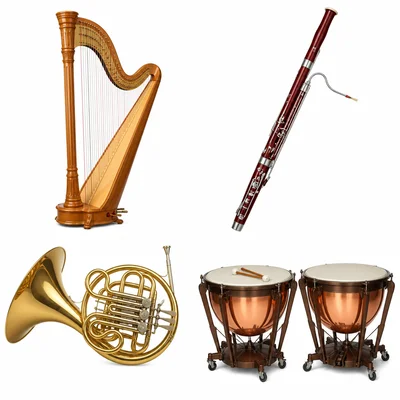
Classify each instrument as strings, woodwinds, brass, or percussion: harp, bassoon, French horn, timpani.
- 10
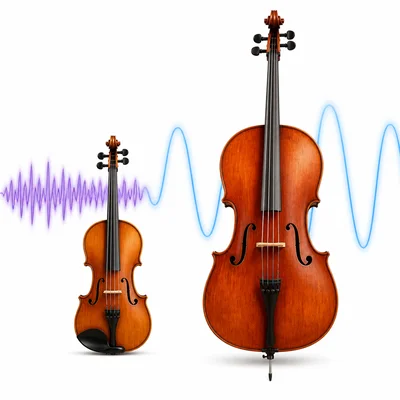
A cello is larger than a violin. How does its size affect its pitch?
- 11
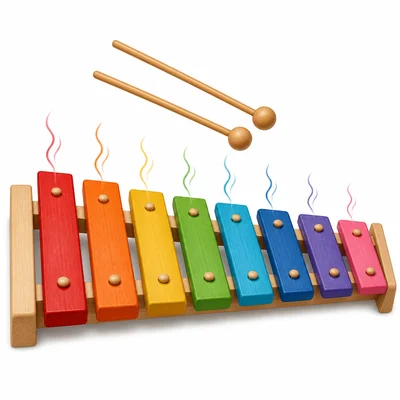
Some percussion instruments have definite pitch, and some have indefinite pitch. Is a xylophone usually definite pitch or indefinite pitch? Explain.
- 12
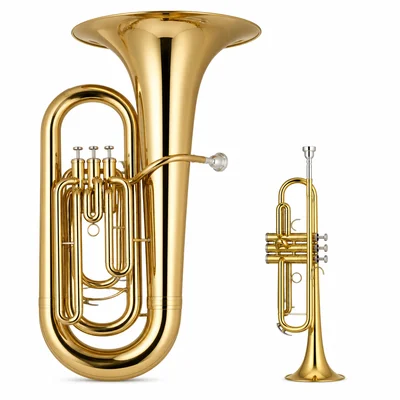
Compare a tuba and a trumpet. They are both brass instruments. Name one way they are alike and one way they are different.
- 13
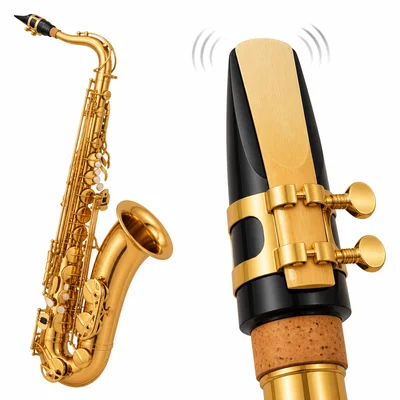
A saxophone is made of brass, but it is classified as a woodwind. What part of the saxophone helps explain its family?
- 14
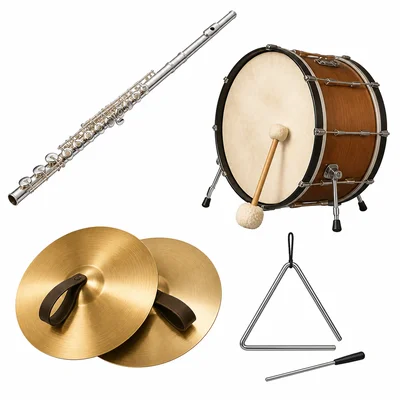
A composer wants a gentle, flowing sound that can play smooth melodies. Which instrument might be a good choice: flute, bass drum, cymbals, or triangle? Explain.
- 15
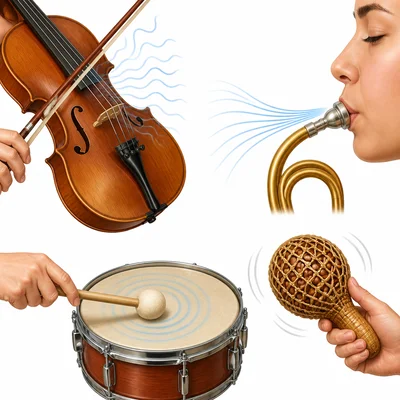
Fill in the missing family names: Instruments that use vibrating strings belong to the blank family. Instruments that use buzzing lips in a mouthpiece belong to the blank family. Instruments that are struck, shaken, or scraped belong to the blank family.