Practice applying the principles of progressive overload, FITT, recovery, and goal setting to create safe and effective training plans.
Read each problem carefully. Show your thinking and include specific details such as frequency, intensity, time, type, sets, reps, rest, or progression when needed.
Designing safe workouts that improve over time
Physical Education - Grade 9-12
- 1
Define progressive overload in your own words and explain why it is important in a training plan.
- 2
A student currently jogs for 20 minutes, 3 days per week. Write one safe way to apply progressive overload for the next two weeks.
- 3
Use the FITT principle to identify the frequency, intensity, time, and type in this workout: Bike at a moderate pace for 30 minutes on Monday, Wednesday, and Friday.
- 4
A beginner strength training plan includes 3 sets of 10 bodyweight squats twice per week. Give one appropriate progression for week 3 and explain why it is safe.
- 5
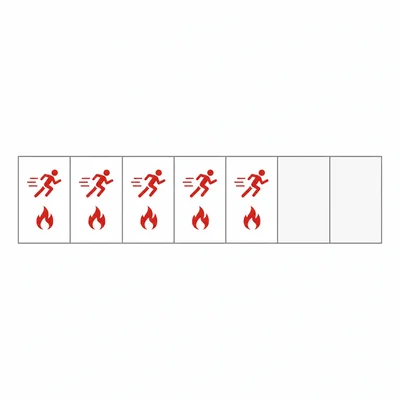
Look at a weekly training calendar with hard workouts on Monday, Tuesday, Wednesday, Thursday, and Friday and no rest or light days. Identify one problem with this plan and suggest a correction.
- 6
A student wants to improve push-up strength. Their current level is 2 sets of 8 push-ups with good form. Create a 3-week progression using sets or reps.
- 7
Explain the difference between increasing intensity and increasing time in a cardio workout.
- 8
A runner increases their weekly mileage from 10 miles to 18 miles in one week. Explain why this may be unsafe and give a safer alternative.
- 9

The chart shows a student's plank time over four weeks: Week 1: 30 seconds, Week 2: 35 seconds, Week 3: 40 seconds, Week 4: 45 seconds. Describe the trend and explain how it shows progressive overload.
- 10
Write a SMART goal for a high school student who wants to improve cardiovascular endurance over the next 6 weeks.
- 11
A student feels sharp pain in their knee during lunges. What should they do during the workout, and what should they avoid doing?
- 12
Create a balanced 1-week training plan for general fitness that includes cardio, strength, flexibility, and at least one rest or recovery day.
- 13
A student is doing 4 sets of 12 dumbbell curls with 10-pound weights and can finish every set easily with perfect form. Give two possible ways to progress the exercise.
- 14
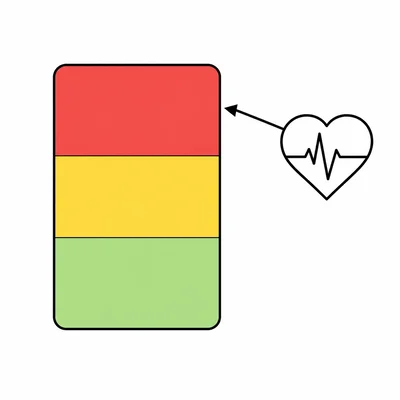
The diagram shows three training zones: easy, moderate, and hard. Explain why a training plan should not place every workout in the hard zone.
- 15
A student has a soccer game on Friday and wants to train during the week. Plan Monday through Thursday so they are prepared but not overly tired for the game.