Practice telling the difference between normal experimental error and human mistakes, then explain how scientists reduce both during investigations.
Read each problem carefully. Decide whether the situation describes experimental error, a human mistake, or a way to reduce error. Explain your thinking in complete sentences.
Identifying uncertainty, mistakes, and ways to improve investigations
Science - Grade 6-8
- 1
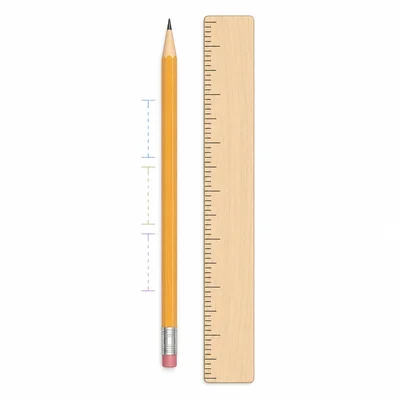
A student measures the same pencil three times with a ruler and gets 14.8 cm, 14.9 cm, and 14.8 cm. Is this more likely experimental error or a human mistake? Explain.
- 2
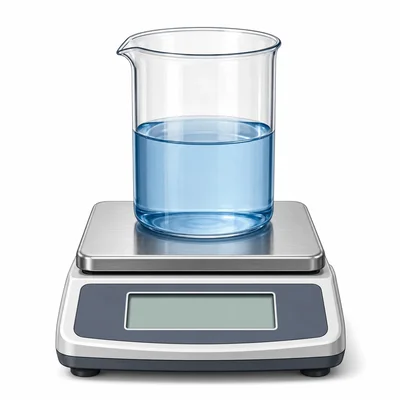
During a lab, a student forgets to zero the digital scale before measuring a beaker of water. The mass is recorded as 128 g, but the empty beaker's mass was included by accident. Is this experimental error or a human mistake? Explain.
- 3
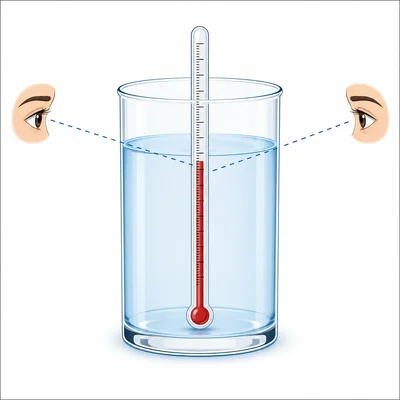
A thermometer can only be read to the nearest 1 degree Celsius. Two students reading the same water sample record 22 °C and 23 °C. Is this more likely experimental error or a human mistake? Explain.
- 4
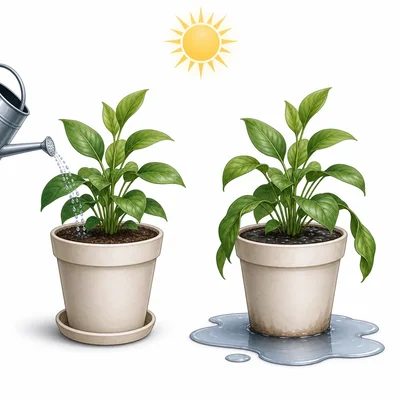
A group is testing how sunlight affects plant growth. They accidentally water one plant twice as much as the others. Is this experimental error or a human mistake? Explain how it could affect the results.
- 5
Define experimental error in your own words. Include one example from a science lab.
- 6
Define human mistake in your own words. Include one example from a science lab.
- 7
A student writes the temperature as 71 °C in a data table, but the thermometer actually showed 17 °C. Is this experimental error or a human mistake? Explain.
- 8
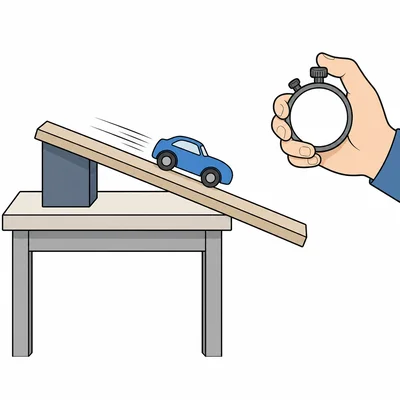
A class measures the time it takes a toy car to roll down a ramp. Trial times are 2.31 s, 2.28 s, 2.34 s, and 2.30 s. What does the small spread in the data suggest?
- 9
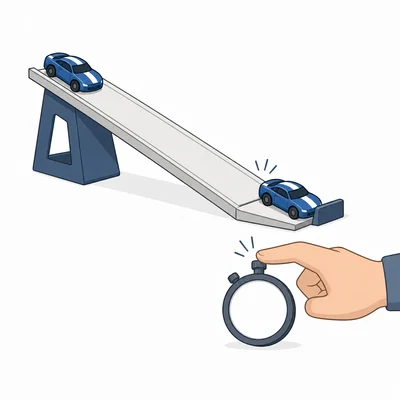
A different group measures the same toy car ramp and records 2.3 s, 2.4 s, 9.8 s, and 2.3 s. Which value is most likely caused by a human mistake, and why?
- 10
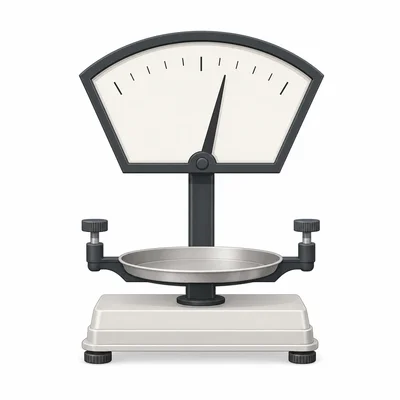
A balance scale always reads 2 g too high because it is not calibrated correctly. Is this random error, systematic error, or a human mistake? Explain.
- 11
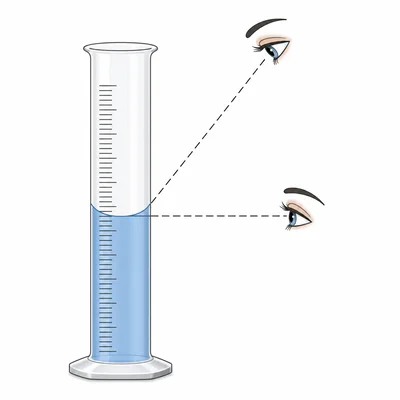
A student reads the bottom of the meniscus in a graduated cylinder and records 42 mL. Another student reads from above the cylinder and records 44 mL. What type of issue is shown, and how can it be reduced?
- 12
Explain why repeating trials helps reduce the effect of experimental error.
- 13
A student spills part of a chemical sample but continues the experiment and records the result without telling the group. What is the main problem with this data?
- 14
For each situation, label it as experimental error or human mistake: A. A stopwatch reaction time causes a 0.1 s difference. B. A student uses the wrong chemical. C. A ruler has marks only every 1 mm. D. A student skips trial 3 but writes down a made-up value.
- 15
A lab report says, 'Our results were wrong because of human error.' Rewrite this statement to be more scientific and specific.