Practice identifying the characteristics of bacteria, viruses, and fungi and explaining how they affect living things.
Read each problem carefully. Answer in complete sentences and explain your thinking when needed.
Comparing tiny life forms and disease-causing agents
Biology - Grade 6-8
- 1
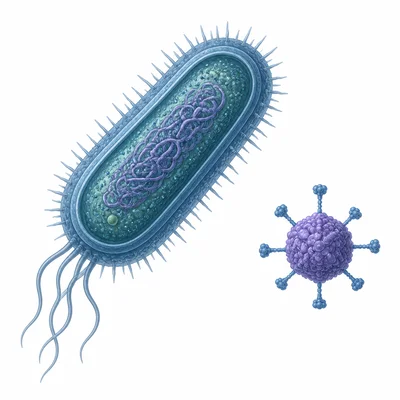
Explain one main difference between bacteria and viruses.
- 2
A student says that all microorganisms are harmful. Is this correct? Explain your answer using an example.
- 3
Name one way fungi are different from bacteria.
- 4
Why are antibiotics used to treat some bacterial infections but not viral infections?
- 5
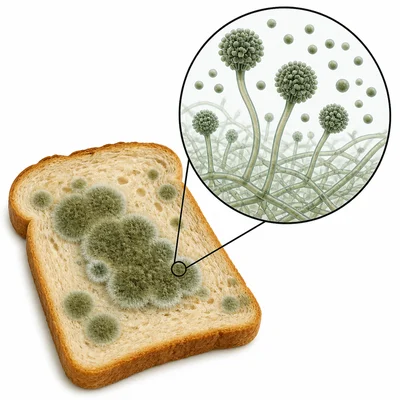
A loaf of bread grows fuzzy green mold after being left out for several days. Is the mold a bacterium, a virus, or a fungus? Explain how you know.
- 6
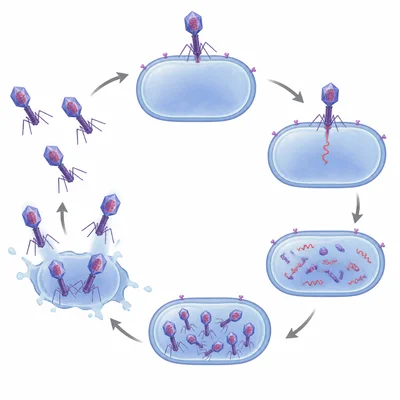
Describe how a virus reproduces.
- 7
Give one example of a useful role of fungi in nature or human life.
- 8
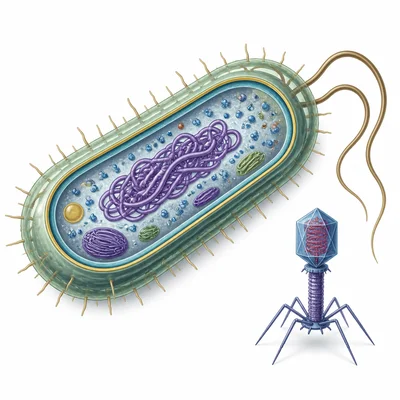
What is one structure that bacteria have which viruses do not?
- 9
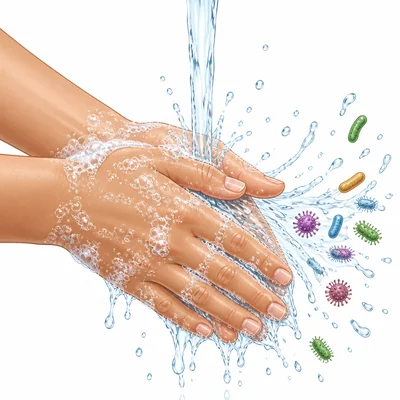
Why is washing your hands an effective way to reduce the spread of many microorganisms?
- 10
Compare bacteria and fungi by naming one similarity and one difference.
- 11
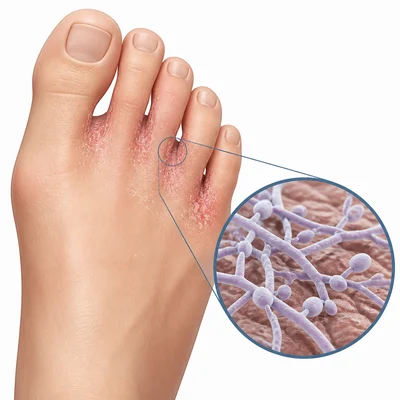
A doctor says a patient has athlete's foot. Which group of microorganisms causes this condition: bacteria, viruses, or fungi?
- 12
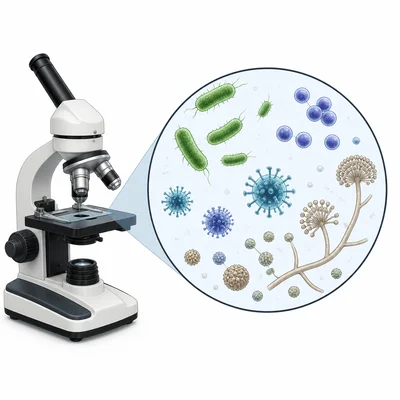
Explain why scientists often use microscopes to study bacteria, viruses, and many fungi.