Learn how the Sun, Moon, and Earth are connected, and practice explaining why we have day and night.
Read each problem carefully. Write your answers in complete sentences when you can.
How Earth's rotation makes day and night
Science - Grade 2-3
- 1
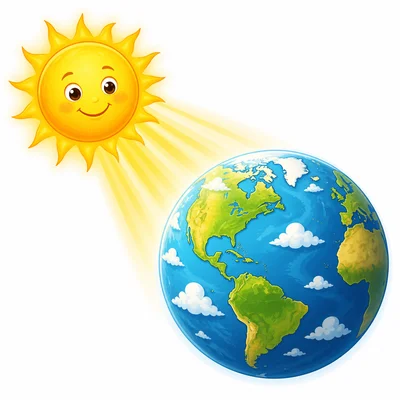
What object gives Earth most of its light during the day?
- 2
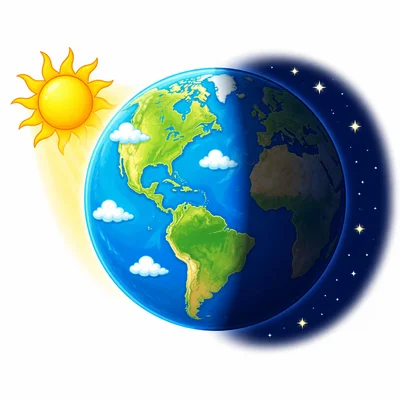
Fill in the blank: It is daytime on the side of Earth that is facing the ____.
- 3
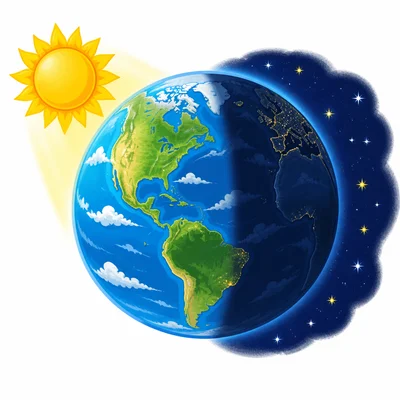
Fill in the blank: It is nighttime on the side of Earth that is turned away from the ____.
- 4
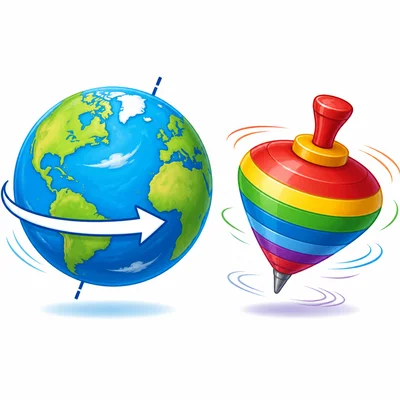
Earth spins like a top. What is this spinning motion called?
- 5
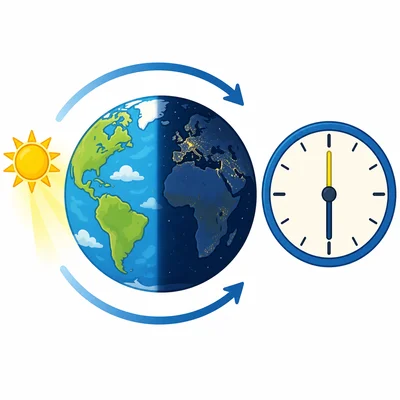
About how long does it take Earth to make one full rotation?
- 6
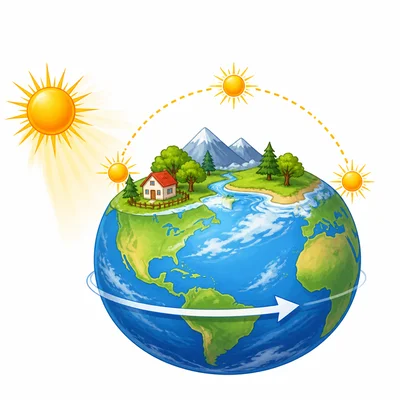
Why do we see the Sun appear to move across the sky during the day?
- 7
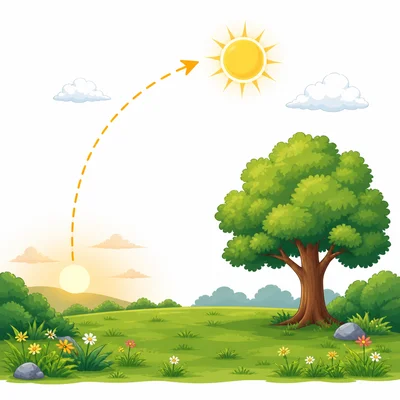
In the morning, the Sun appears low in the sky. What usually happens to the Sun's position by noon?
- 8
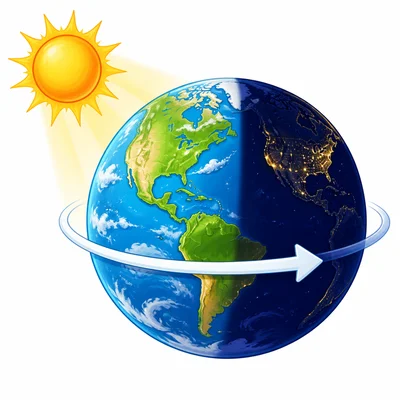
A student says, "The Sun goes around Earth every day." Is this correct? Explain your answer.
- 9
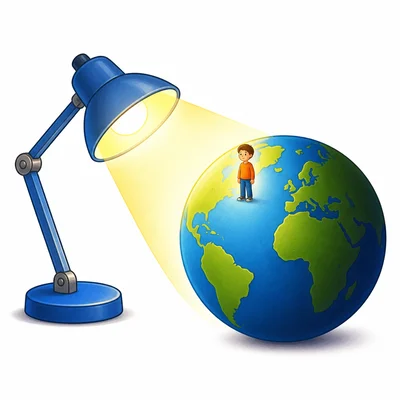
Look at a model with a lamp as the Sun and a ball as Earth. If one side of the ball is bright, what would people on that side experience?
- 10
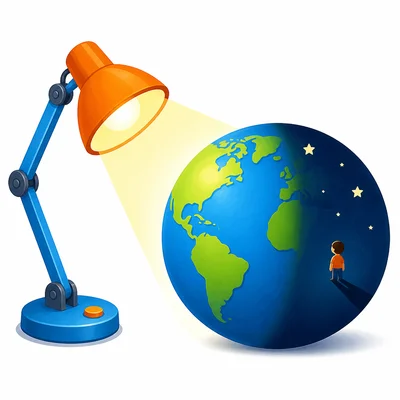
Look at a model with a lamp as the Sun and a ball as Earth. If one side of the ball is dark, what would people on that side experience?
- 11
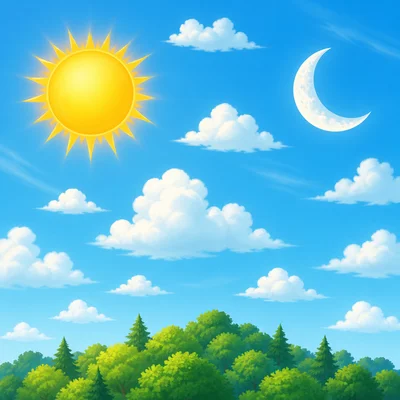
Can the Moon sometimes be seen during the daytime? Write yes or no and explain.
- 12
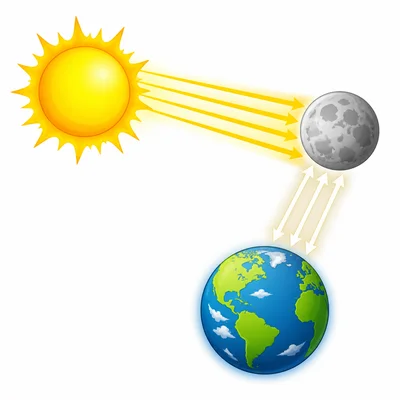
Does the Moon make its own light like the Sun does? Explain your answer.
- 13
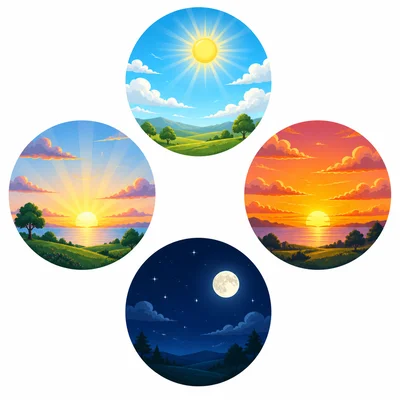
Put these events in order: sunset, sunrise, daytime, nighttime.
- 14
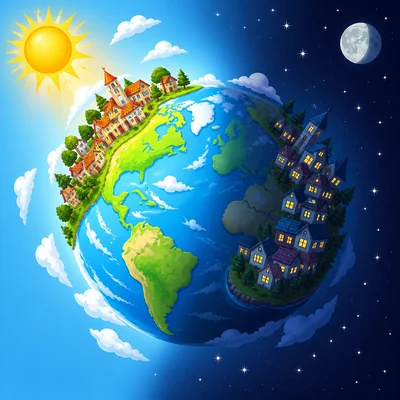
A town is having nighttime while another town on the opposite side of Earth is having daytime. Why can this happen?
- 15
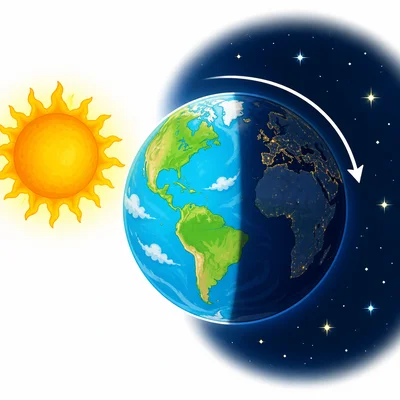
Write one sentence that explains why day changes into night.