Sun, Moon & Daylight Patterns Lab
Pick a month and a day in the moon cycle to see the sunrise, sunset, daylight hours, and moon phase. Record your observations in a table and find the patterns that repeat every year and every month.
Guided ExperimentSun, Moon & Daylight Patterns Investigation
Predict how daylight hours change from winter to summer. Will they be the same in every month?
Write your hypothesis in the Lab Report panel, then click Next.
Pick a Month
Pick a Day in the Moon Cycle
Today's Observation
Controls
Reference Guide
Sun Patterns
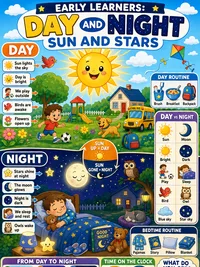
The sun always rises in the east and sets in the west. This pattern repeats every single day.
West. Sun sets.
How long the sun is up changes through the year. Summer days are long and winter days are short.
Moon Phases
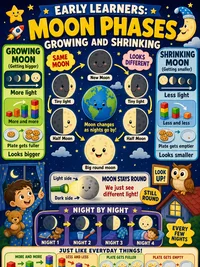
The moon looks different on different nights. It moves through 8 shapes called phases.
The whole cycle takes about 28 days. Then it starts over. Day 0 is a new moon, day 14 is a full moon.
Seasons and Daylight
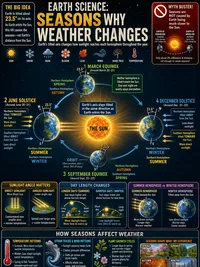
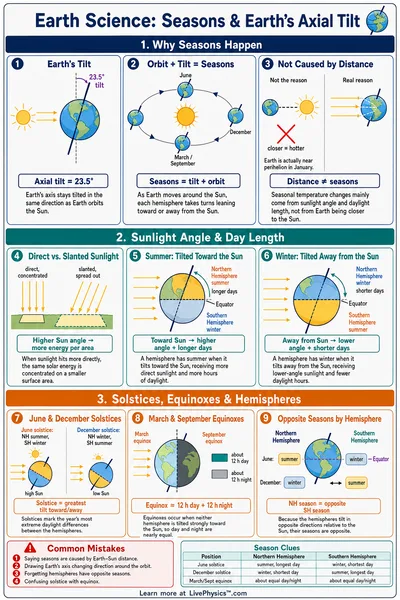
A year has four seasons. Each one has its own pattern of daylight hours.
In June you might have 15 hours of daylight. In December you might only have 9 hours.
Why Patterns Help Us
Patterns let us predict what will happen next. We know the sun will rise tomorrow because it has risen every day before.
Scientists use patterns to make calendars, plan farming, and understand the sky.