How Do Antibiotics Kill Bacteria?
Tiny drugs target bacterial machinery
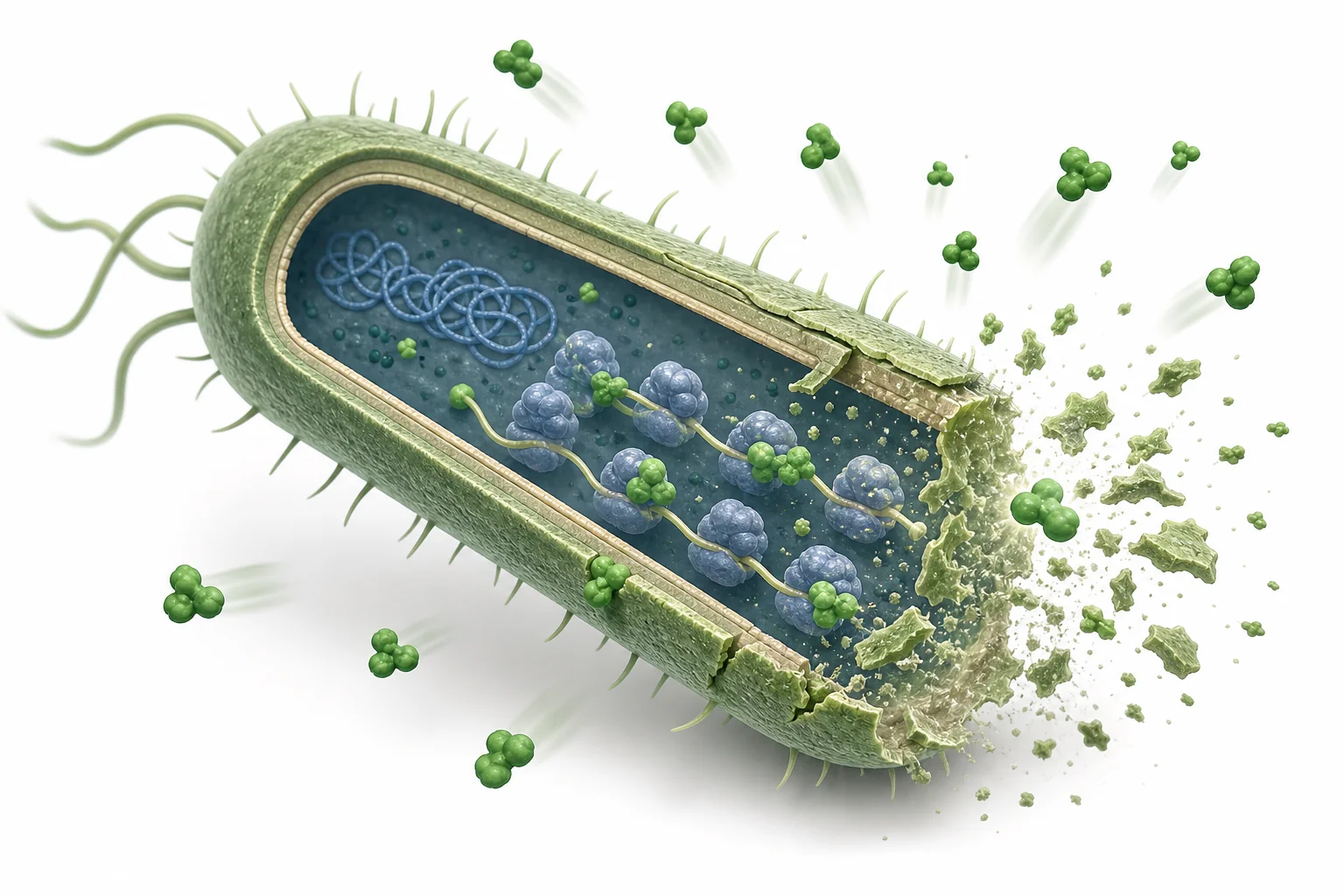
Antibiotics kill bacteria by blocking jobs that bacterial cells need to stay alive. Some weaken the outer wall, while others stop bacteria from making proteins or copying genetic material. Antibiotics do not kill viruses because viruses do not have the same cell parts or life processes.
Antibiotics changed medicine because they gave doctors a way to treat many bacterial infections. They work because bacteria are living cells with parts that can be targeted. A bacterial cell must build a strong wall, make proteins, copy DNA, and control what enters and leaves. If a drug blocks one of these jobs, the cell may stop growing or die. Human cells share some chemistry with bacteria, but they are not the same. That difference is why an antibiotic can harm bacteria more than it harms the person taking it. Viruses are different again. They are not cells, and they use host cells to reproduce. That is why an antibiotic for strep throat will not treat the flu. The same biology also explains resistance. When bacteria change in ways that let them survive a drug, the resistant cells can multiply.
Bacteria Have Targets
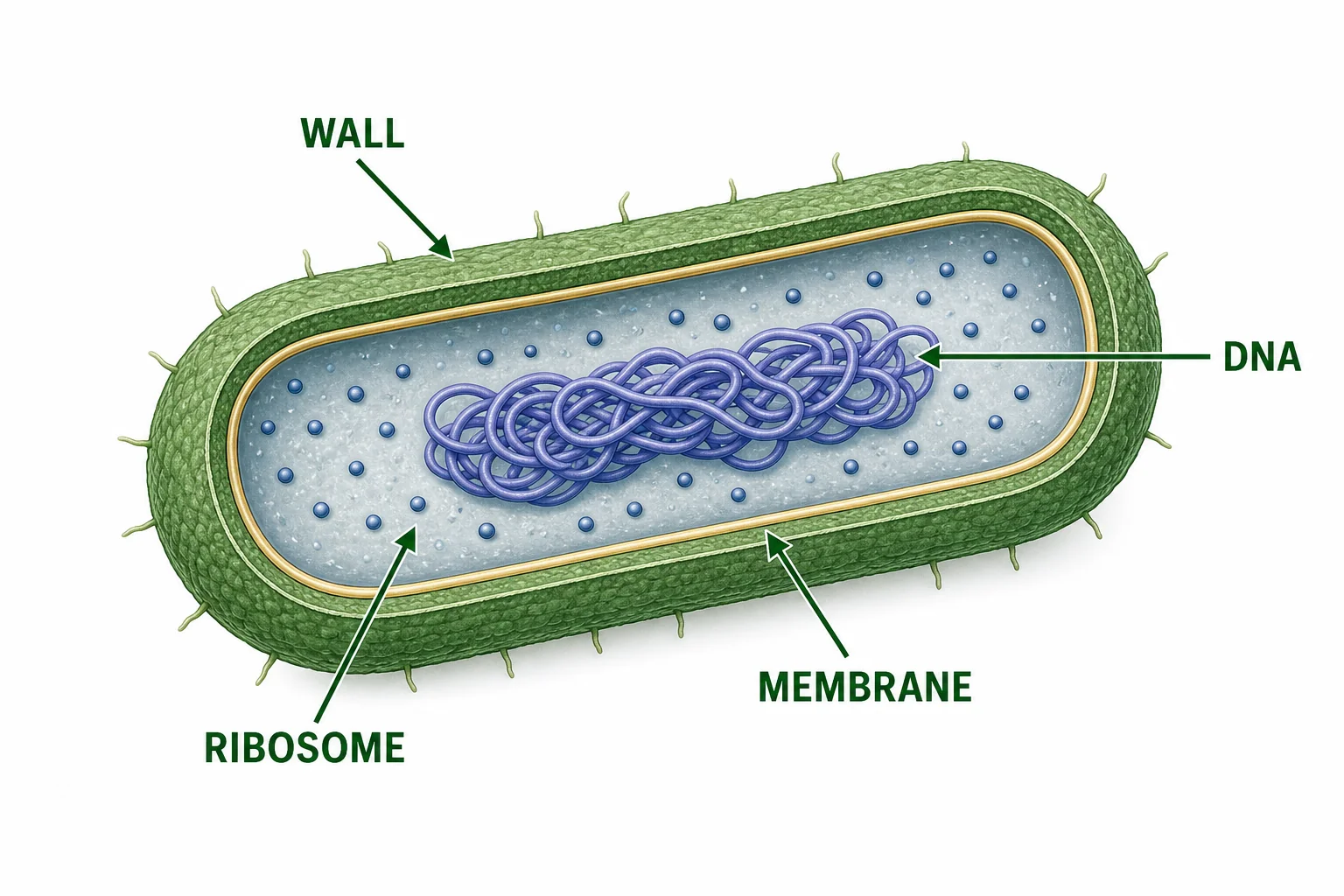
A useful antibiotic target is important to bacteria and different from human cells.
Penicillin Weakens the Wall
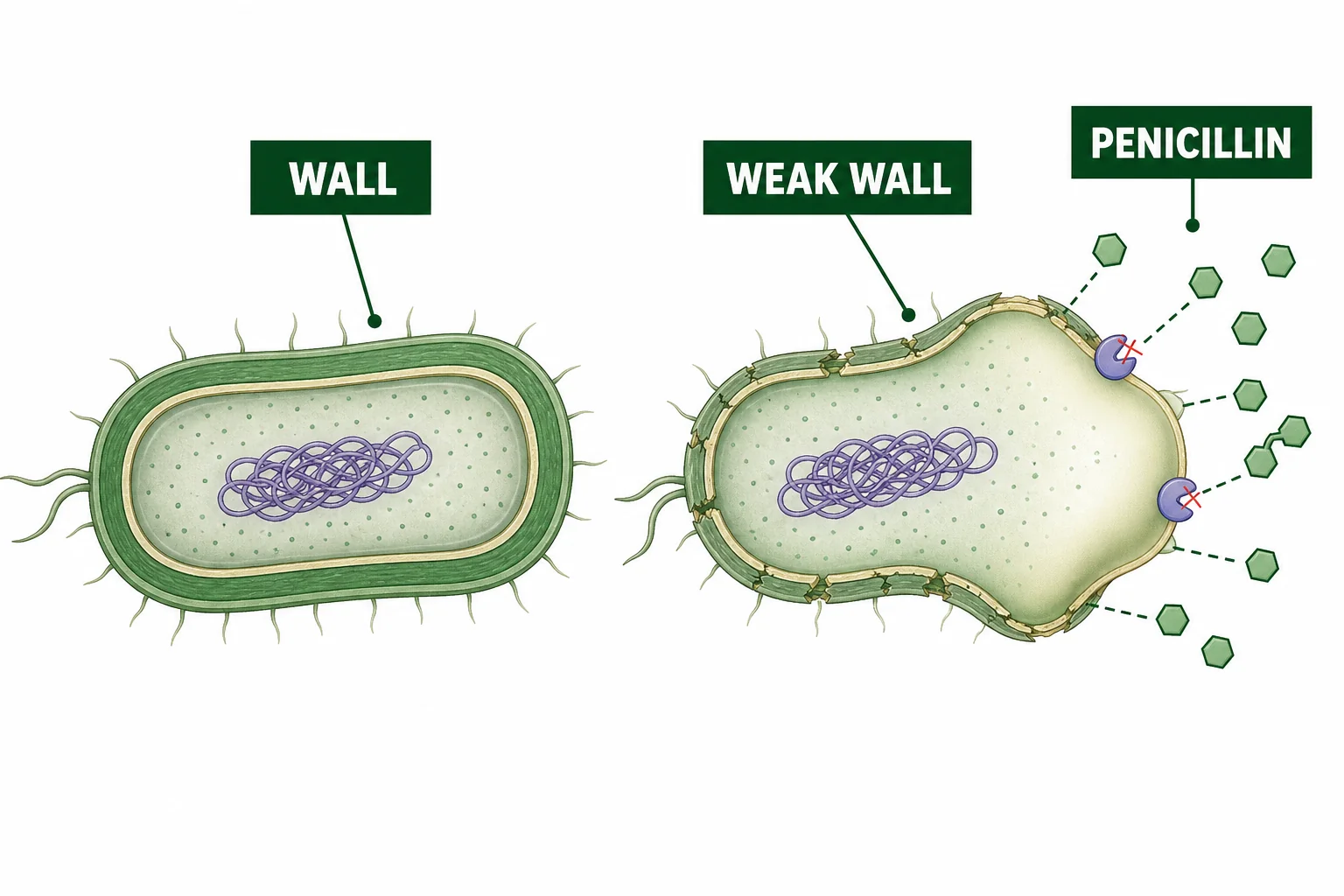
Penicillin can kill growing bacteria by making their cell walls fail.
Tetracyclines Block Protein Making
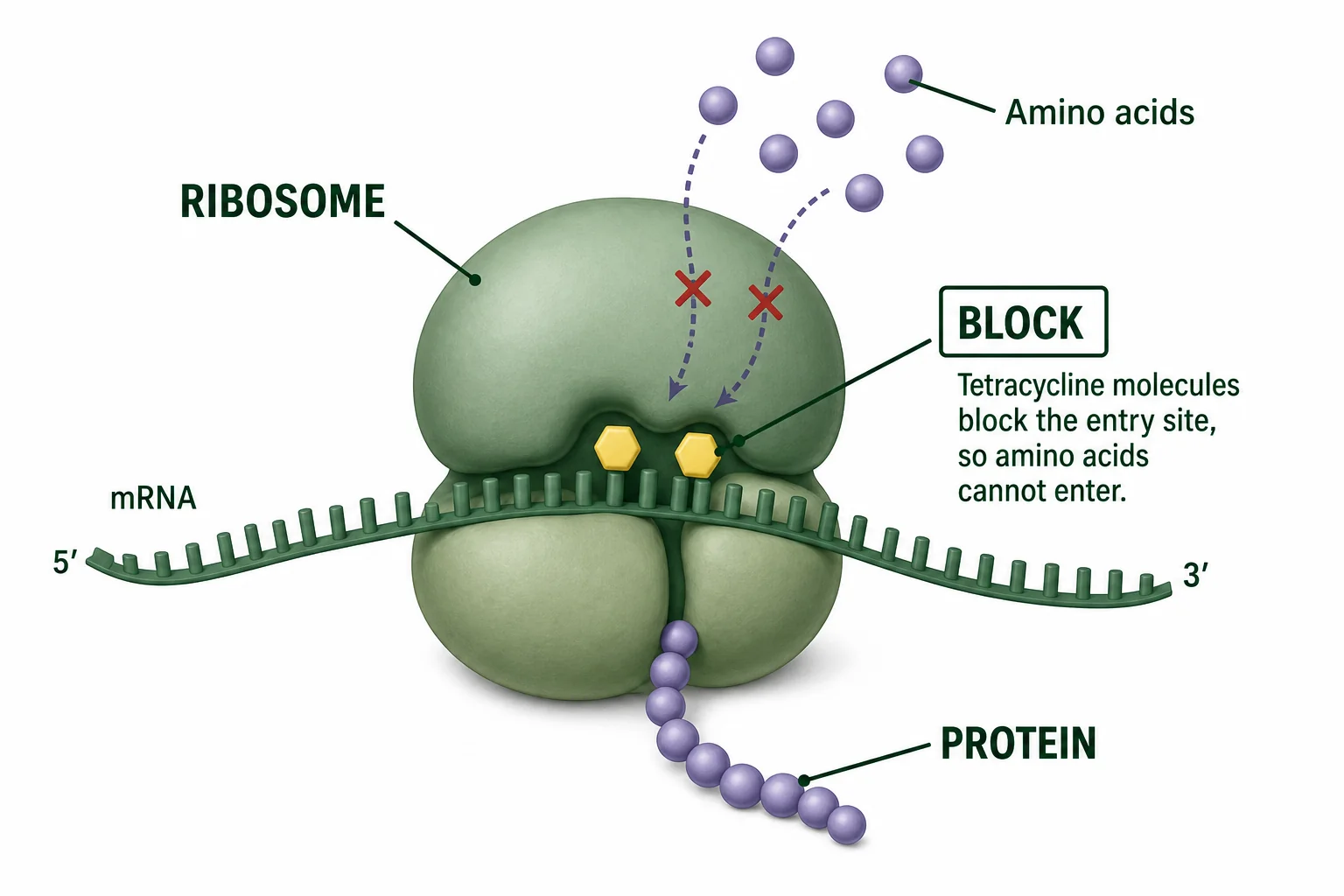
Blocking bacterial ribosomes stops the cell from making proteins it needs.
Viruses Are Not Bacteria
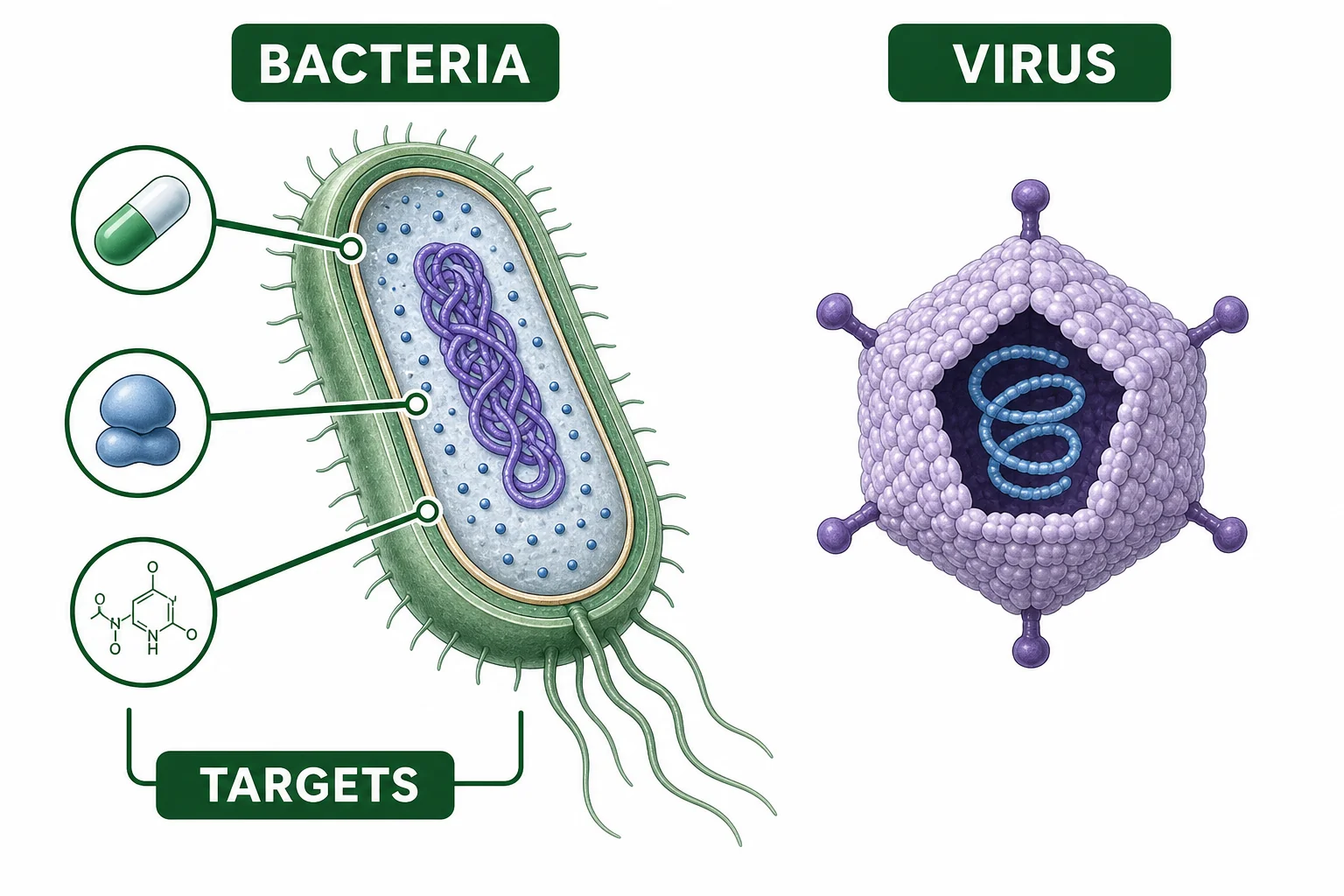
Antibiotics miss viruses because viruses lack bacterial targets.
Resistance Can Spread
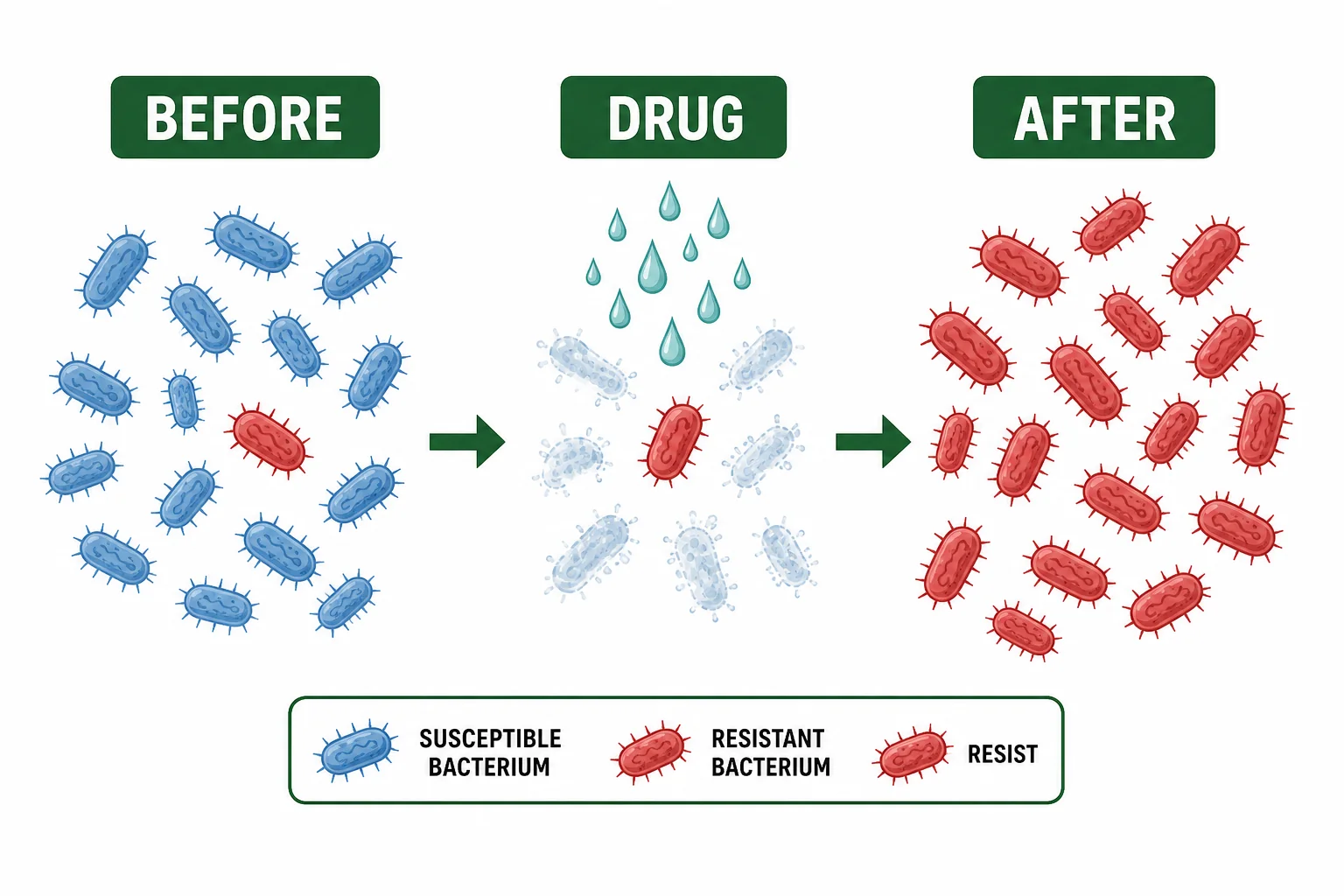
Resistance spreads when surviving bacteria pass on traits that protect them.
Vocabulary
- Antibiotic
- A medicine that kills bacteria or slows their growth.
- Cell wall
- A stiff outer layer that helps many bacteria keep their shape and resist bursting.
- Ribosome
- A cell structure that builds proteins from genetic instructions.
- Virus
- A noncellular infectious particle that must use a host cell to make more copies.
- Resistance
- The ability of bacteria to survive an antibiotic that would normally stop or kill them.
In the Classroom
Model a Cell Wall Failure
20 minutes | Grades 9-12
Students use a sealed plastic bag inside a mesh or paper sleeve to model a bacterium with a wall. They predict what happens when the sleeve is weakened and connect the model to penicillin and osmotic pressure.
Sort the Targets
25 minutes | Grades 9-12
Students sort cards showing bacterial structures, human cell structures, and virus features. They identify which antibiotic targets are present in bacteria but missing in viruses.
Simulate Resistance Selection
30 minutes | Grades 9-12
Students use colored beads or paper dots to represent susceptible and resistant bacteria. After each antibiotic round, survivors reproduce, making selection visible over several generations.
Key Takeaways
- • Antibiotics work by blocking essential processes in bacterial cells.
- • Penicillin weakens bacterial cell walls, which can cause growing bacteria to burst.
- • Tetracyclines block bacterial ribosomes and slow or stop protein production.
- • Antibiotics do not work on viruses because viruses do not have bacterial cell machinery.
- • Resistance spreads when bacteria with protective traits survive and reproduce.