Practice explaining how enzymes work, how metabolic pathways are regulated, and how changes in conditions affect reaction rates in living systems.
Read each problem carefully. Answer in complete sentences and show your reasoning when needed.
How enzymes speed reactions and organize metabolism
Biology - Grade 9-12
- 1
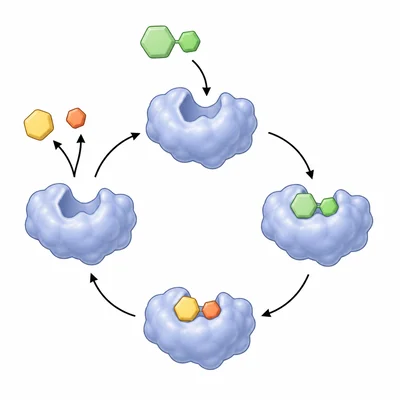
Define an enzyme and explain its role in a chemical reaction in cells.
- 2
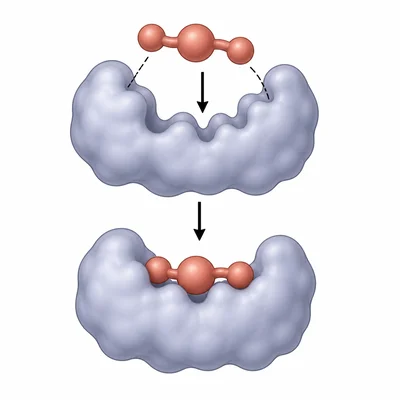
Describe what happens at an enzyme's active site when a substrate binds.
- 3
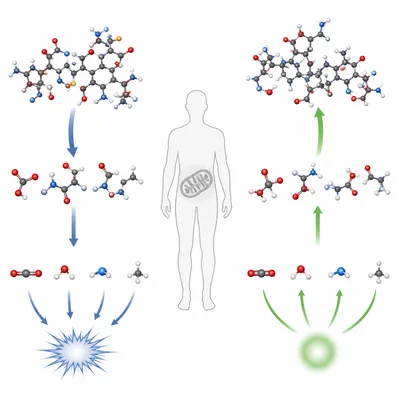
Explain the difference between catabolic pathways and anabolic pathways.
- 4
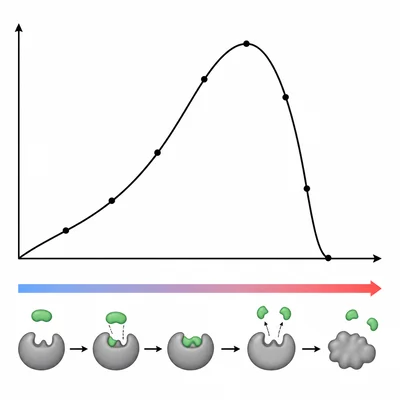
A graph shows enzyme activity increasing as temperature rises from 10 degrees C to 37 degrees C, then dropping sharply above 45 degrees C. Explain why this pattern occurs.
- 5
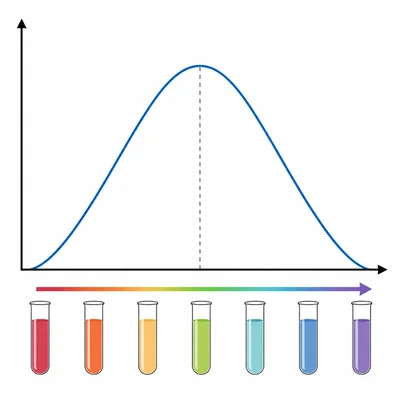
How does pH affect enzyme function, and why does each enzyme have an optimal pH range?
- 6
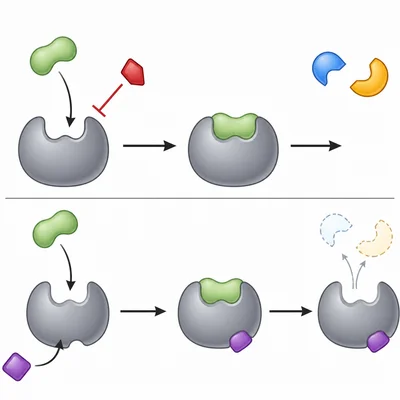
Compare competitive inhibition and noncompetitive inhibition.
- 7
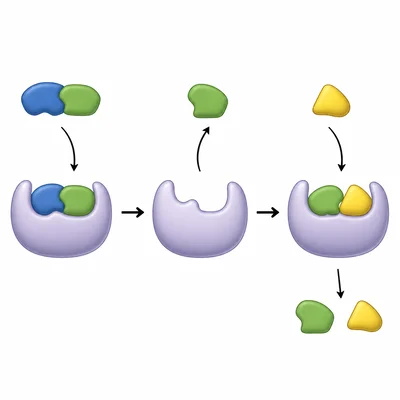
In a metabolic pathway, the product of one reaction often becomes the substrate for the next reaction. Explain why this arrangement is useful for cells.
- 8
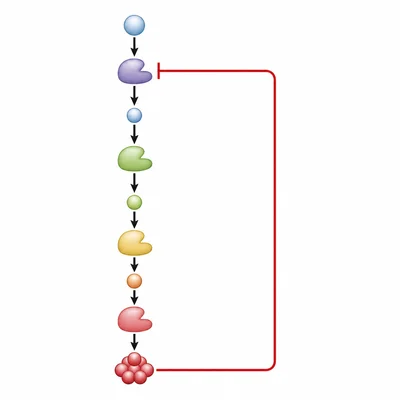
What is feedback inhibition in a metabolic pathway, and how does it help maintain homeostasis?
- 9
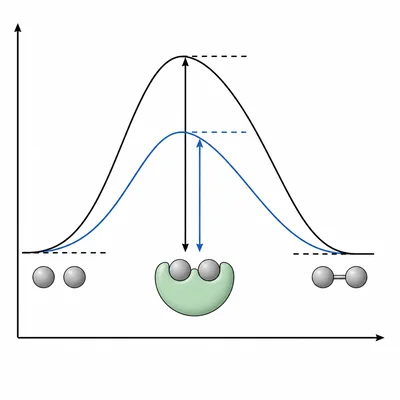
A student says, "Enzymes add energy to reactions so products can form." Correct this statement.
- 10
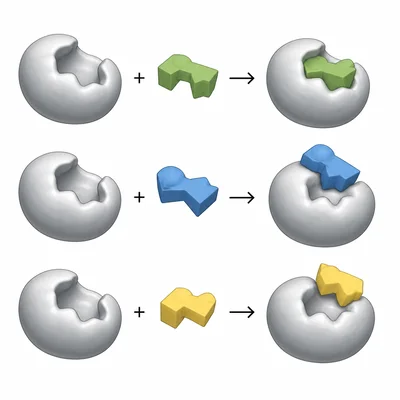
Explain why enzyme specificity is important in living organisms.
- 11
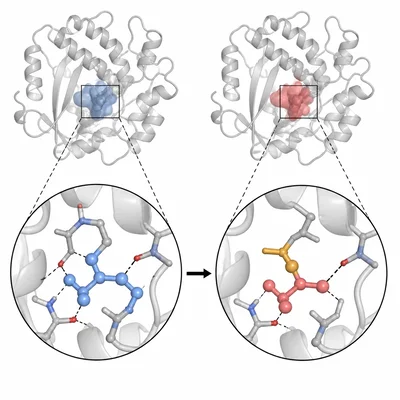
A mutation changes the amino acid sequence of an enzyme near its active site. Predict one possible effect on the enzyme's function and explain why.
- 12
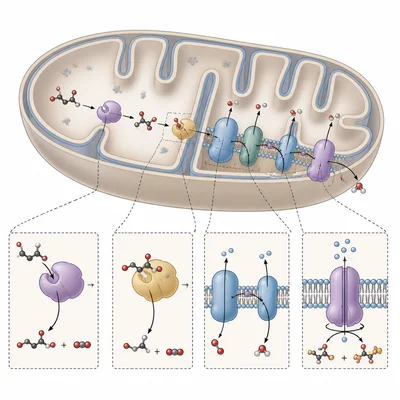
Cells use many enzymes in cellular respiration. Explain how enzymes help this process occur efficiently.