Practice distinguishing bacteria from viruses, explaining infection and immune responses, and understanding antibiotic action and resistance.
Read each problem carefully. Use complete sentences when explaining your reasoning. Show your work or evidence in the space provided.
Comparing microbes and explaining how antibiotics work
Biology - Grade 9-12
- 1
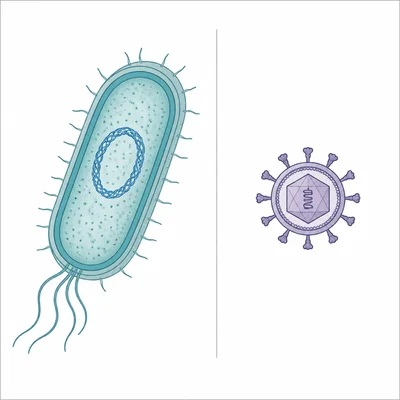
List three major differences between bacteria and viruses. Include differences in cell structure, reproduction, and response to antibiotics.
- 2
A patient has a sore throat, fever, and swollen lymph nodes. The doctor performs a rapid test before deciding whether to prescribe antibiotics. Explain why the doctor should test before giving antibiotics.
- 3

Describe binary fission in bacteria. Explain how this process can lead to a rapid increase in bacterial population size.
- 4
Viruses are often described as obligate intracellular parasites. Explain what this phrase means.
- 5
A student says, "Antibiotics kill viruses because viruses are germs." Write a correction to this statement using accurate biology vocabulary.
- 6
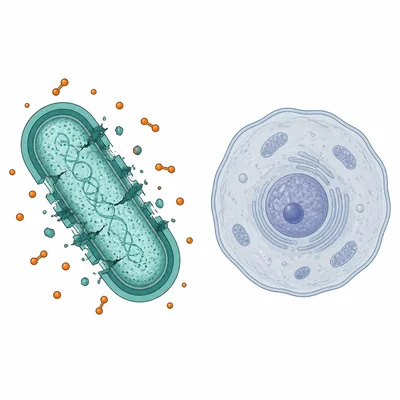
Penicillin interferes with bacterial cell wall formation. Explain why this can kill many bacteria but does not harm human cells in the same direct way.
- 7
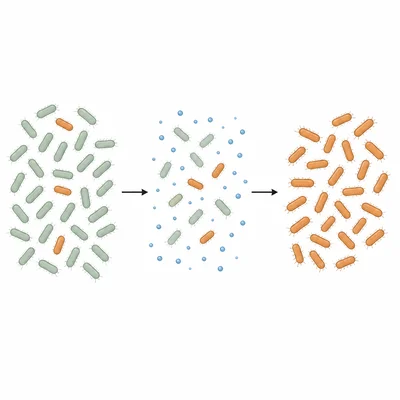
Explain how natural selection can lead to antibiotic-resistant bacteria in a population after antibiotic treatment.
- 8
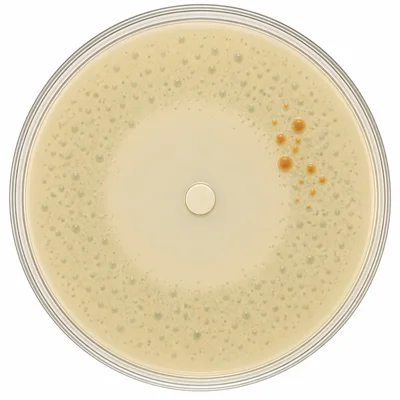
A culture plate is treated with antibiotic A. After 24 hours, most bacteria are gone, but a few colonies remain and continue growing. What is the most likely explanation, and what could happen if those colonies are allowed to reproduce?
- 9
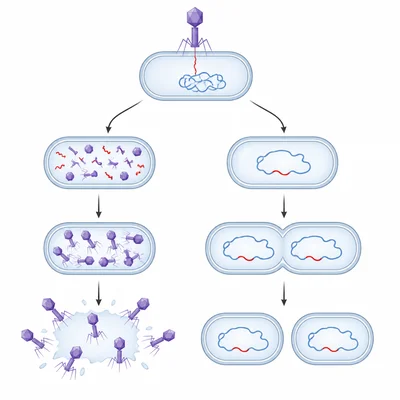
Compare the lytic cycle and the lysogenic cycle of viral reproduction.
- 10
Explain why completing a full course of prescribed antibiotics can help reduce the development of antibiotic resistance.
- 11

Some bacteria exchange plasmids through conjugation. Explain how plasmid transfer can contribute to antibiotic resistance spreading between bacterial cells.
- 12
A new medicine blocks a viral enzyme needed to copy viral RNA. Predict whether this medicine would be more useful against a bacterial infection or a viral infection, and justify your answer.