Sign in to save

Bookmark this page so you can find it later.

Sign in to save

Bookmark this page so you can find it later.

Biology elementary May 24, 2026

Why Do You Look Like Your Parents?

How families pass features from one generation to the next
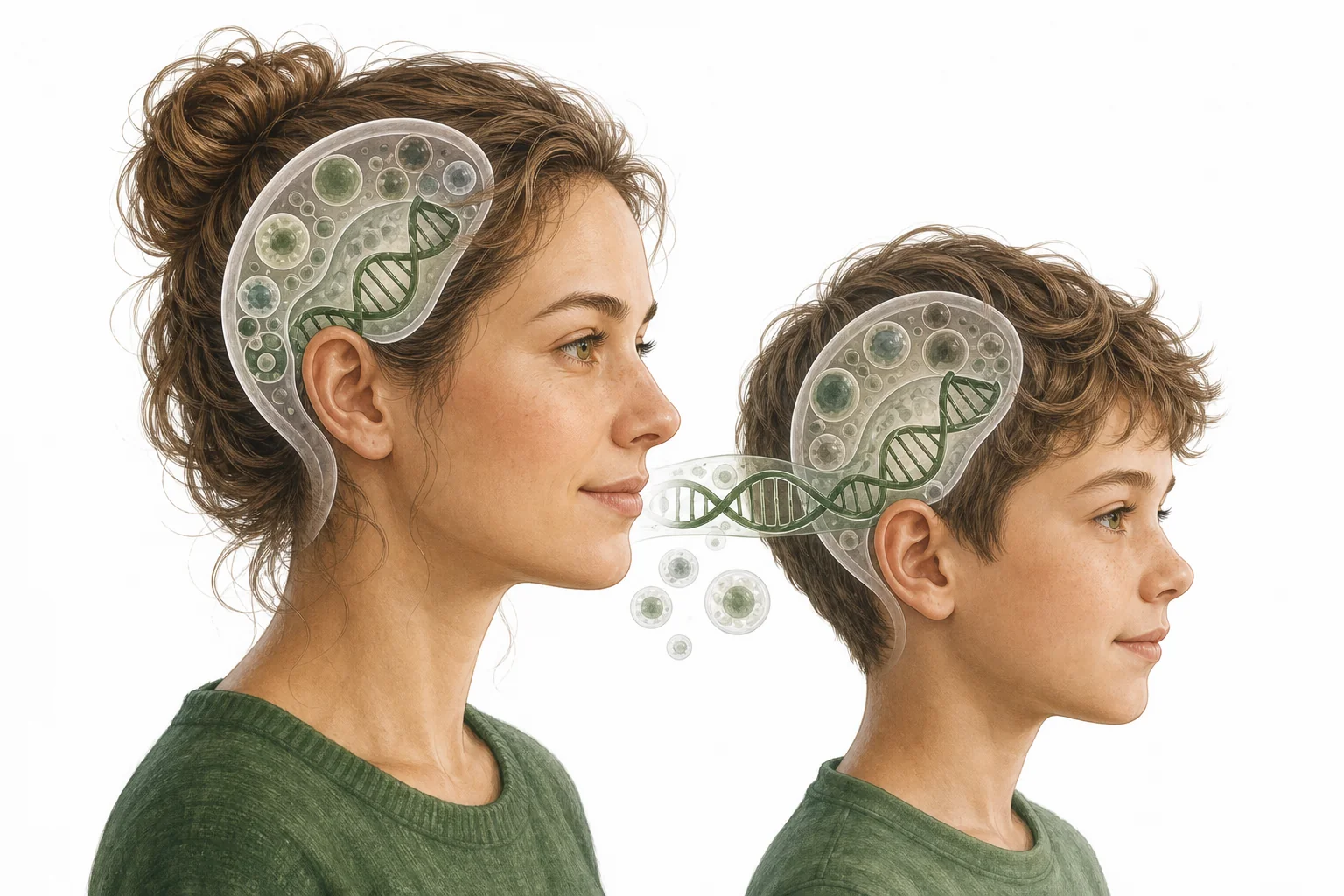
A child standing between two parents with simple DNA strands and shared features such as hair color and dimples shown nearby.

You look like your parents because they each pass tiny instructions to you. Those instructions help your body grow features like eye color, hair texture, and face shape. You get a mix, so you may look a little like one parent, the other parent, or both.

Big Idea. NGSS 3-LS3-1 explains that young plants and animals are like their parents in many ways, but not exactly the same.

Families often share clues. A child may have a parent’s curly hair, a grandparent’s freckles, or a sibling’s smile. These clues come from tiny instructions inside almost every cell in the body. The instructions are called DNA. DNA is packed into structures called chromosomes. A baby gets one set of chromosomes from each parent. Together, those two sets help guide how the baby grows. They do not control every detail. Food, sunlight, sleep, health, and chance also matter. That is why two siblings can have the same parents and still look different. In elementary science, this idea is called heredity. It means that living things pass many features to their young. This article explains how DNA, genes, and chromosomes work at a kid level, and why family members can look alike without being copies.

Tiny instructions in cells
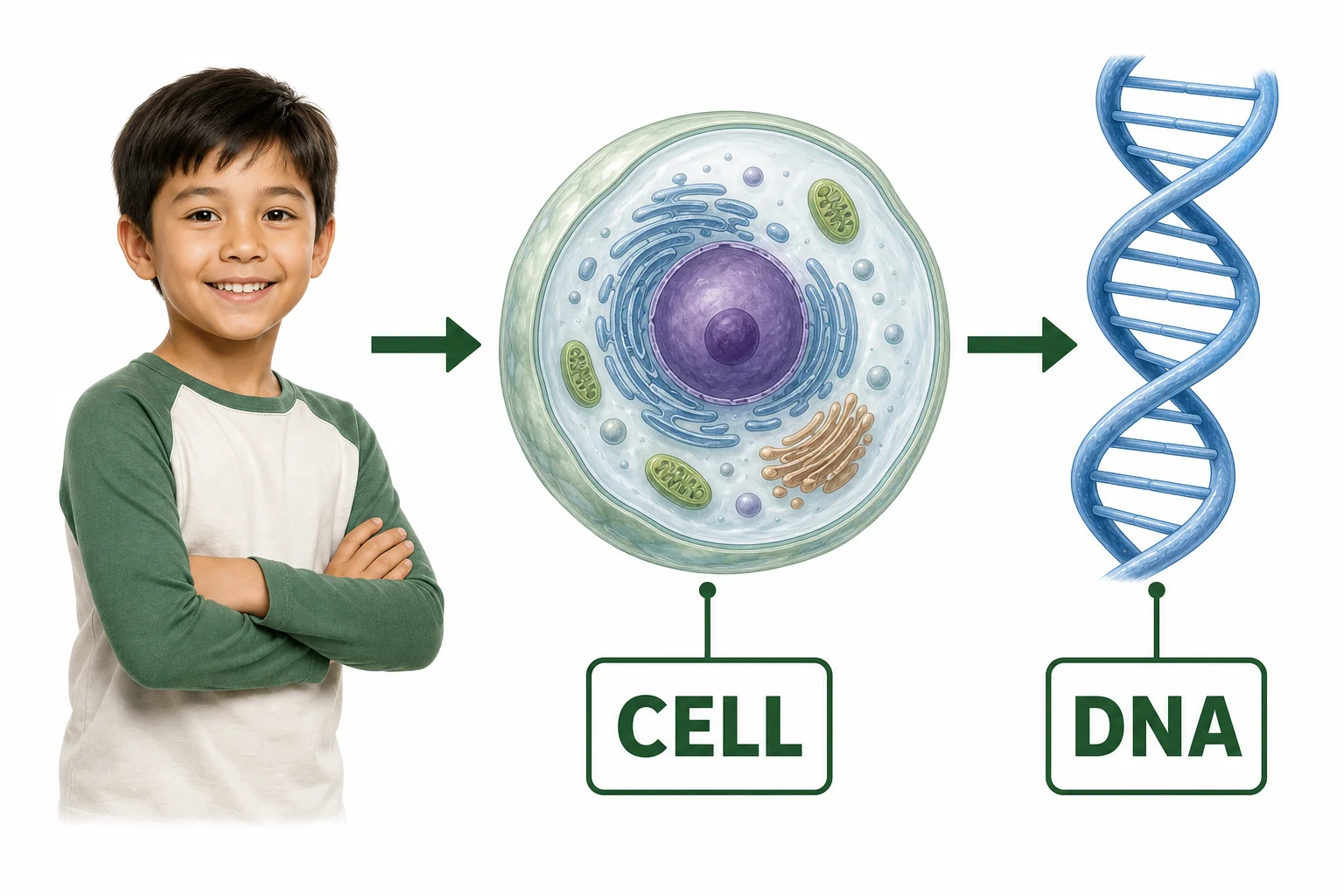
A simple diagram shows a child, a zoomed-in body cell, and a DNA strand inside the cell.
DNA is stored inside cells
Your body is made of tiny parts called cells. Most cells hold a set of instructions that help your body grow and work. These instructions are DNA. DNA is not something you can see with your eyes. It is much too small. Scientists often draw DNA like a twisted ladder because that shape helps explain how it stores information. Different parts of DNA give different instructions. Some instructions help build eye color. Some help guide hair type. Some help your body make parts that you never notice, like proteins that help cells do their jobs. DNA does not act like a single recipe for one feature. Many features are shaped by several instructions working together. The result is a body that has many family patterns, but also its own mix.

DNA is a tiny instruction set found inside most body cells.

You get half from each parent
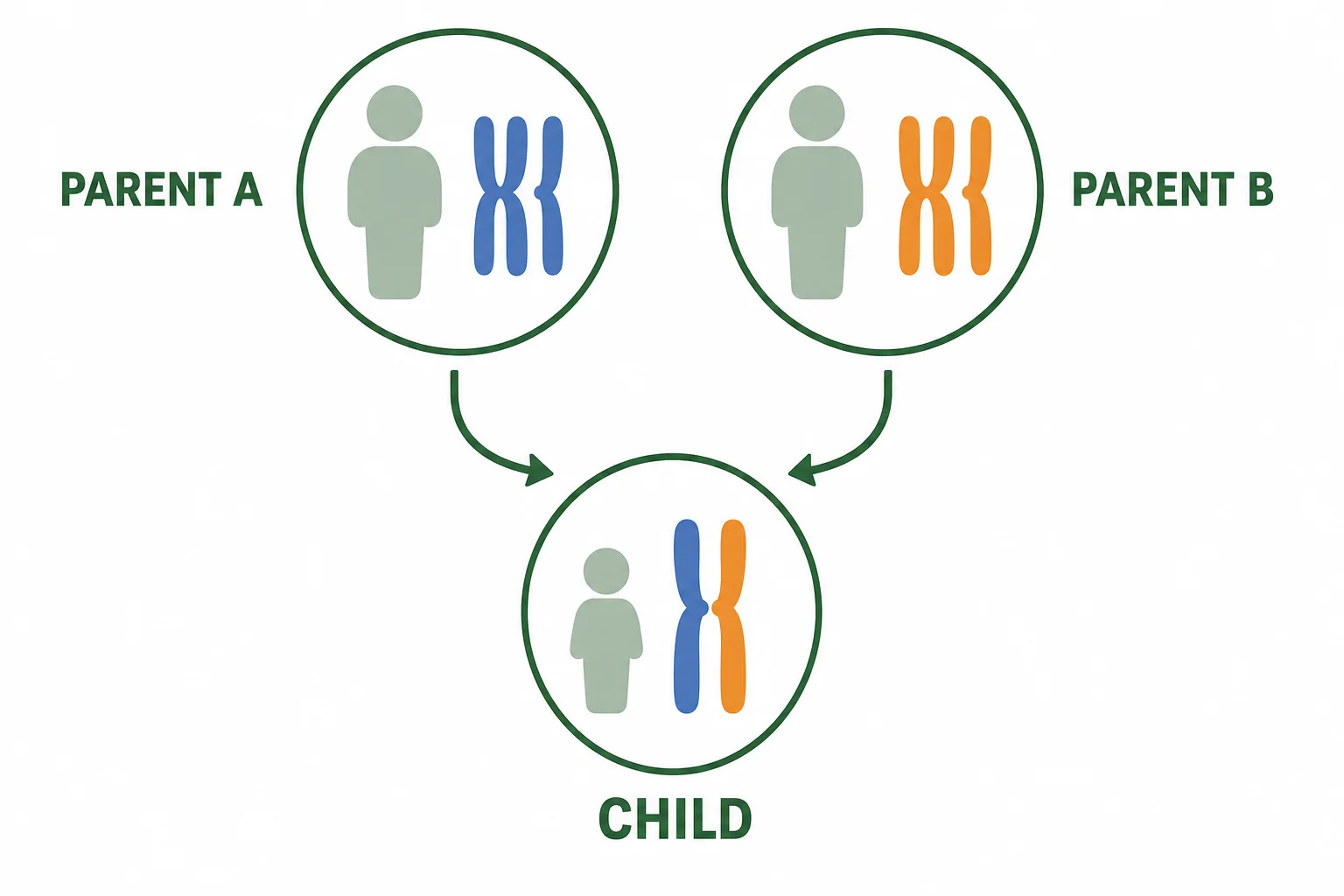
A diagram shows chromosomes from two parents joining to form chromosome pairs in a child.
Each parent gives one set
DNA is packed into bundles called chromosomes. Humans usually have 46 chromosomes in most body cells. They come in pairs. For each pair, one chromosome came from the egg parent and one came from the sperm parent. That means you get a set from each biological parent. The two sets work together as you grow. This is one reason you may share a chin shape with one parent and hair color with another. It is also why siblings can be different. Each child gets a new mix of chromosomes from the same two parents. The mix is not chosen by the child or the parents. It happens during the making of egg and sperm cells. The final mix is one of many possible combinations.

A child receives one chromosome from each parent for every pair.

Genes guide features
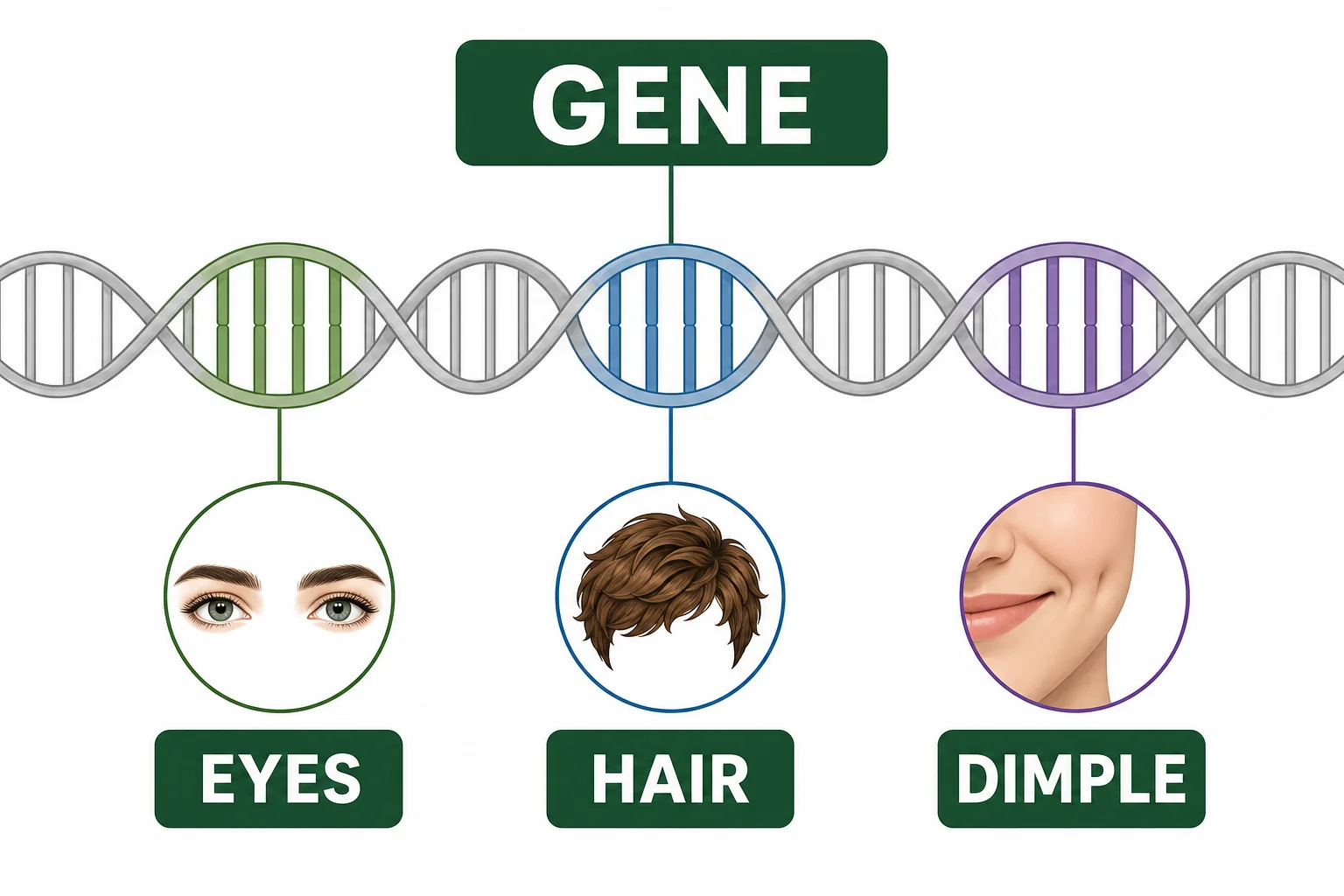
A DNA strand has small highlighted gene sections connected to simple feature icons such as hair, eyes, and dimples.
Genes are parts of DNA
A gene is a small part of DNA that gives a specific kind of instruction. Genes help guide features in living things. Scientists call these features traits. In people, traits can include attached or free earlobes, dimples, hair texture, and many other body patterns. Some traits are easy to notice. Others happen inside the body and cannot be seen. Genes are not tiny switches that always make one simple result. Many traits are affected by more than one gene. Some are also affected by the environment. For example, a person’s height is shaped by genes, but food, health, and sleep can matter too. This makes heredity more like a set of guiding instructions than a perfect copy machine.

Genes are DNA sections that help guide traits.

Dominant and recessive patterns
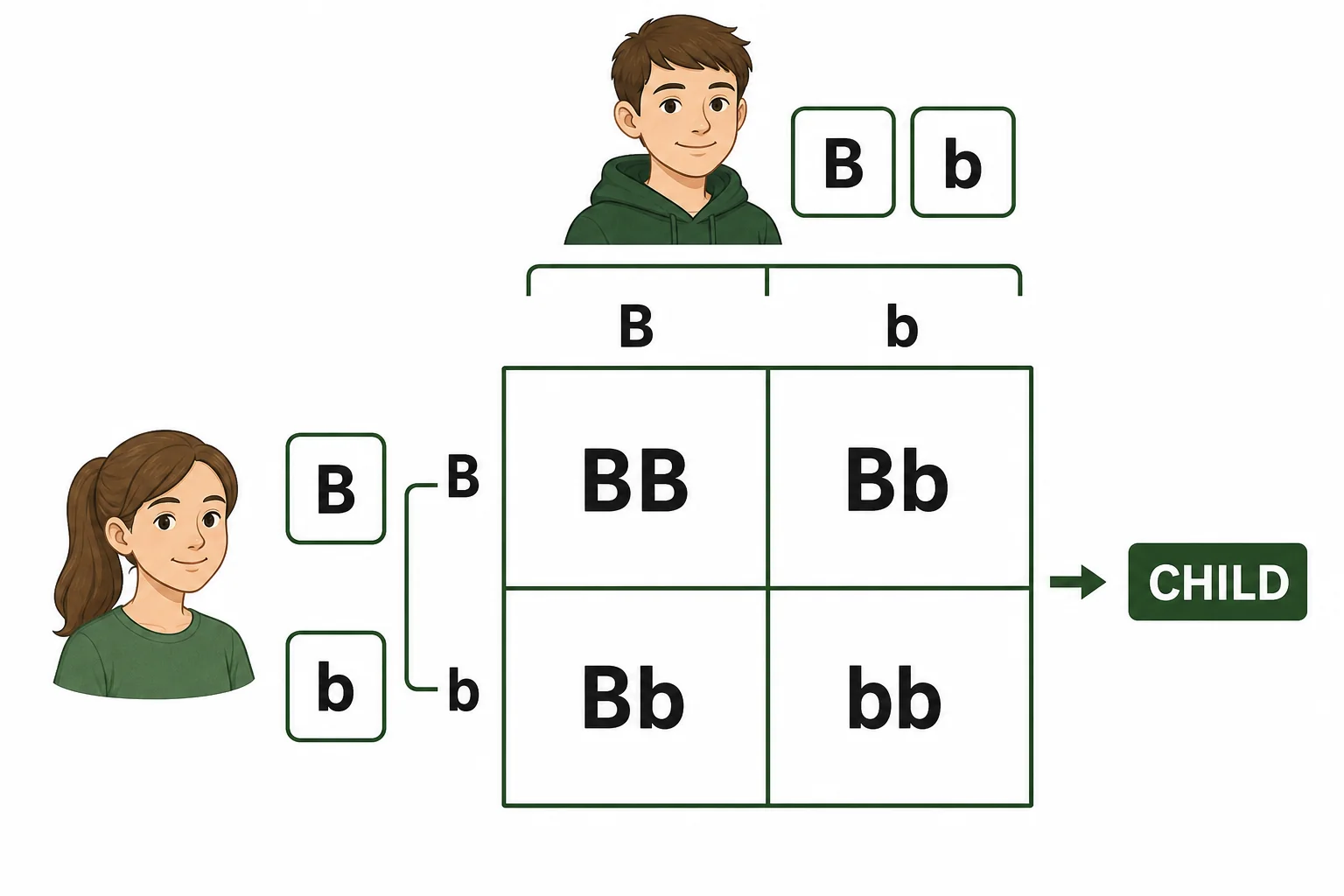
A simple four-box inheritance chart shows how two parents can pass dominant and recessive gene versions to a child.
Some traits follow simple patterns
For some traits, the two gene copies in a pair can work in a pattern that scientists call dominant and recessive. A dominant version can show its effect even if there is only one copy. A recessive version usually shows its effect only when both copies are recessive. A common classroom model uses letters. A capital letter can stand for a dominant version. A lowercase letter can stand for a recessive version. This model helps students see why a child may have a trait that one parent does not show. It is a model, not the whole story. Many human traits do not follow a simple dominant and recessive pattern. Still, the model is useful for learning how parents can pass hidden instructions to children.

A hidden gene version can be passed on even when a parent does not show that trait.

Same parents, different mix
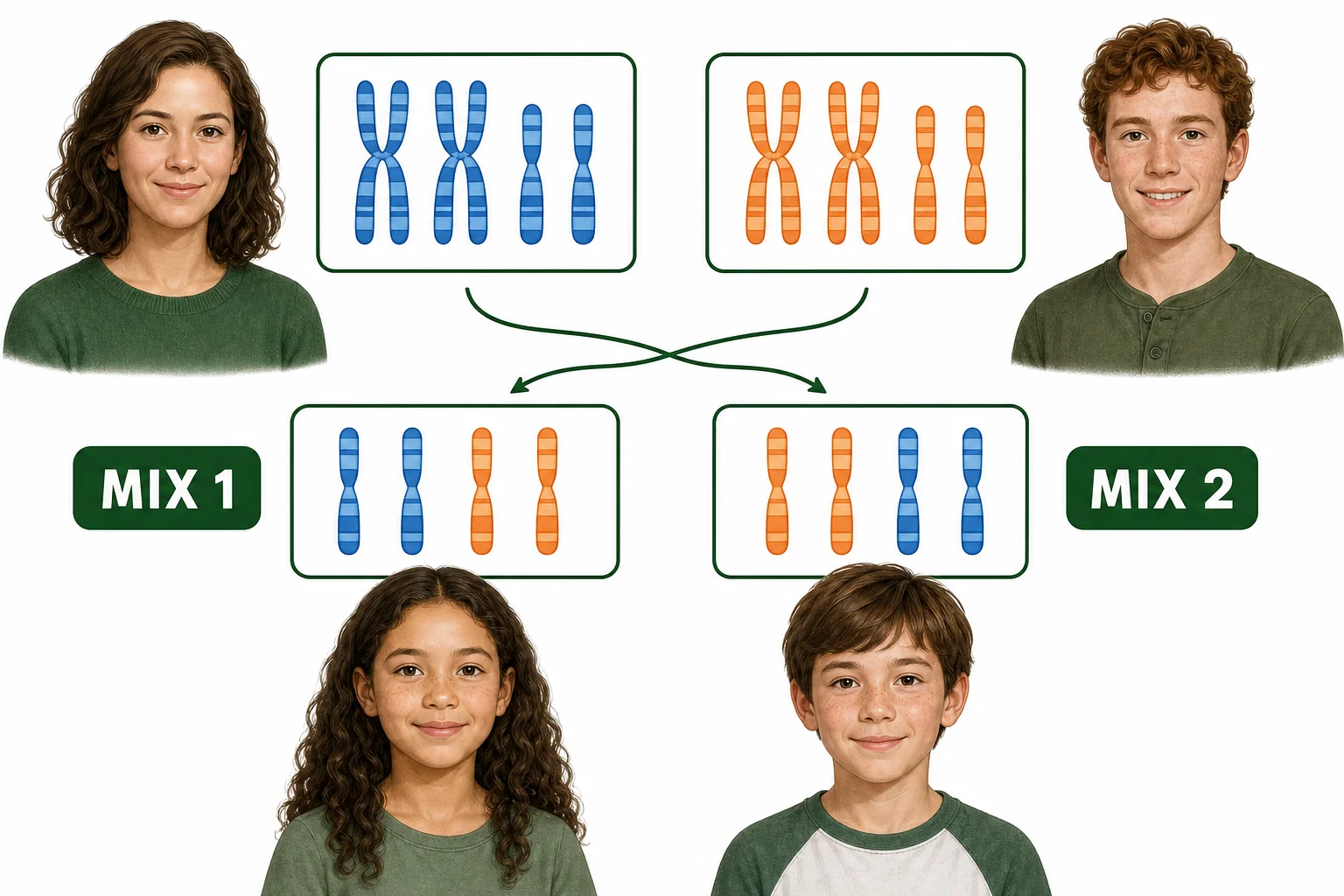
Two siblings are shown with some shared features and some different features, with chromosome cards from the same parents mixed differently.
Siblings get different mixes
Brothers and sisters can look alike because they get instructions from the same two parents. They can also look different because each child gets a different mix. Imagine shuffling two decks of cards and dealing a new hand each time. The cards come from the same decks, but the hands are not the same. In a family, one child may get more instructions connected to straight hair. Another may get more instructions connected to curly hair. One child may have freckles and another may not. This does not mean one child got more from a parent overall. It means the mix for each trait can be different. Heredity creates family resemblance and family variety at the same time.

Family members can be similar without being identical.

Vocabulary

DNA
The tiny instruction material inside most cells that helps living things grow and work.
Gene
A section of DNA that helps guide a trait or a body process.
Chromosome
A packed bundle of DNA. Humans usually have chromosomes in pairs.
Trait
A feature of a living thing, such as hair color, freckles, or leaf shape.
Heredity
The passing of traits from parents to their young.
Dominant
A gene version that can show its effect when only one copy is present in a simple inheritance model.

In the Classroom

Family Trait Tally

20 minutes | Grades 3-5

Students make a class tally of easy-to-observe traits such as dimples, freckles, or widow’s peak only if students are comfortable participating. The class compares patterns and discusses why classmates can share traits without being related.

Chromosome Card Mix

25 minutes | Grades 3-5

Give pairs of students two sets of colored cards to represent chromosomes from two parents. Students deal one card from each color into pairs, then compare how different children can get different mixes.

Dominant and Recessive Bean Model

30 minutes | Grades 4-5

Use two colors of beans to model two gene versions. Students draw two beans from a cup and record which simple trait would show in the model.

Key Takeaways

  • Children look like their parents because parents pass DNA to their young.
  • DNA is packed into chromosomes, and children get one set from each biological parent.
  • Genes are parts of DNA that help guide traits.
  • Some traits can be modeled with dominant and recessive gene versions.
  • Siblings can look different because each child gets a different mix of instructions.