Genetics & Punnett Square Calculator
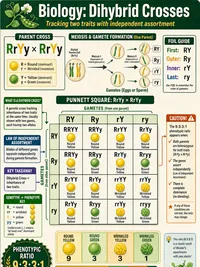
Generate Punnett squares for genetic crosses. Supports monohybrid (one gene), dihybrid (two genes), incomplete dominance, and sex-linked inheritance. See color-coded genotypes, phenotype ratios, and step-by-step analysis.
Punnett Square2×2
Controls
Cross Summary
Genotype Ratios
| Genotype | Count | Fraction | Probability |
|---|---|---|---|
| aa | 1 | 25.0% | |
| Aa | 2 | 50.0% | |
| AA | 1 | 25.0% |
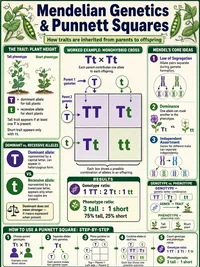
Genotype ratio 1:2:1
Phenotype Ratios
Phenotype ratio 3:1
Step-by-Step
Open this tool with your own values
This tool reads its inputs from the page address, so a link can open it with the values from a problem already entered. Include every value the problem needs, because one left out keeps the tool's default. Use plain numbers in the stated units.
- mode
- monohybrid or dihybrid
- p1
- genotype of parent 1, such as Aa or AaBb
- p2
- genotype of parent 2
Example links
Reference Guide
Mendelian Genetics
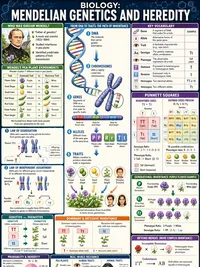
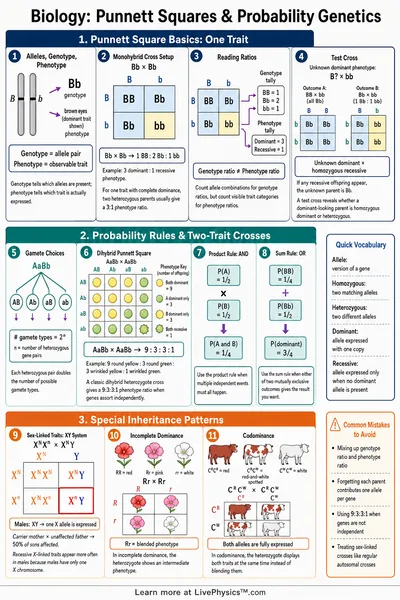
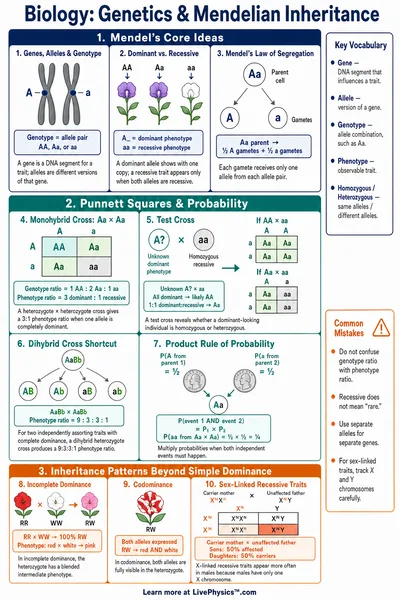
Gregor Mendel discovered that traits are passed from parents to offspring through discrete units called genes. Each organism carries two copies (alleles) of each gene, one from each parent.
Dominant alleles (uppercase, like A) mask the effect of recessive alleles (lowercase, like a). A heterozygous individual (Aa) shows the dominant phenotype.
Punnett Squares
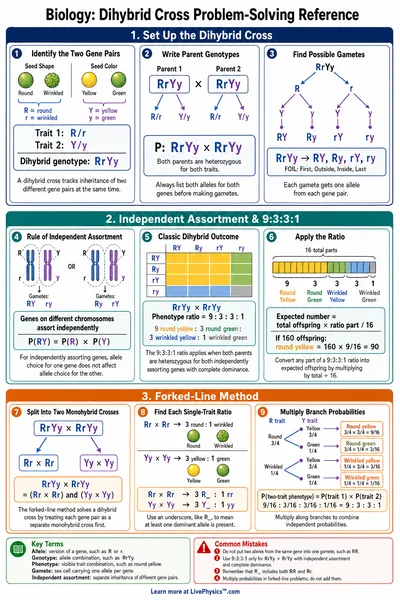
A Punnett square is a grid that predicts the genotypes of offspring from a genetic cross. Parent gametes line the top and left sides, and each cell shows one possible offspring genotype.
Incomplete Dominance and Codominance
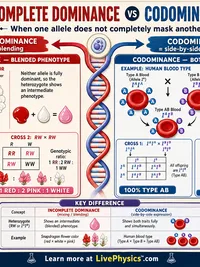
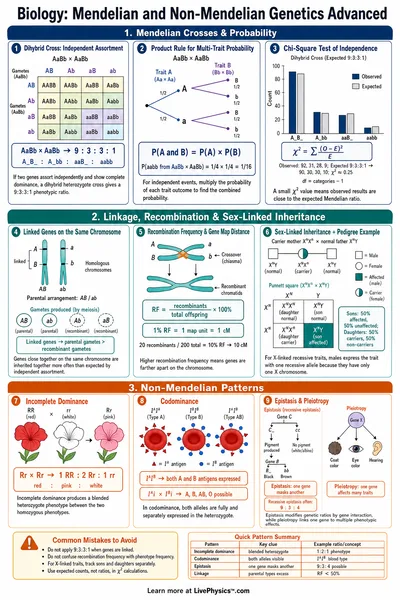
Not all traits follow simple dominance. In incomplete dominance, the heterozygote shows a blended phenotype between the two homozygous forms.
In codominance, both alleles are fully expressed (e.g., AB blood type where both A and B antigens appear).
Sex-Linked Inheritance
Genes located on the X chromosome follow X-linked inheritance patterns. Males (XY) have only one X, so a single recessive allele will be expressed.
Females can be carriers (heterozygous) without showing the trait. Males are either affected or unaffected because they carry only one X allele.