Inherited Traits & Variation Lab
Sort traits as inherited or learned, build a three-generation family trait tree, and count how variation appears across a litter of puppies. Aligned to NGSS 3-LS3-1.
Guided Experiment Inherited Traits Investigation
Which traits do you think offspring inherit from their parents? Which traits come from experience?
Write your hypothesis in the Lab Report panel, then click Next.
Controls
Explore how traits are inherited from parents. Sort traits into the correct bins, build a family trait tree, and count trait variation in a litter of puppies.
Sort the Traits
Read each trait card and click a button to sort it. Is this trait something a dog is born with (inherited), or something it learns through experience?
Data Table
(0 rows)| # | Offspring | Fur Color | Ear Type | Tail | Notes |
|---|
Reference Guide
What Is a Trait?
A trait is a feature or characteristic of a living thing. Traits describe how an organism looks, moves, or behaves. Examples include fur color, height, eye color, and the ability to roll your tongue.
Traits come from two sources, genes passed from parents (inherited), or experiences and the environment (learned or acquired).
Inherited vs. Learned Traits
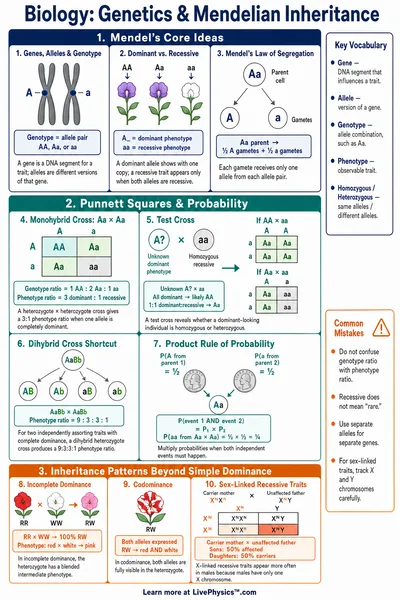
Inherited traits are passed from parents to offspring through genes. A puppy is born with its fur color, paw size, and ear shape already determined.
Learned traits develop through experience, training, or the environment. A dog learns its name, tricks, and fears after it is born.
- Inherited, fur color, eye color, tail length, paw size
- Learned, trained behaviors, name recognition, fear of thunder
Variation in a Species
Variation means that individuals within the same species look different from one another. Even puppies from the same litter can have different fur colors, ear shapes, or tail lengths.
This happens because each offspring inherits a random mix of traits from both parents. No two offspring receive exactly the same combination.
Why Variation Matters
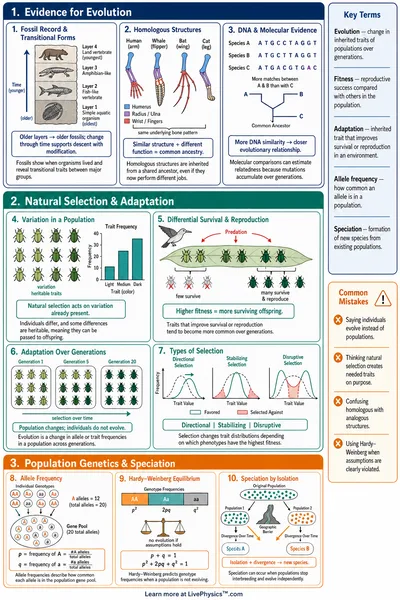
Variation is important for the survival of a species. When individuals differ, some may be better suited to changes in their environment.
For example, if the weather turns cold, animals with thicker fur may survive better than those with thin fur. Over many generations, helpful traits become more common in the population.
- Variation comes from the random mixing of parent genes
- More variation gives a species more ways to adapt
- This is a key idea in how life on Earth changes over time