Sign in to save

Bookmark this page so you can find it later.

Sign in to save

Bookmark this page so you can find it later.

Computer Science middle-school May 24, 2026

How Do Search Engines Find Answers So Fast?

The hidden prep work behind web search

A search box connected to a web of pages, word lists, and ranked results to show how search engines prepare answers before a query is typed.

A search engine does most of its work before you type. It makes a huge map of words and pages, then looks up your words in that map. It sorts the matching pages so the most useful ones are shown first.

Big Idea. CSTA 2-DA-08 connects to search because an inverted index transforms messy web data into a structure that computers can search quickly.

Typing three words into a search box can return millions of results in less than a second. That speed can feel surprising because the web is huge. A search engine is not reading the whole web after you press Enter. It has already sent programs to visit pages, save useful information, and build special lookup tables. The lookup table is like the index in the back of a book, but much larger. It points from each word to pages that contain that word. When your search has three words, the engine can compare three lists instead of opening billions of pages. Then it ranks the matches. Some pages are a better fit because they use the words clearly. Some are trusted because many other useful pages link to them. Fast search comes from preparation, smart data structures, and many computers working at once.

Crawlers make a web map
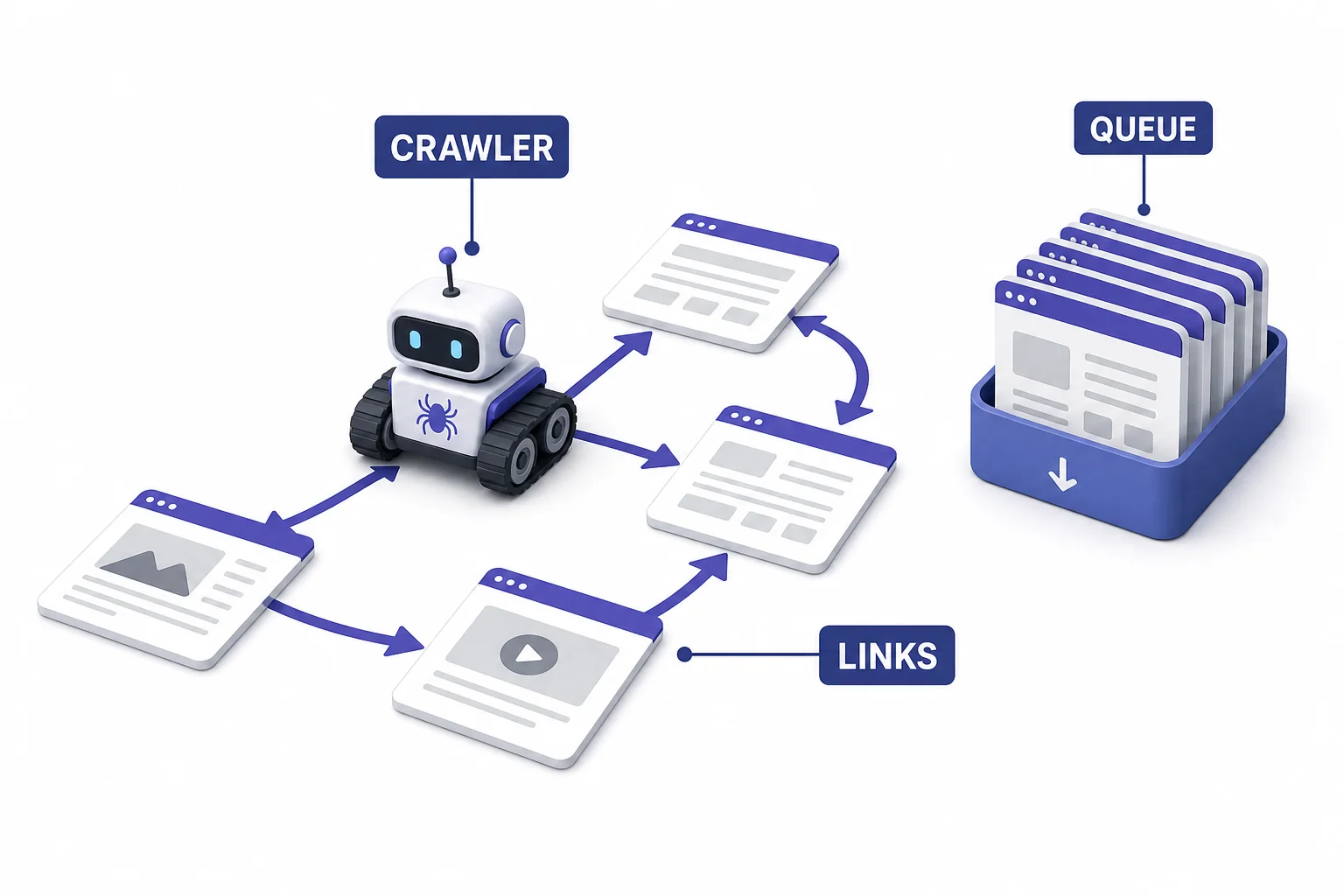
A crawler program visiting web pages by following links and adding newly found pages to a visit queue.
Crawlers follow links to discover pages
Search starts long before a person types. A search engine uses programs often called crawlers or spiders. A crawler downloads a page, reads its links, and adds new links to a list of places to visit. Then it repeats that process again and again. This is how the engine discovers pages across the web. The crawler also checks pages it has seen before, because websites change. News pages update. Stores add products. Schools move documents. The crawler has to be careful. It cannot visit every page every second. It follows rules that website owners publish and spends more time on pages that change often or seem important. Crawling is like making a changing map of a city. The map is never perfect, but it is useful enough to help the next step. That next step is turning page content into searchable data.

A crawler builds the search engine's working map of the web.

The index flips the page list
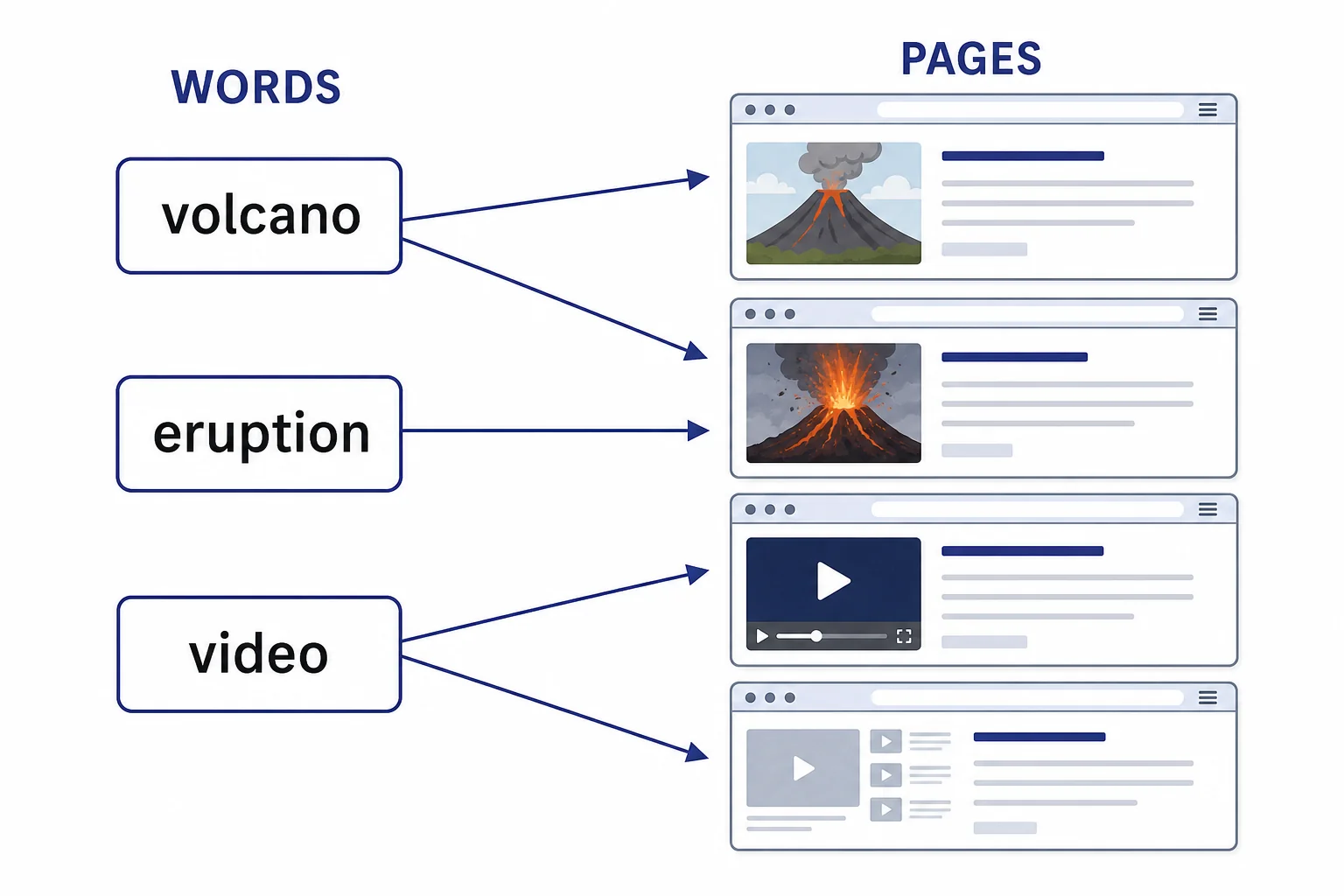
An inverted index showing words on the left and matching page cards on the right.
An inverted index points from words to pages
After crawling, the search engine stores what it learned in an index. A normal page list starts with a page and says which words are on it. An inverted index flips that idea. It starts with a word and lists the pages where that word appears. This makes search much faster. If you search for volcano eruption video, the engine does not scan every saved page. It looks up volcano, eruption, and video in the index. Each lookup returns a list of page addresses. The engine can compare those lists to find pages that match all three words or most of them. The index also stores clues. It may note whether a word appears in a title, a heading, or the main text. A word in a title can be a stronger clue than the same word in a footer.

The index changes the problem from reading pages to looking up word lists.

Three words narrow the search
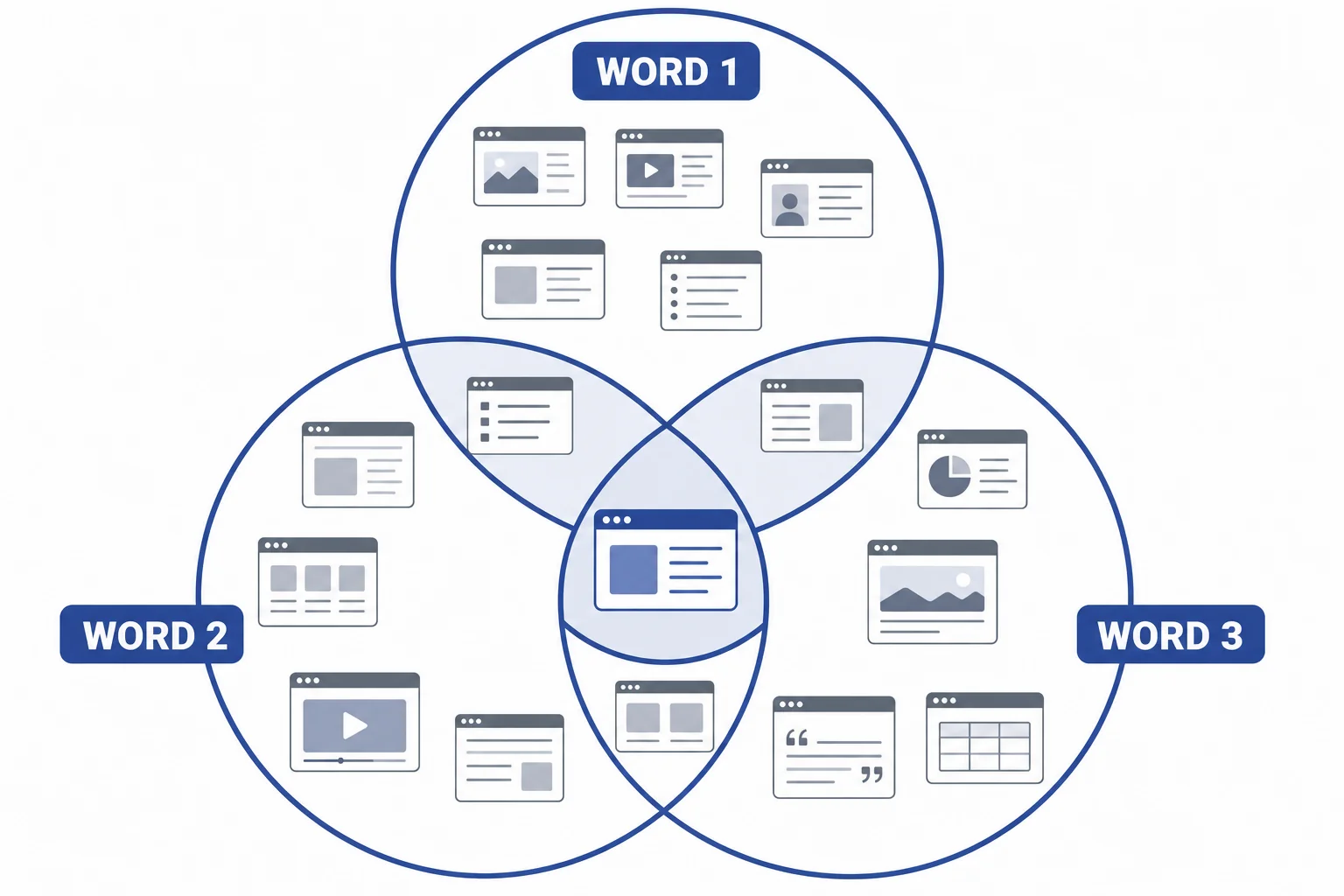
Three overlapping sets of pages showing that pages in the center match all query words.
The overlap gives the strongest matches
A short search can still match millions of pages because common words appear in many places. The speed comes from set operations. A set is a group of items. The search engine can treat each word's page list as a set. For a three word search, it finds pages in the overlap of those sets. Pages that contain all three words are strong matches. Pages with two words might still be useful, especially if the missing word has a similar meaning or the page has a close phrase. Search engines also remove or downplay very common words in some cases. Words like the, of, and and usually do not help much. The engine may also fix spelling, match word forms, and notice phrases. All of this happens on prepared data. That is why a search can feel instant even when the answer list is enormous.

A multiword search is often a fast comparison of prepared lists.

Ranking chooses the order
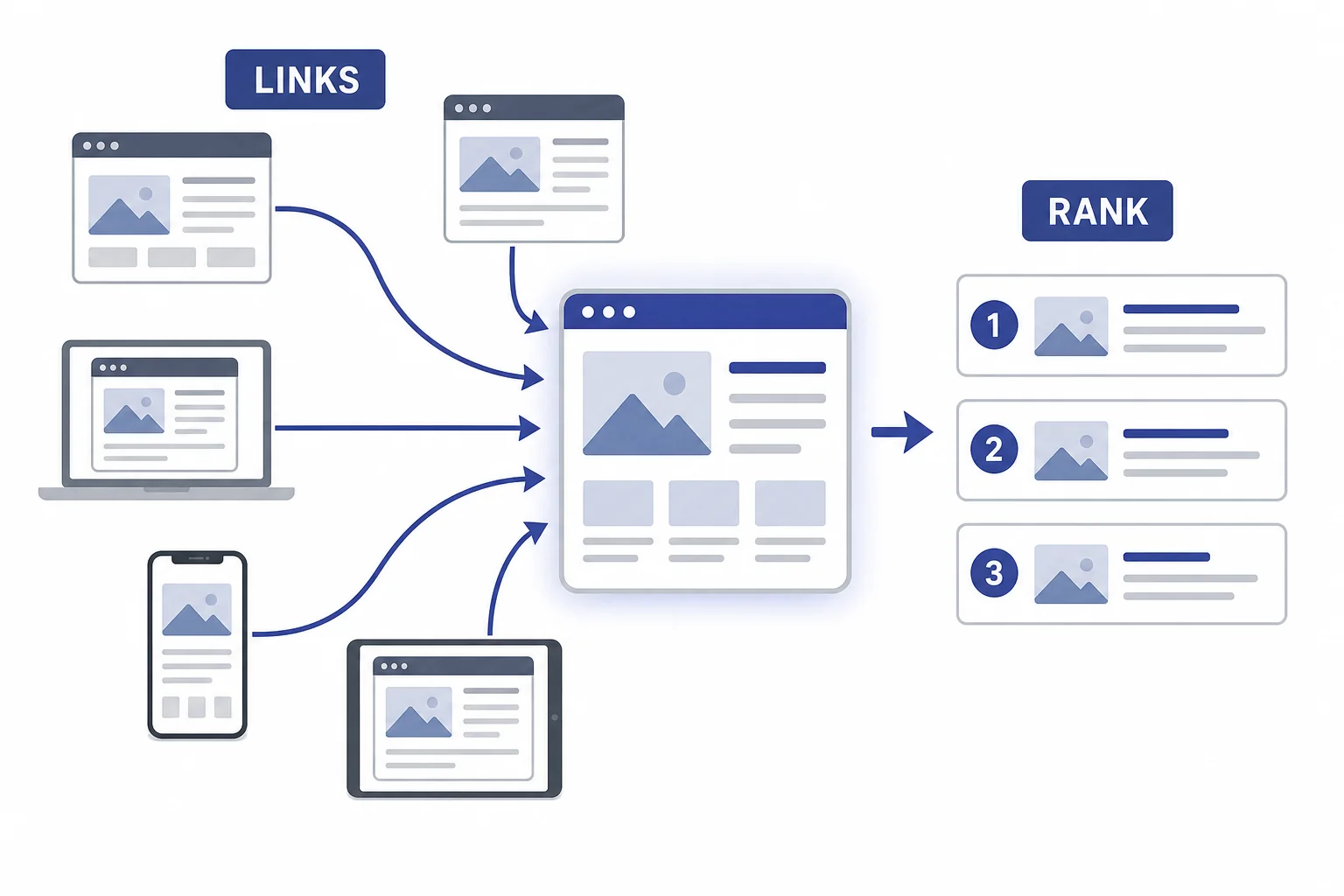
A network of pages where a central page receives links from several other useful pages, suggesting why it may rank higher.
Links help estimate which pages are useful
Finding matches is not enough. The search engine must decide which results go first. Ranking uses many signals. One signal is text match. A page that uses your words in a clear title may rank higher than a page that mentions them once. Another signal is freshness. A recent page may be better for a current event, but not for a history topic. A third signal is link structure. The PageRank idea treats a link like a vote of attention. A page linked by many useful pages may be useful too. Not every link counts the same. A link from a trusted, related page can matter more than a random link. Modern ranking systems use many more signals, but the basic idea is simple. Results are sorted so the first page is likely to answer the search well.

Ranking sorts matches by clues about usefulness and trust.

Speed comes from many shortcuts
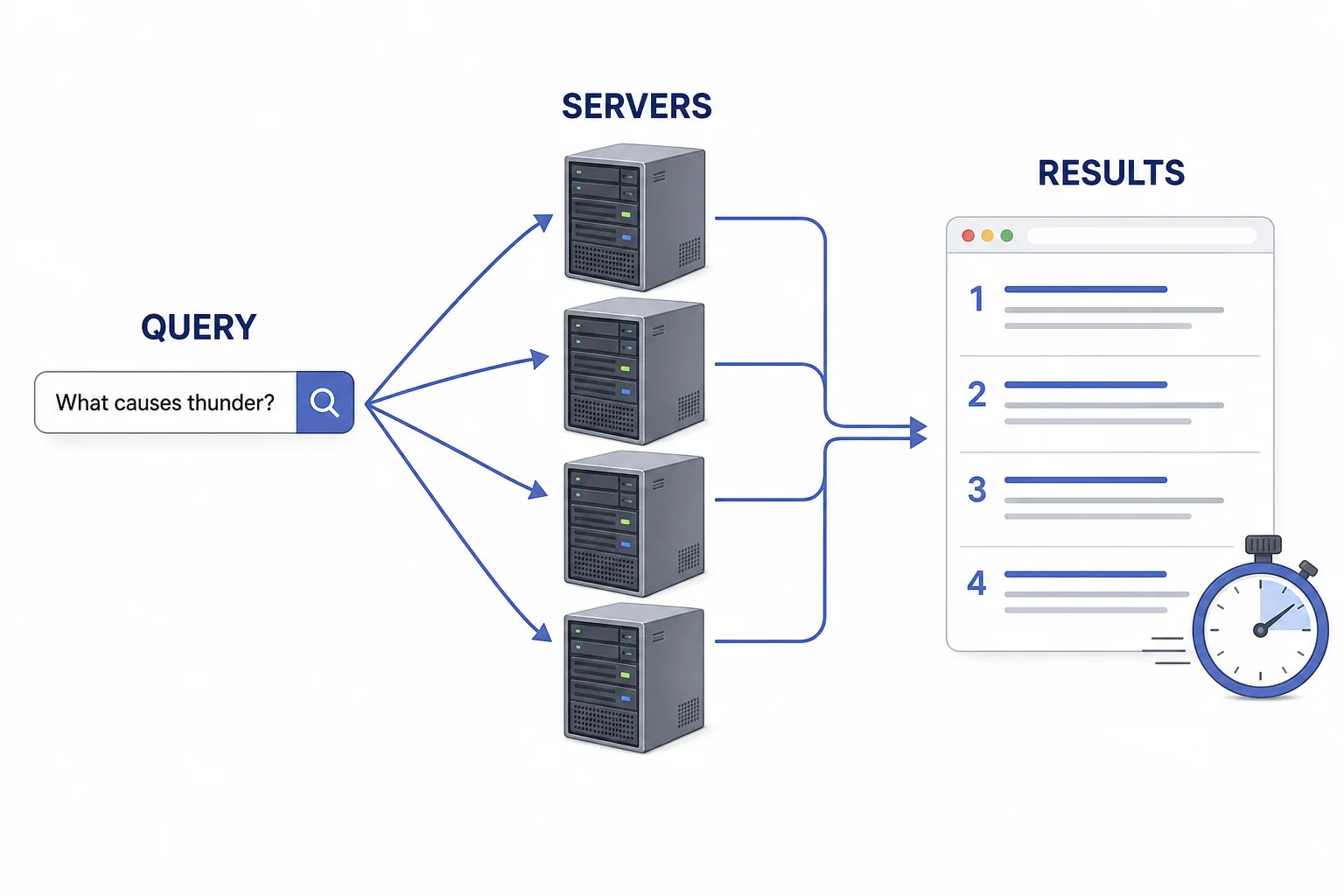
A query being split across several servers, then combined into a short ranked results page.
Many computers answer one search together
The last trick is scale. A large search engine does not keep one giant index on one computer. It splits the index across many machines in data centers. When you search, many machines can work on different pieces at the same time. Each machine returns its best matches. Another system combines the results, removes repeats, and sends a short list back to your screen. Search engines also store popular answers in fast memory. If many people search for the same event, the engine can reuse recent work. It may also predict what you are typing and prepare likely results before you finish. The time you see, such as 0.3 seconds, is the result of years of engineering. The engine prepared data in advance, divided the job, used fast lookup tables, and returned only a small result page first.

Parallel work turns a huge search into many smaller searches.

Vocabulary

Crawler
A program that visits web pages and follows links to discover more pages.
Index
A stored lookup system that helps a search engine find information quickly.
Inverted index
An index that starts with words and points to the pages that contain them.
Ranking
The process of sorting matching pages so the most useful results appear near the top.
PageRank
An early ranking method that used links between pages as clues about importance.
Query
The words a person types into a search engine.

In the Classroom

Build a classroom index

25 minutes | Grades 6-8

Give each group three short articles and ask students to list the important words in each article. Then have them flip the list so each word points to the article numbers where it appears. Students test the index by answering search prompts without rereading every article.

Rank with link votes

20 minutes | Grades 6-8

Create paper webpage cards and draw arrows between related cards. Students count incoming links, then discuss why not all links should have equal value. They compare a simple link count with a ranked result list.

Search speed race

15 minutes | Grades 6-8

One team searches a pile of cards one by one for three words. Another team uses a prepared word-to-card index. Students compare times and explain which data structure made the bigger difference.

Key Takeaways

  • Search engines prepare before you search by crawling pages and building indexes.
  • An inverted index points from each word to the pages that contain it.
  • A three word search can be handled by comparing prepared lists of matching pages.
  • Ranking uses clues such as word match, freshness, and links between pages.
  • Large search engines split the work across many computers to return results quickly.