Sign in to save

Bookmark this page so you can find it later.

Sign in to save

Bookmark this page so you can find it later.

Computer Science middle-school May 24, 2026

Why Do Passwords Need to Be Strong?

Small choices can change guesswork by trillions
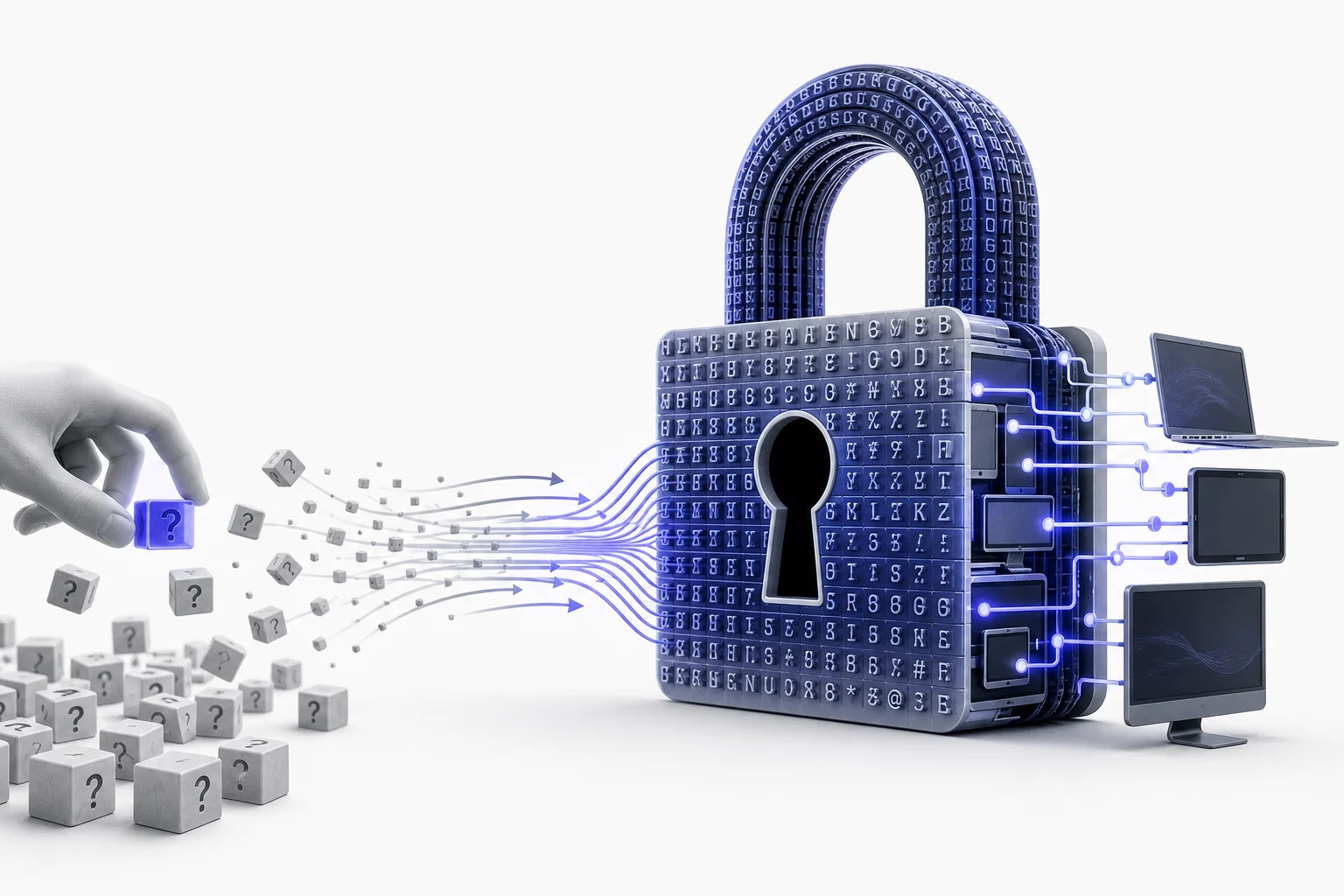
An educational illustration of a laptop login screen protected by a lock, with many possible password paths branching away from it.

Strong passwords are hard for computer programs to guess because they have many possible combinations. Long, random passwords usually work better than short passwords with common words or patterns. Sites also protect passwords by storing scrambled versions, so stolen files are less useful.

Big Idea. CSTA 2-NI-05 connects strong passwords to the broader idea that digital security measures protect electronic information.

A password is a tiny gate in front of a lot of personal information. It may protect messages, school files, game accounts, photos, and payment details. The strength of that gate depends on how many guesses an attacker would need to try before finding the right one. A password like password123 feels longer than a random code, but it uses a word and a common number pattern. Attack programs try those first. A random password with eight characters can be harder to guess because each spot has many possible choices. Computer scientists describe this uncertainty with entropy, often measured in bits using ideas like $\log_2$. Passwords also do not sit safely in a website as plain text if the site is designed well. They are hashed and salted. For more background, see the Cryptography and Encryption cheat sheet.

Passwords are search spaces
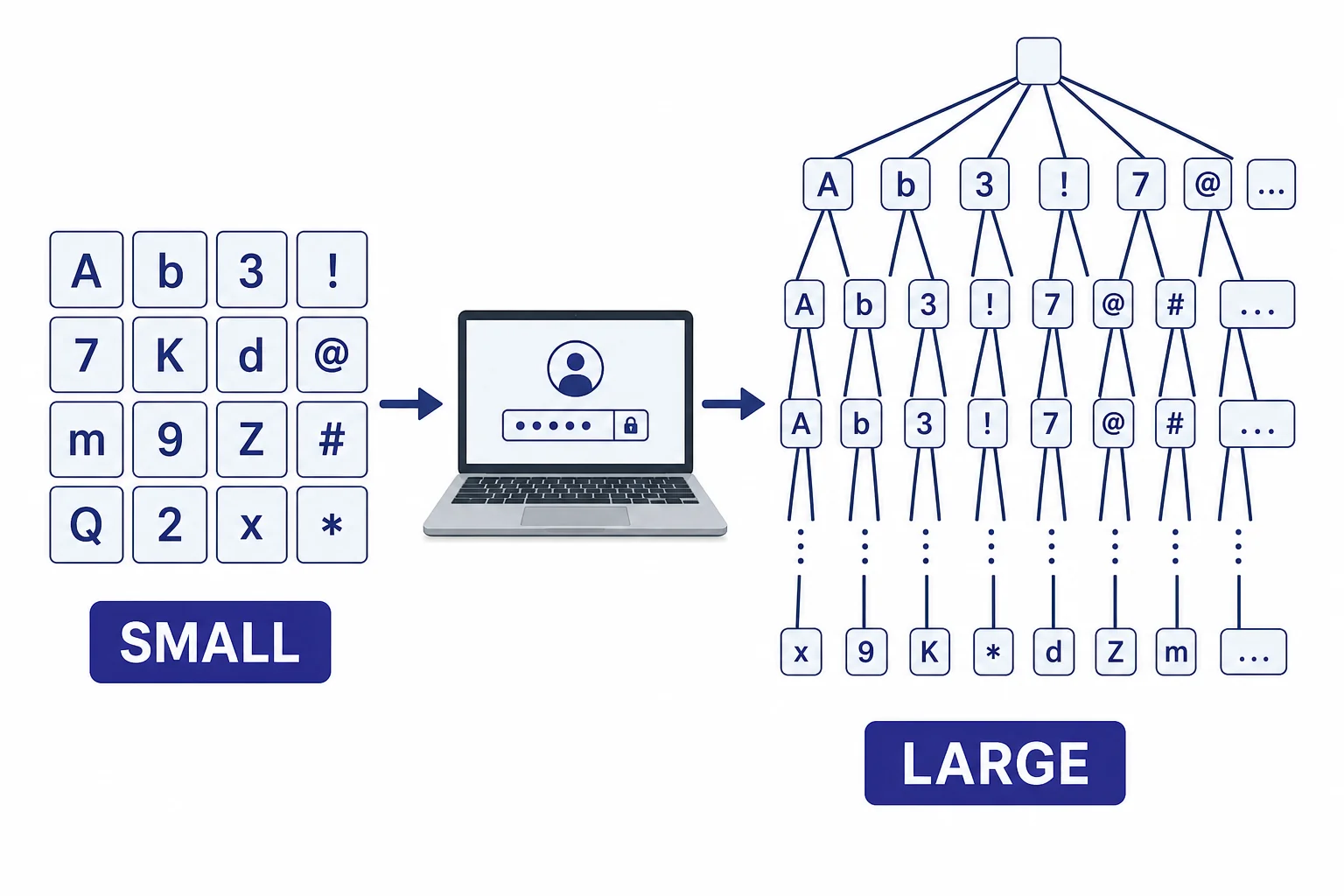
A comparison of two password search spaces, with a small grid for short lowercase passwords and a much larger branching grid for longer mixed-character passwords.
More possible choices means more guessing work.
A password is not just a word. To a computer, it is one choice from a set of possible strings. If a password uses only lowercase letters and has 4 characters, there are 26 choices for each position. That makes $26^4$ possible passwords. If it uses 8 characters with uppercase letters, lowercase letters, numbers, and symbols, the number of choices grows much faster. This set of possibilities is called the search space. A larger search space usually means more work for an attacker. This is why length matters so much. Adding one random character multiplies the number of guesses by the number of possible symbols. A short password can be found quickly, even if it includes a symbol. A longer random password makes the guessing problem much larger.

A strong password makes the list of possible guesses much larger.

Entropy measures uncertainty
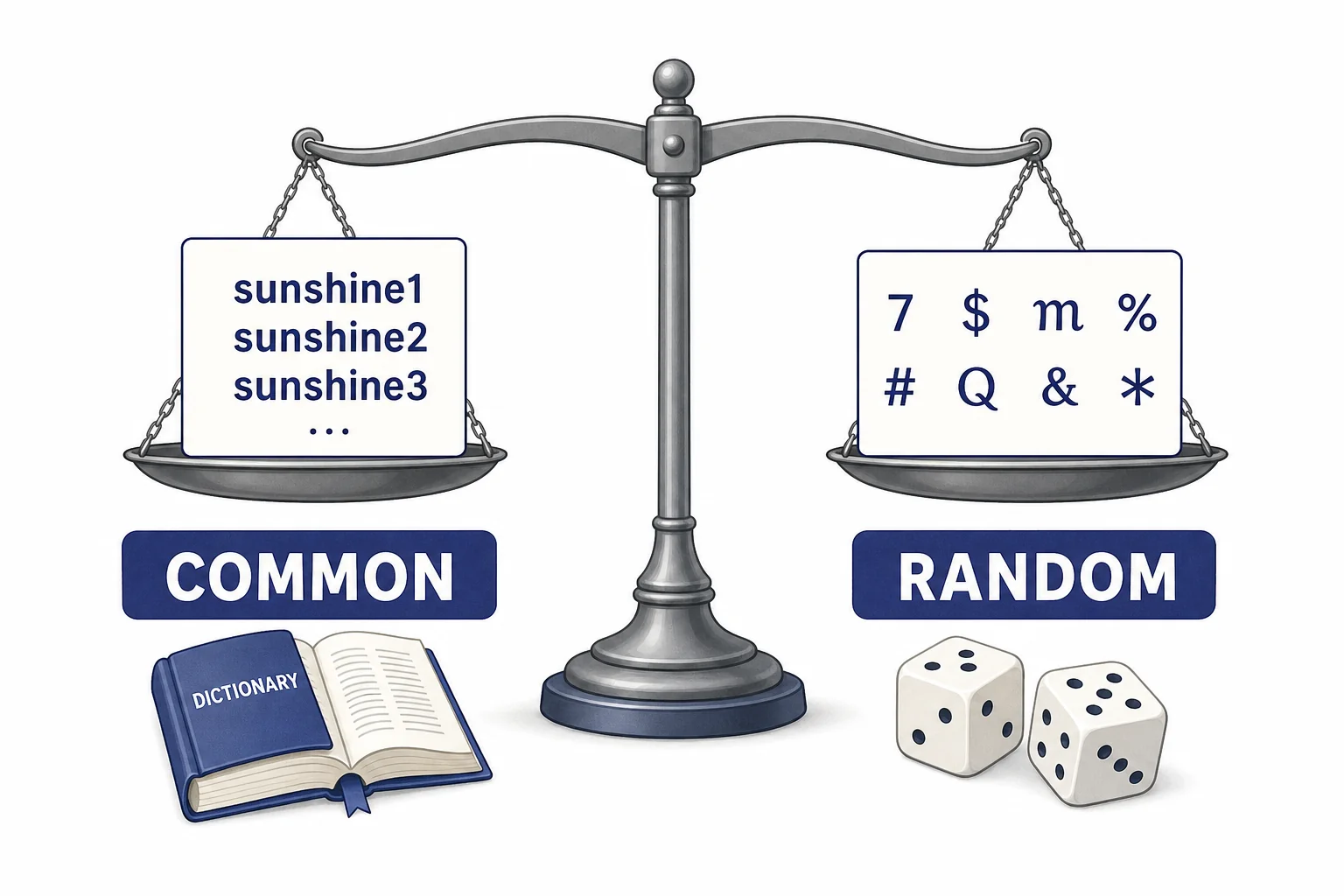
A balance scale comparing a common password pattern with a random string, showing the random string as harder to predict.
Random choices hide patterns.
Entropy is a way to describe how hard something is to predict. In passwords, higher entropy means an attacker has less information about the answer. A random password chosen from many possible characters has more entropy than a password based on a common word. For example, 8 random characters from a large character set can beat password123, even though password123 has 11 characters. The reason is that attackers do not guess randomly at first. They use what people commonly choose. Words, names, sports teams, keyboard patterns, and years are likely guesses. Randomness removes those clues. Entropy is not magic. It depends on how the password was made. If a person chooses a password that looks random but follows a pattern, its real entropy may be lower than it appears.

Length helps most when the characters are chosen in a way attackers cannot predict.

Brute force tries everything
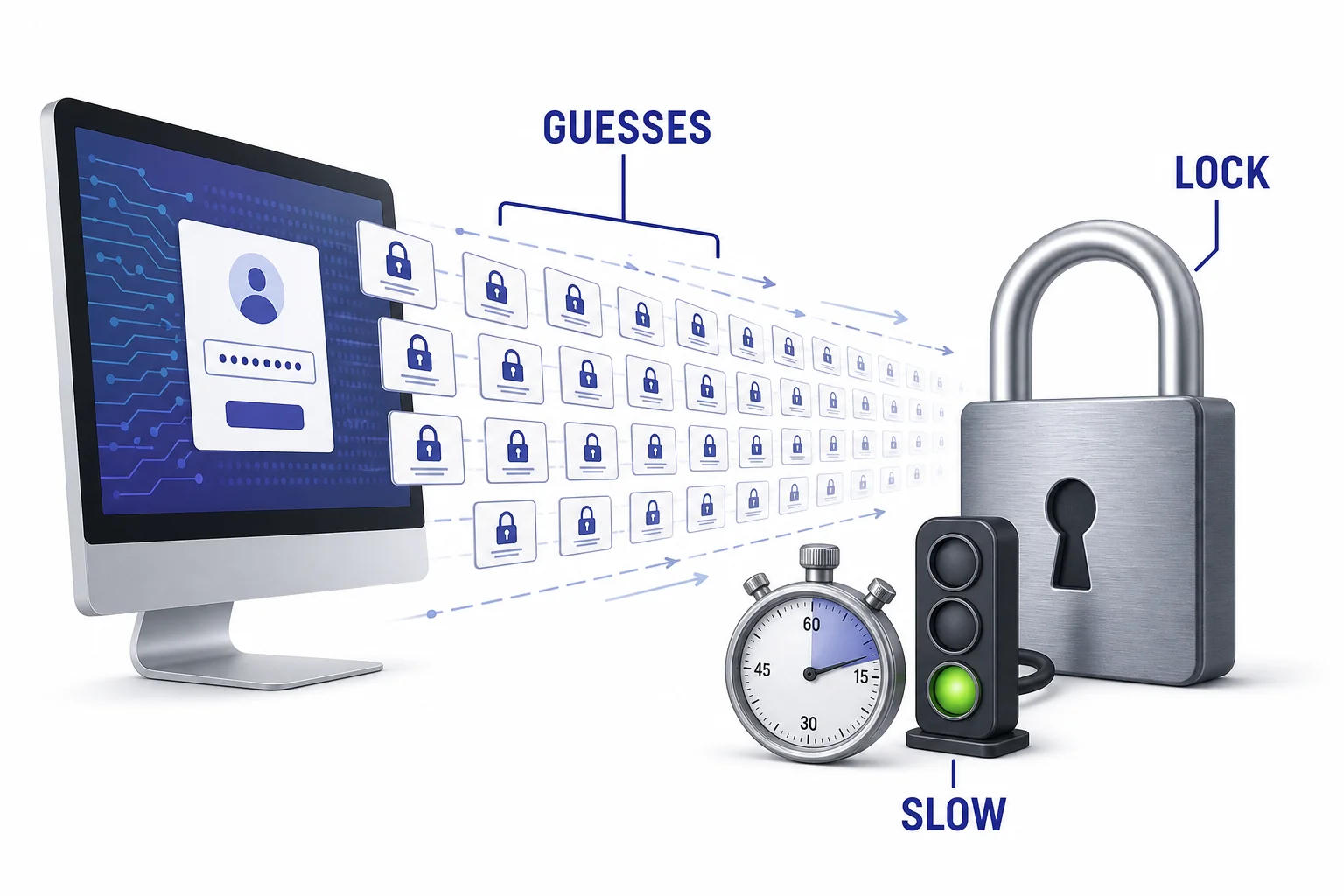
A computer trying many lock combinations, while a rate limit sign slows the attempts.
Brute force depends on speed and search size.
A brute-force attack is the most direct kind of guessing. The attacker’s program tries every possible password in some order. If the password is short, this can be fast. If the password is long and random, the number of guesses can become too large to finish in a useful time. This is a math problem as much as a security problem. Each extra random character multiplies the work. If a system allows too many guesses, brute force becomes easier. Good login systems slow attackers down. They may limit login attempts, add waiting time, or require a second factor, such as a code from a phone. Those protections matter because real attackers use fast computers. A strong password and a careful login system work together. The password increases the search space. The system limits how quickly guesses can be tested.

Brute force gets harder when guesses are many and testing is slow.

Dictionary attacks start smarter
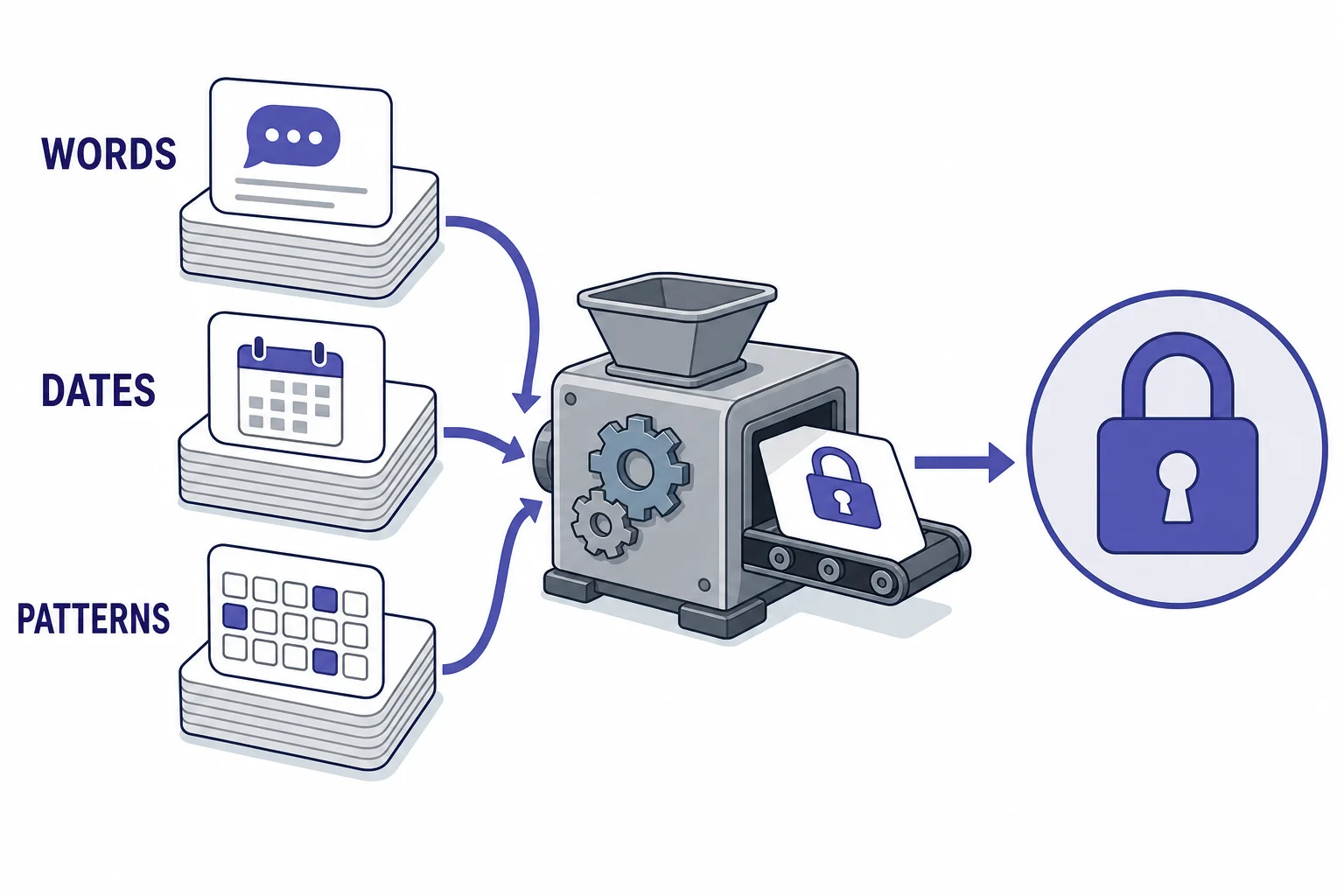
A dictionary attack shown as a stack of common password cards being fed into a guessing machine before random strings are tried.
Attackers try likely passwords first.
Many attackers do not begin by trying every possible string. They start with a dictionary attack. This means they test common passwords and common patterns first. The list can include words from real dictionaries, leaked passwords from past breaches, names, dates, and simple changes like replacing a with @. That is why password123 is weak. It is common, easy to remember, and easy for software to try early. Adding one symbol to a common word may not help much if the change is predictable. Attack tools can try millions or billions of likely guesses before moving to less likely ones. A passphrase can be strong if it uses several random words, but not if it uses a famous quote or song lyric. The safest idea is to avoid anything someone could guess from your life or from common password lists.

A password that people commonly choose is usually one that attackers try early.

Hashing and salting protect stored passwords
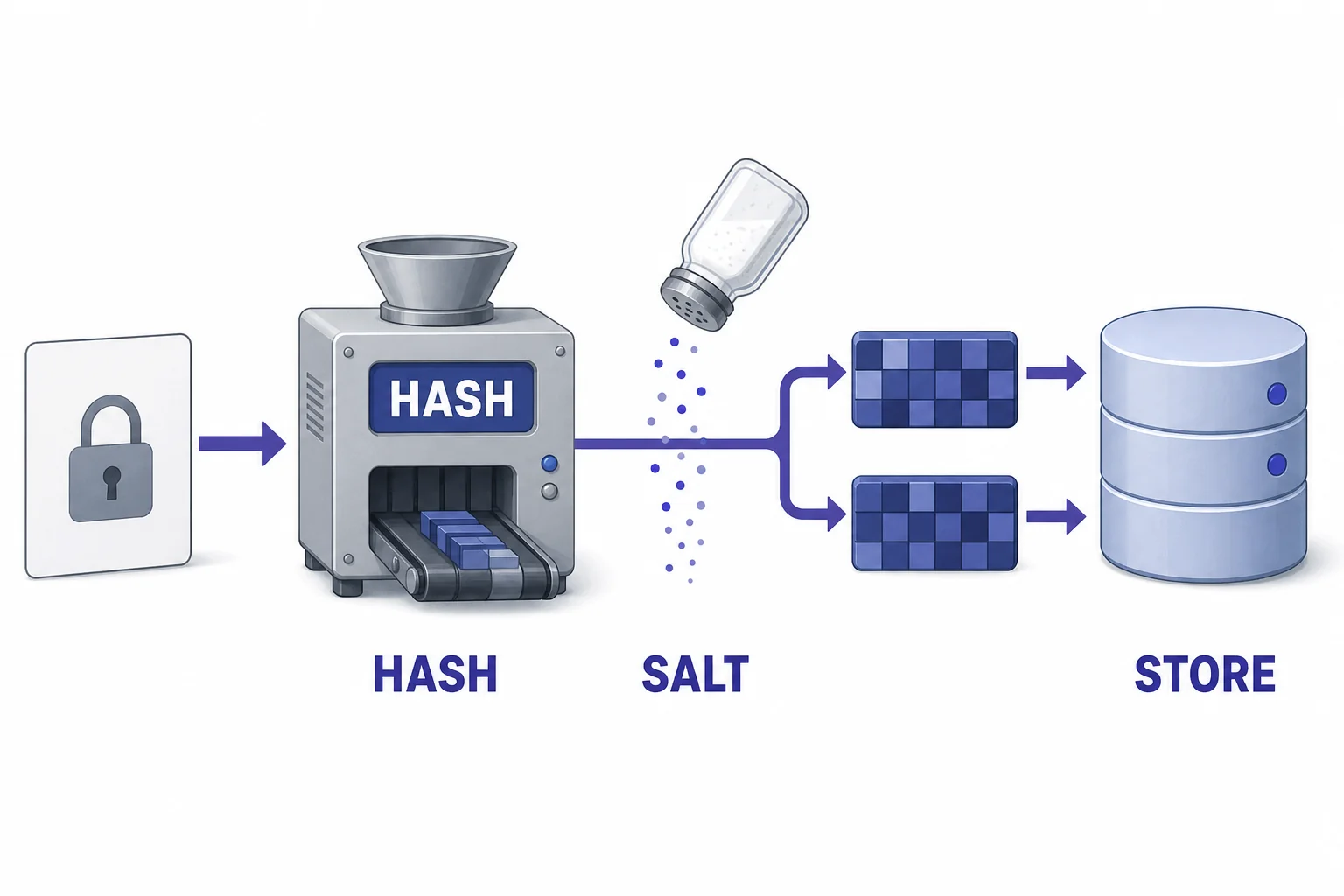
A password going through a hashing machine with a salt shaker icon, producing different stored hash blocks for two accounts.
Hashing changes storage. Salting adds uniqueness.
A well-designed website should not store your actual password. Instead, it stores a hash. A hash is the result of a one-way calculation. The same password gives the same hash, but the hash should not reveal the password. When you log in, the site hashes the password you typed and compares it with the stored hash. A salt is extra random data added before hashing. It makes two identical passwords produce different stored results for different accounts. This helps if attackers steal a password database. Without salts, attackers can compare stolen hashes to huge precomputed tables. With salts, they must do more work for each account. Hashing and salting do not make weak passwords strong. They reduce damage after a database leak. Users still need strong passwords because attackers may test guesses against stolen hashes offline.

Hashing and salting help protect passwords after they reach a website.

Vocabulary

Password entropy
A measure of how hard a password is to predict, based on how many possible choices could have made it.
Brute-force attack
A guessing method that tries many possible passwords until one works.
Dictionary attack
A guessing method that tries common words, leaked passwords, and familiar patterns first.
Hash
A one-way result made from data, used so a site can check a password without storing the plain password.
Salt
Random extra data added before hashing so identical passwords do not create identical stored results.
Two-factor authentication
A login method that requires a password plus another proof, such as a temporary code or security key.

In the Classroom

Build a search space

20 minutes | Grades 6-8

Students calculate how many passwords are possible for different lengths and character sets. They compare the effect of adding one character with the effect of adding one new symbol choice.

Spot the pattern

15 minutes | Grades 6-8

Students sort sample passwords into predictable and less predictable groups without using real personal passwords. The class discusses why attackers try some patterns earlier than others.

Hash card model

25 minutes | Grades 7-8

Students use a simple classroom rule to turn a secret word card into a coded output card. Then they add a salt card and see why two matching words can lead to different stored outputs.

Key Takeaways

  • Strong passwords have many possible combinations.
  • Long random passwords are usually stronger than short patterned passwords.
  • Dictionary attacks try common words and patterns before random guesses.
  • Brute-force attacks become harder when the search space grows and login attempts are slowed.
  • Hashing and salting protect stored passwords, but they do not replace strong password choices.