Why Do Bigger Pizzas Cost Less Per Slice?
How circle area changes the deal
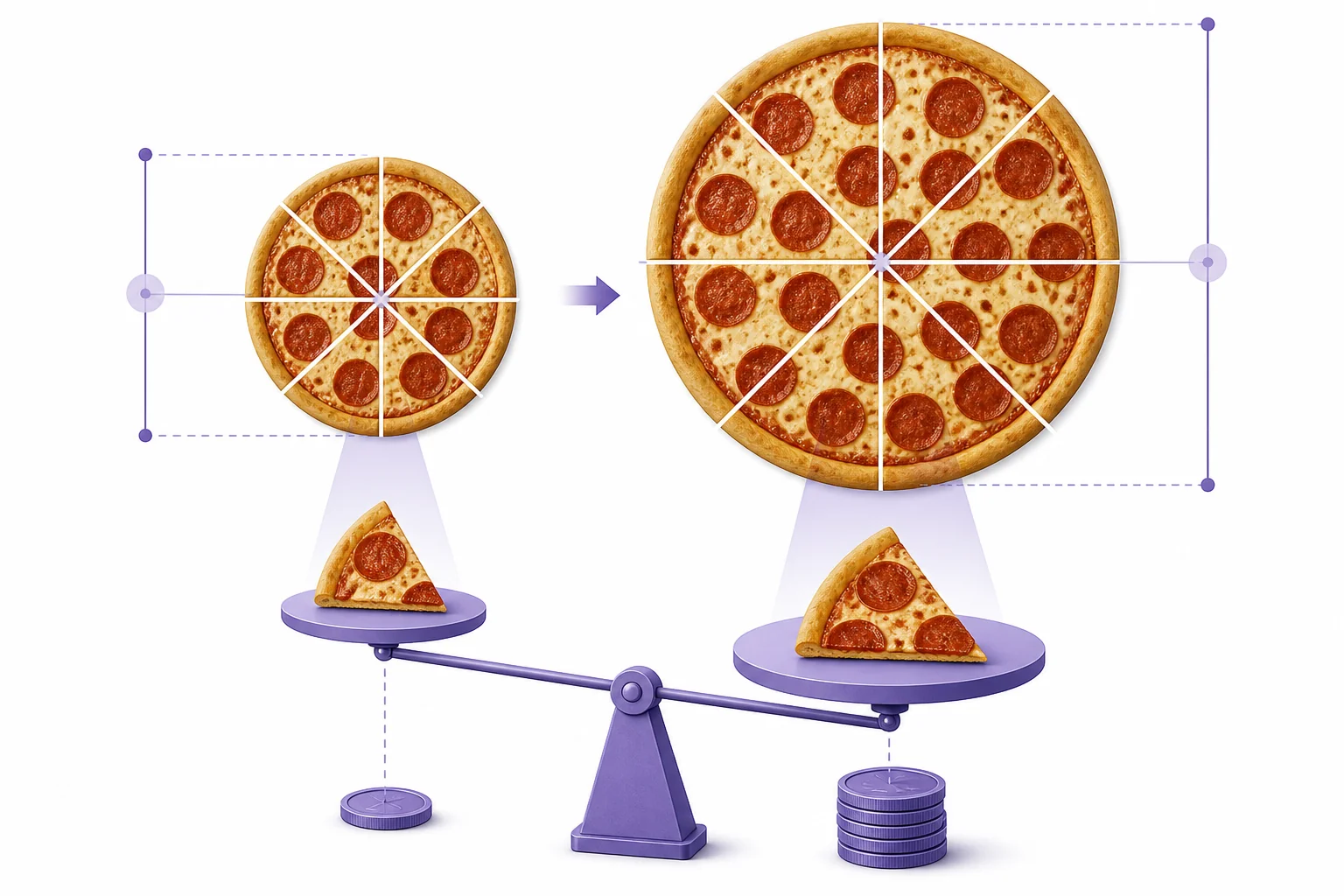
A bigger pizza has much more surface area than its diameter suggests. When the diameter doubles, the area becomes four times as large. The price often rises less than the area, so each slice or square inch can cost less.
Pizza is a useful circle problem because the size on the menu is usually a diameter. An 8-inch pizza sounds like half of a 16-inch pizza, but it is not half the amount of food. The pizza is flat, so the useful measure is area, not width. Area grows with the square of the radius. That means a small change in diameter can make a large change in the amount of crust, sauce, cheese, and toppings. This is why a large pizza can be a better deal even when it costs more in total. Middle-school geometry gives the tools to check the deal instead of guessing. The area formula is $\pi r^2$, and the circumference formula is $2\pi r$. These formulas help explain both the amount of pizza and the length of crust around the edge.
Diameter is not area
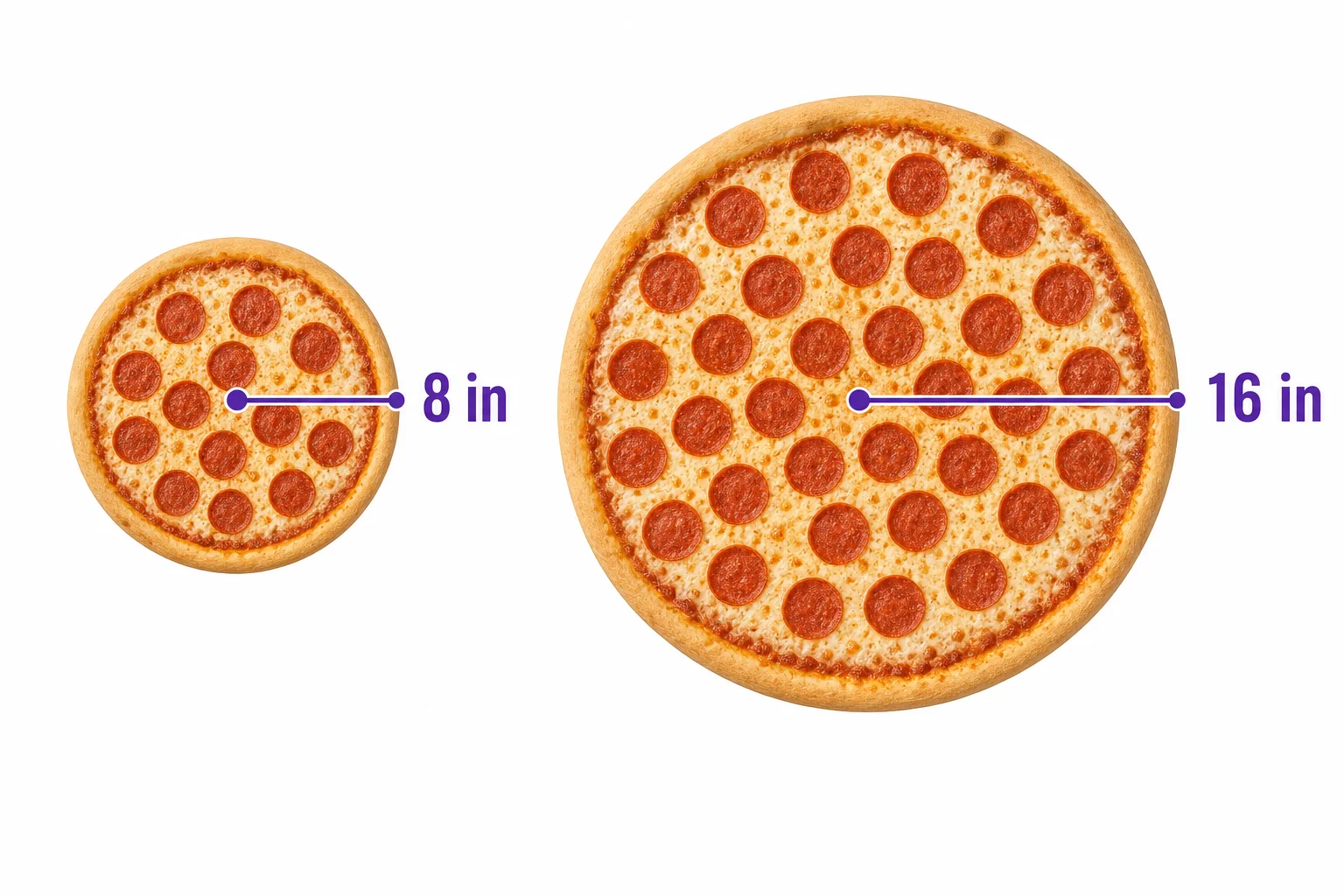
A 16-inch pizza has four times the area of an 8-inch pizza.
Area grows by the square
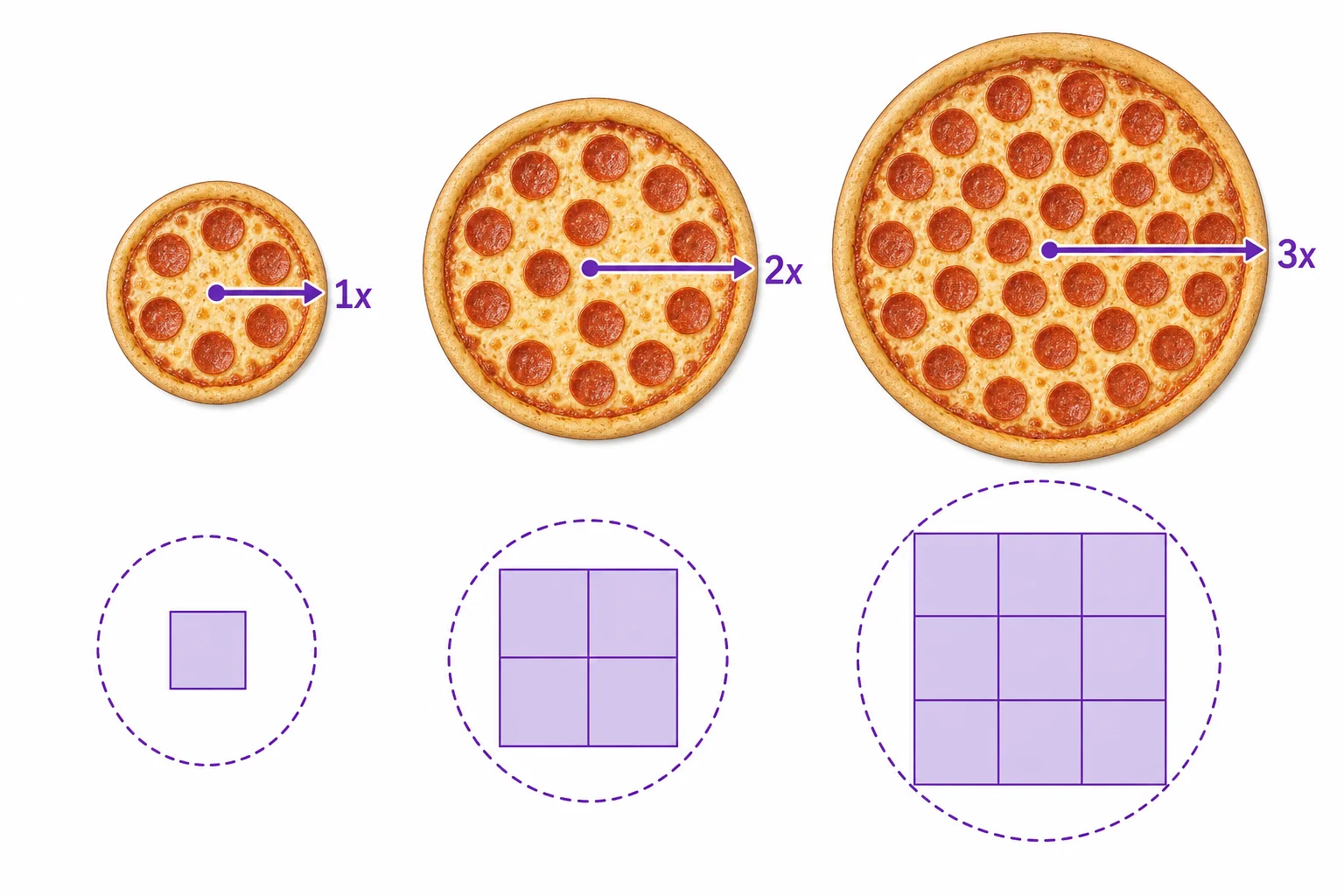
When radius scales by a factor, area scales by that factor squared.
Price per square inch
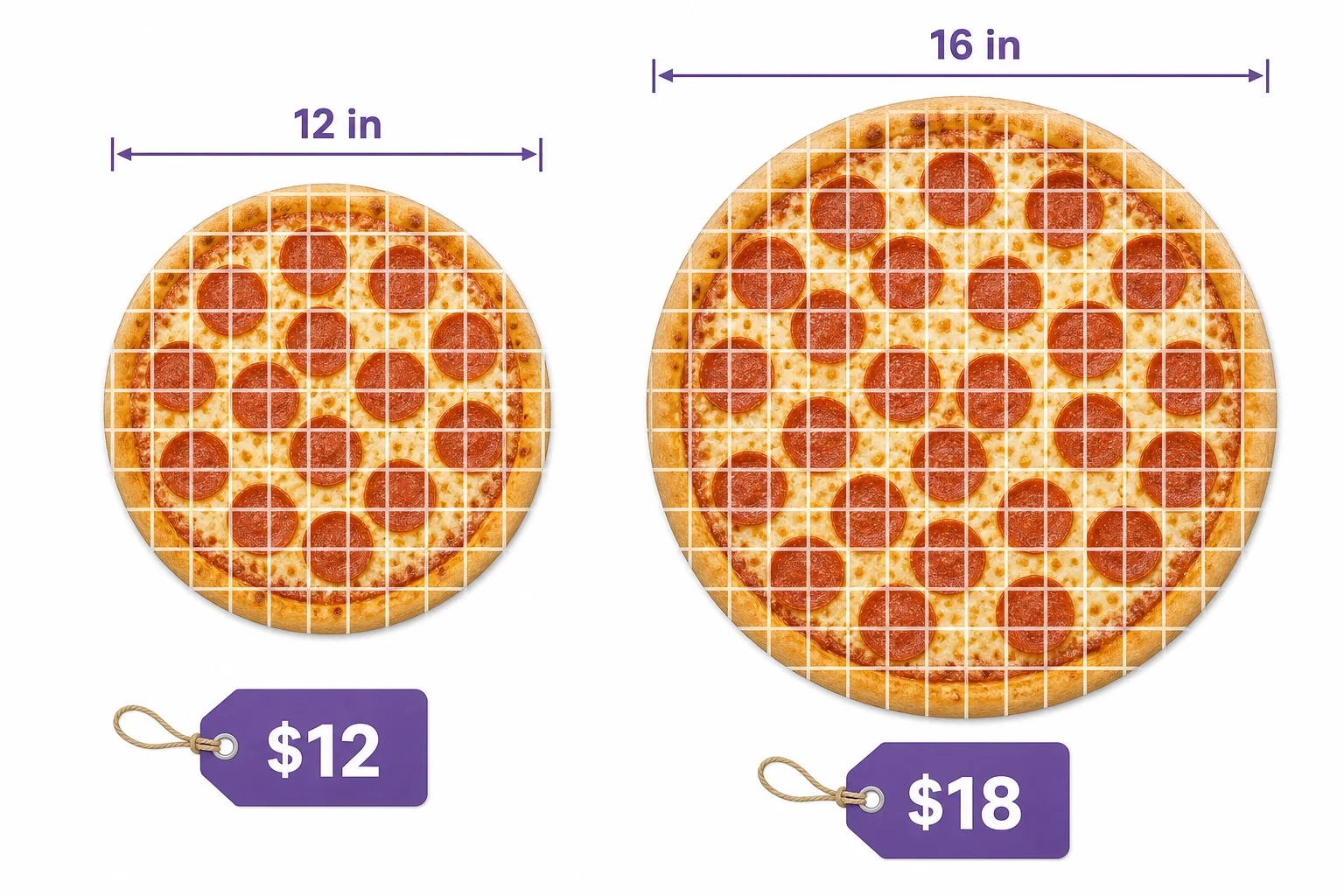
The best deal is usually found by dividing price by area.
Crust grows more slowly
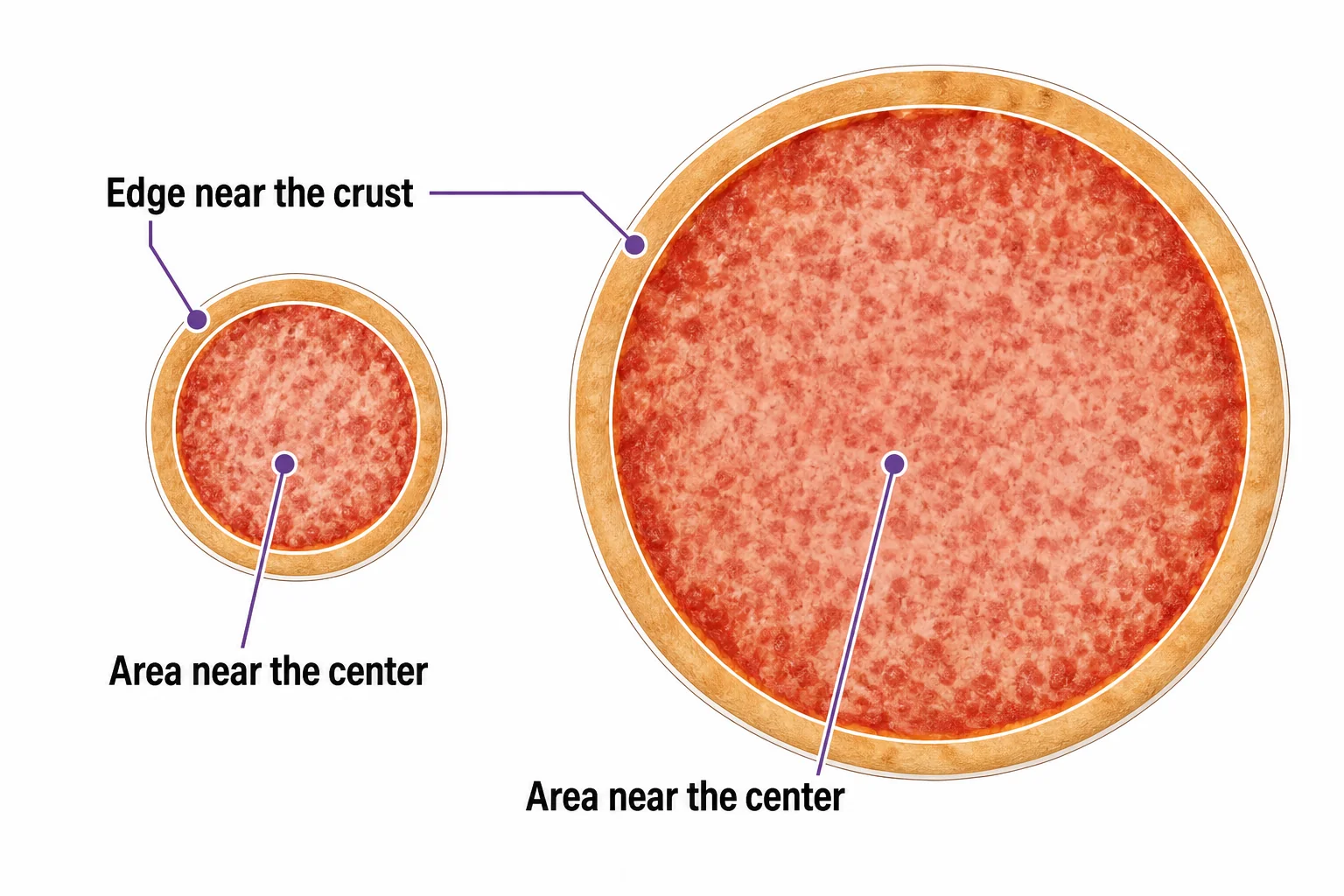
Circumference grows with radius, but area grows with radius squared.
Slices can mislead
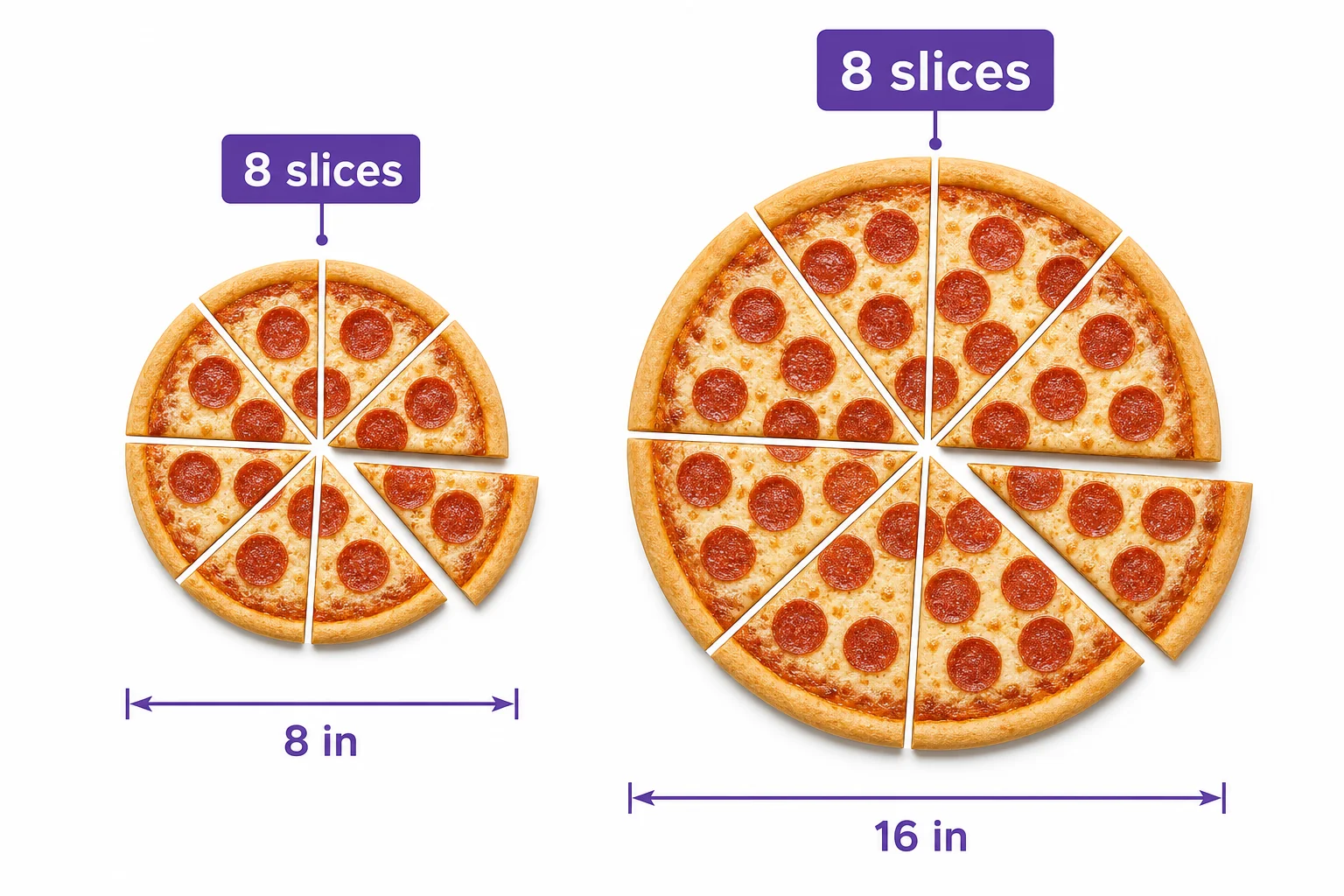
Slice count is not enough. Area tells how much pizza is really there.
Vocabulary
- Diameter
- The distance across a circle through its center.
- Radius
- The distance from the center of a circle to its edge.
- Area
- The amount of flat surface inside a shape, measured in square units.
- Circumference
- The distance around the edge of a circle.
- Unit rate
- A comparison that tells how much one unit costs or measures, such as dollars per square inch.
- Scaling
- Changing a size by a factor and studying how other measurements change.
In the Classroom
Pizza deal table
25 minutes | Grades 6-8
Give students a menu with several pizza diameters and prices. Students calculate radius, area, and cost per square inch, then rank the deals using unit rates.
Paper pizza scale model
30 minutes | Grades 6-8
Students draw 8-inch, 12-inch, and 16-inch circles to scale on paper or use smaller scaled circles if space is limited. They cut each into 8 slices and compare the area of one slice from each pizza.
Crust versus center
20 minutes | Grades 7-8
Students calculate circumference and area for several circle sizes. They discuss why the edge grows more slowly than the surface and connect the pattern to pizza crust.
Key Takeaways
- • Pizza size is usually given as diameter, but the amount of pizza is area.
- • Circle area is $\pi r^2$, so doubling the radius makes four times the area.
- • A 16-inch pizza is four times the area of an 8-inch pizza, not twice as much.
- • Cost per square inch is a fairer comparison than cost per slice.
- • Crust length grows like circumference, while the cheesy surface grows faster as area.