Sign in to save

Bookmark this page so you can find it later.

Sign in to save

Bookmark this page so you can find it later.

Math middle-school May 24, 2026

Why Is Zero Such a Strange Number?

The number that means nothing and changes everything
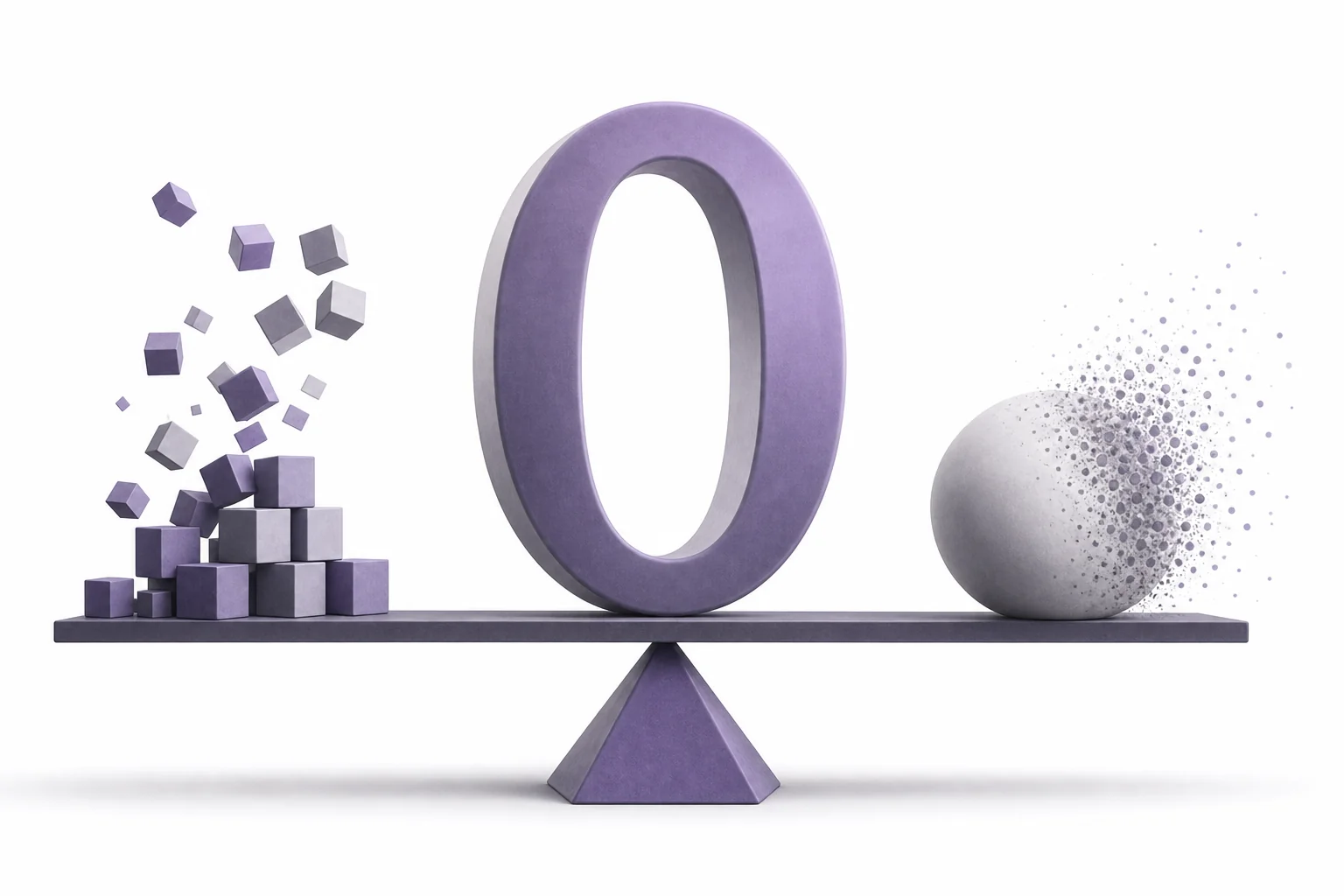
A middle school math scene showing zero on a number line, in place value, and in simple equations to show its different roles.

Zero is strange because it can mean an empty amount, a place in a number, or a balance point on a number line. It also changes how operations work, since adding zero changes nothing but multiplying by zero makes the answer zero. Mathematicians had to invent clear rules for zero before algebra and our number system could work well.

Big Idea. Common Core 6.NS.C.6 connects zero to the origin on a number line and to positive and negative numbers.

Zero feels simple at first. It means none. No apples, no points, no distance moved. But zero also holds a place in numbers like 204, separates positive numbers from negative numbers, and helps equations describe balance. That makes it different from most numbers students meet. People did not always write zero as a number. Ancient Babylonians used a mark as a placeholder in their number system. Later, mathematicians in India treated zero as a number with rules. Brahmagupta wrote about calculations with zero in the 600s. Those ideas helped make our base ten system powerful. Without zero, writing large numbers would be messy. Algebra would be harder too. Zero is strange because it is both a symbol for nothing and a tool for building nearly everything in arithmetic.

Zero can mean none
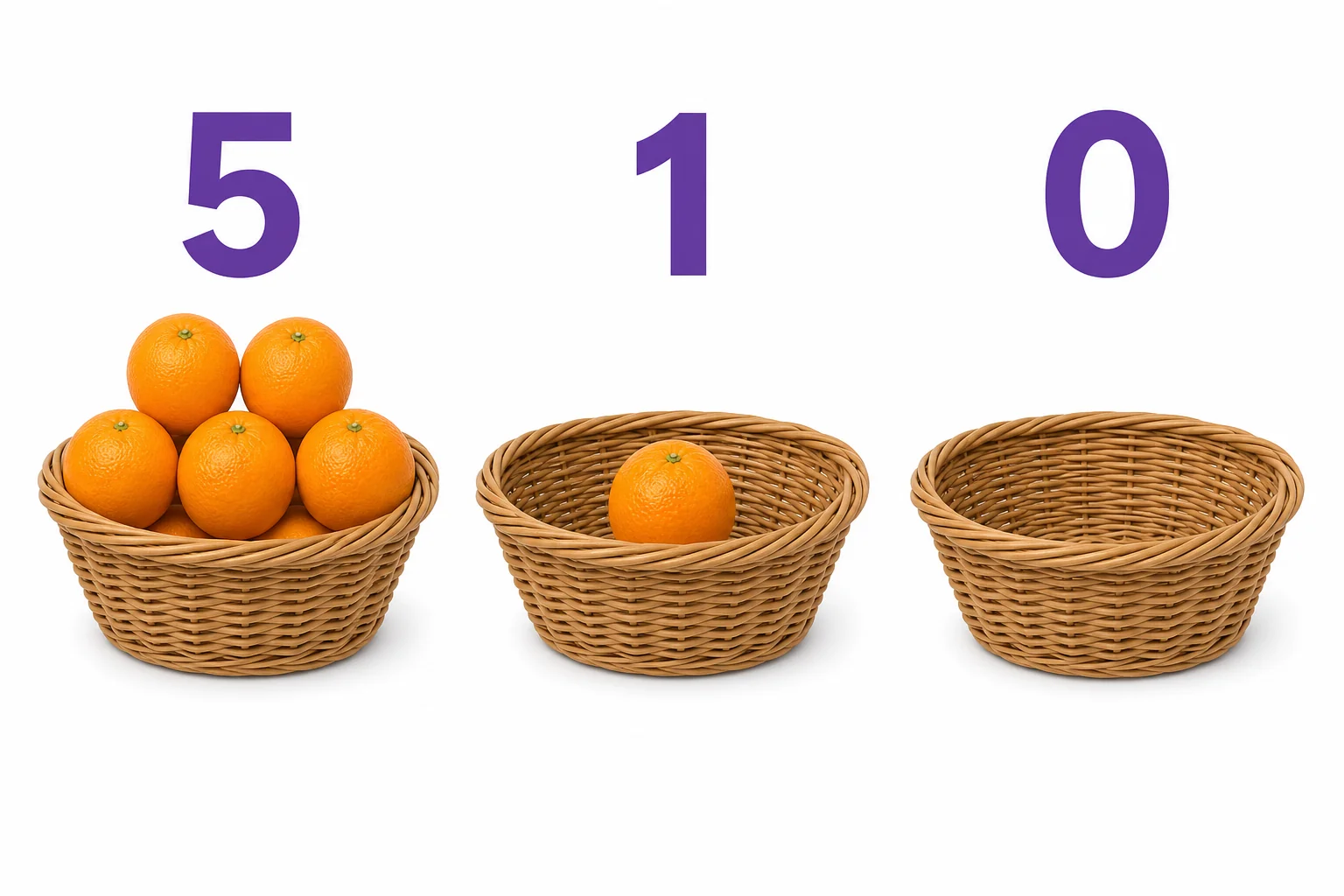
Three baskets show five oranges, one orange, and an empty basket labeled zero to show zero as an empty quantity.
Zero can count an empty set.
The easiest meaning of zero is an empty quantity. If a basket has zero oranges, it has no oranges. This is a counting idea. We can compare zero with one, two, or three because zero tells how many objects are in a set. That sounds obvious now, but it is a major math step. A symbol for an empty amount lets us write equations about absence. For example, 5 minus 5 equals 0. The zero does not mean the equation failed. It means the result is a real quantity, and that quantity is none. This matters in science, money, sports, and measurement. A temperature change of 0 degrees means no change. A score of 0 points means no points earned. Zero lets math talk clearly about nothing.

Zero can be an amount, even when that amount is none.

Zero can hold a place
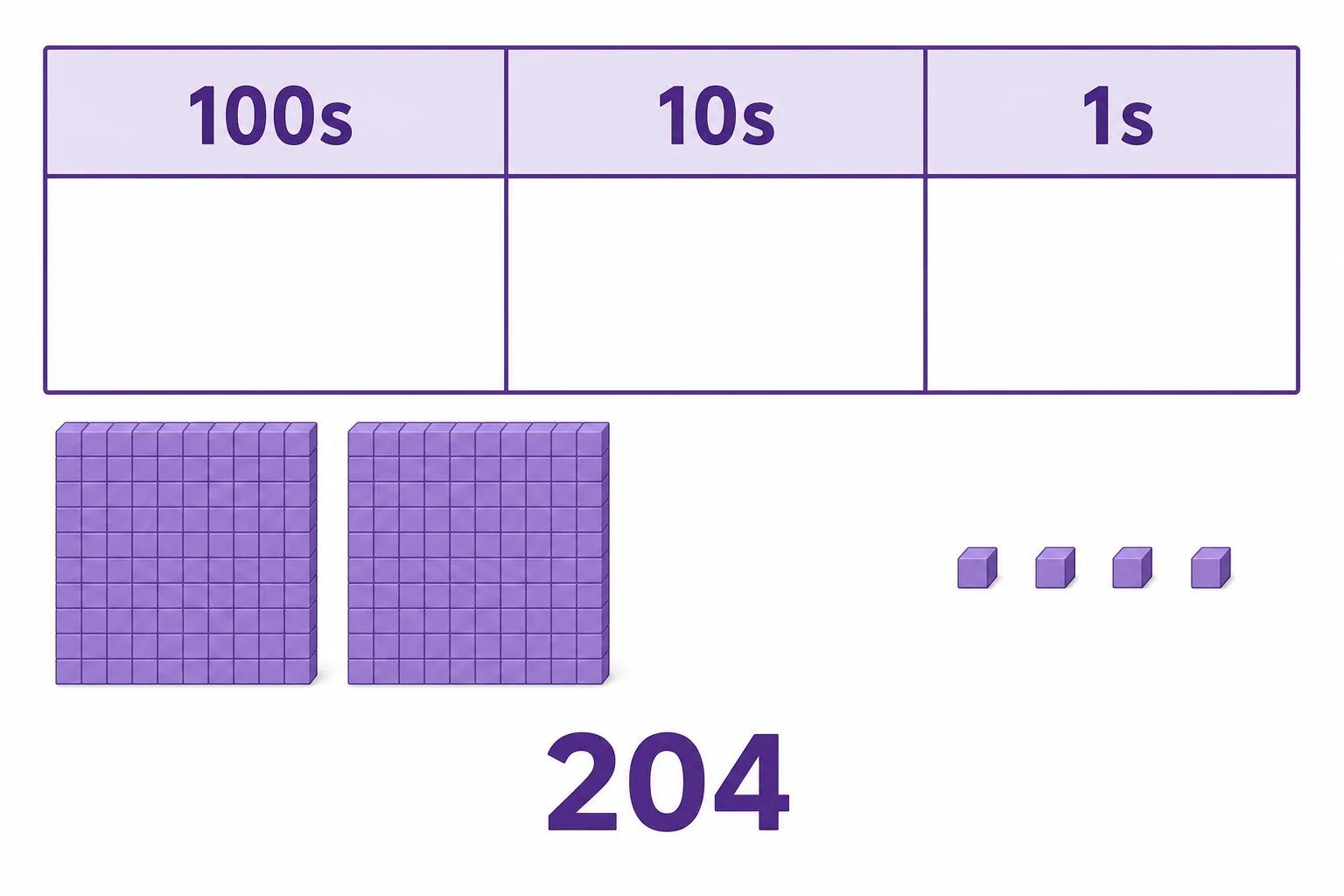
A place value chart shows 204 with 2 in the hundreds place, 0 in the tens place, and 4 in the ones place.
In 204, zero keeps the tens place open.
Zero also works as a placeholder. This role is different from zero as a quantity. In the number 204, the zero tells us there are no tens. It keeps the 2 in the hundreds place and the 4 in the ones place. Without that zero, 204 could be confused with 24. Place value depends on position, so an empty position still needs a symbol. Ancient Babylonian scribes used a placeholder mark in some written numbers. That mark helped readers tell which place was empty. Our modern system uses zero for this job. This is one reason zero changed math history. It made large numbers easier to write, compare, and calculate. The same ten digits can build huge numbers because zero protects the value of each place.

As a placeholder, zero shows that a place is empty but still important.

Zero is the balance point
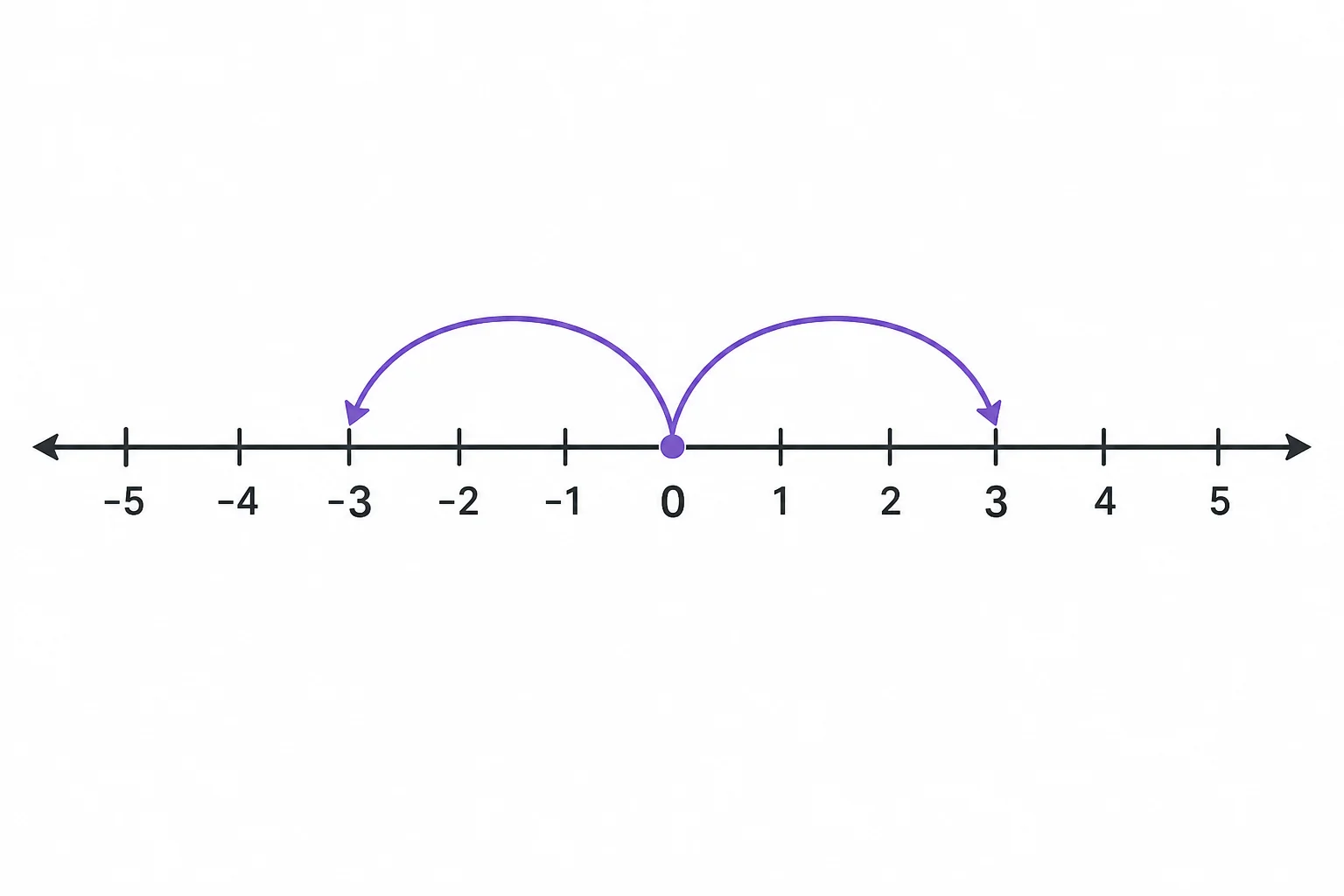
A horizontal number line shows negative numbers on the left, positive numbers on the right, and zero at the center.
Zero is the origin on a number line.
On a number line, zero has another job. It is the point between positive and negative numbers. Numbers to the right of zero are greater than zero. Numbers to the left are less than zero. This makes zero a reference point. In sixth grade math, students use this idea to understand opposites. The numbers 3 and negative 3 are the same distance from zero, but they are on opposite sides. This is useful for temperatures, bank balances, elevations, and motion. If a submarine is at 0 meters, it is at sea level. If it goes to negative 20 meters, it is below sea level. Zero helps us describe direction and distance at the same time. It is not positive or negative. It is the dividing point.

Zero is the origin that helps compare positive and negative numbers.

Zero follows special rules
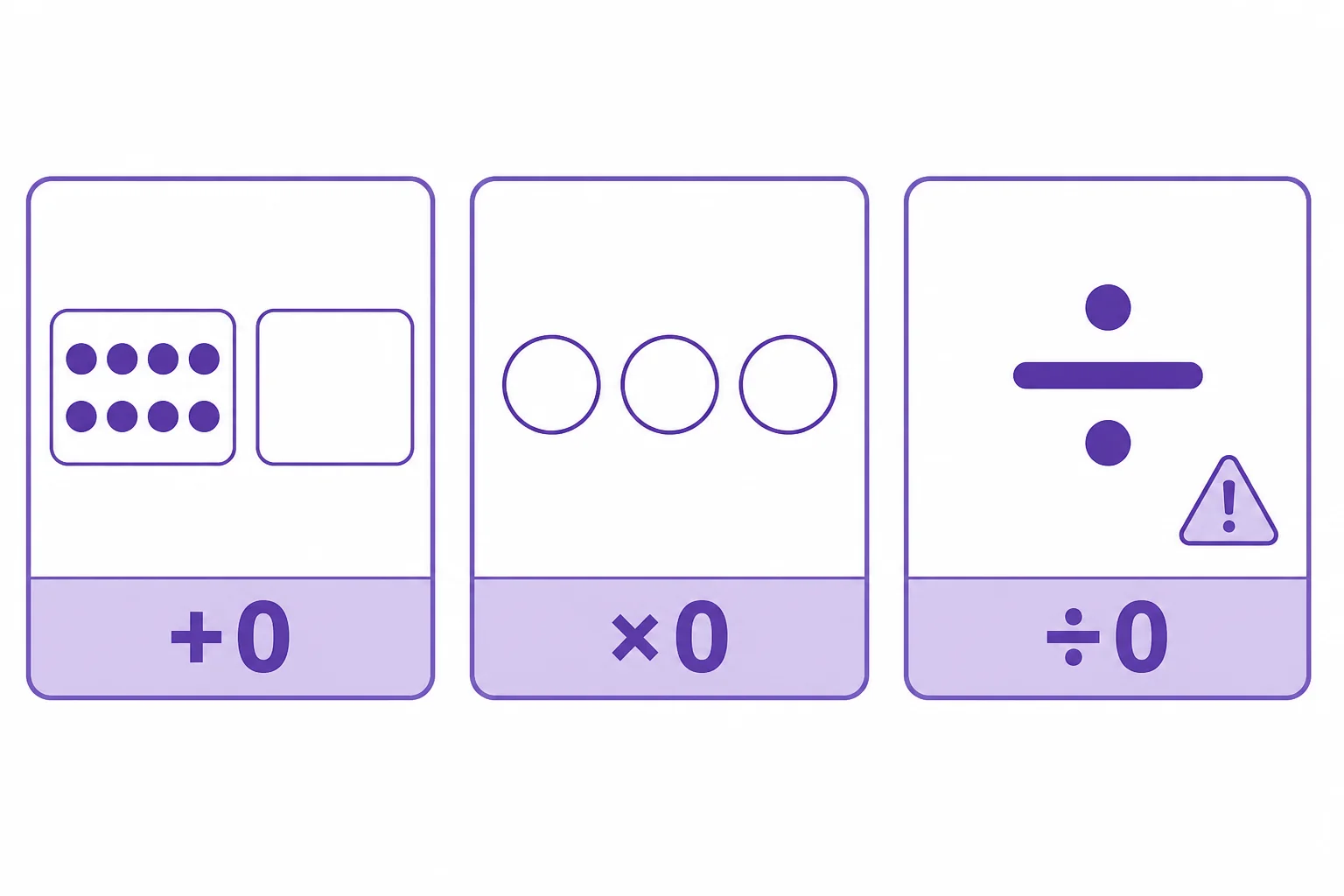
Simple operation cards show adding zero, multiplying by zero, and division by zero as not allowed.
Zero has rules that protect arithmetic.
Zero behaves in a few surprising ways during operations. Adding zero does not change a number. That is why 8 plus 0 equals 8. Subtracting zero also leaves a number unchanged. Multiplying by zero is different. If you have 8 groups of 0, there is nothing in every group, so the total is 0. This rule helps algebra work. If a product equals zero, then at least one factor must be zero. Division is the trickiest case. Dividing 0 by 5 gives 0 because zero objects split into five groups still gives none in each group. But dividing by zero is not allowed in ordinary arithmetic. There is no number of groups that makes 5 divided by 0 make sense.

Zero can leave a number alone, erase a product, or make division undefined.

Zero helps algebra and limits
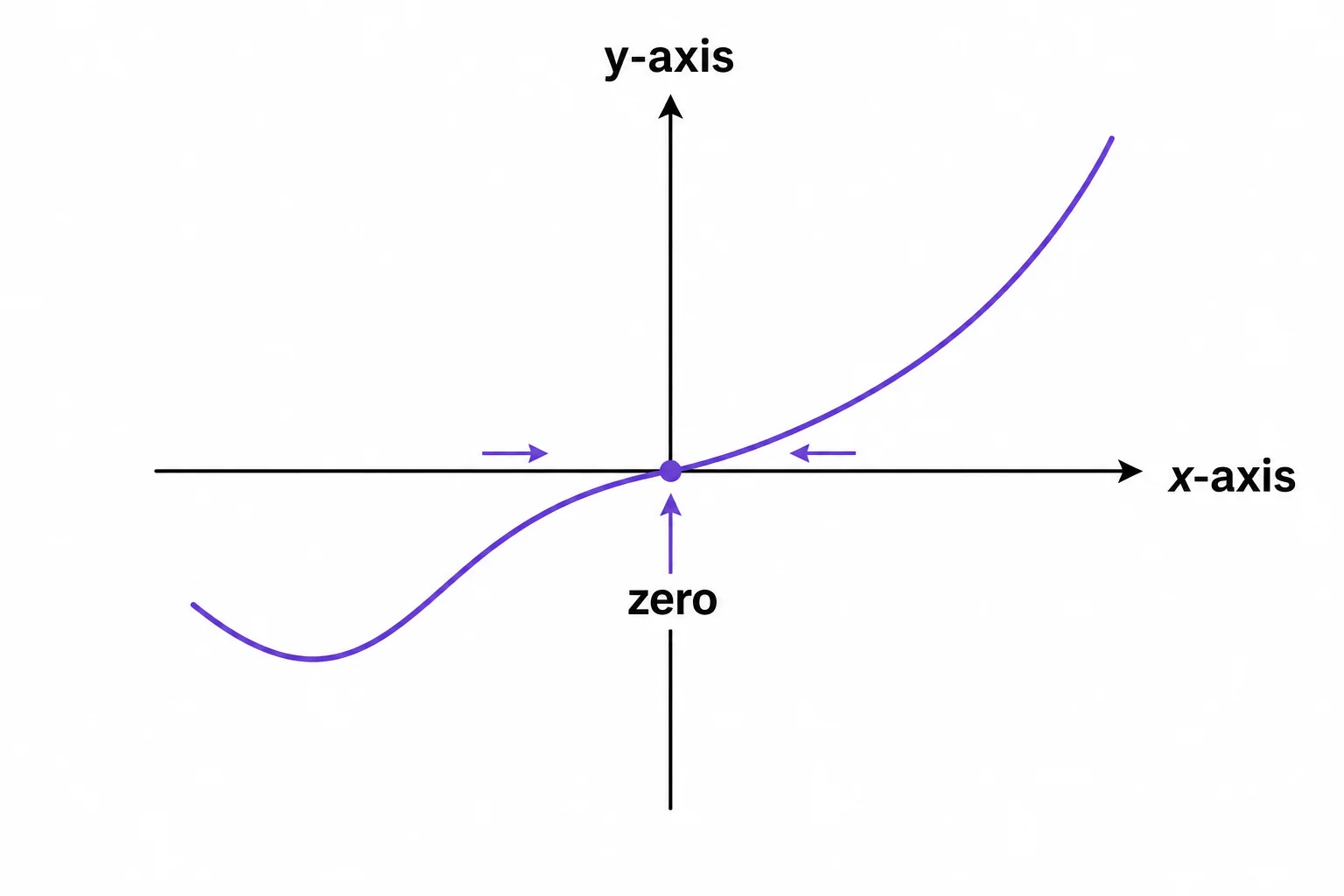
A coordinate graph shows a curve crossing the x-axis at zero height and small arrows approaching zero on the x-axis.
Zero can be a solution or a point to approach.
In algebra, zero often marks the answer we are looking for. When we solve x plus 4 equals 4, we find x equals 0. When a graph crosses the x-axis, its height is zero at that point. Those zero points can show when a ball hits the ground or when a business breaks even. Zero also appears in later math through limits. A limit can describe what happens as a number gets closer and closer to zero without actually being zero. This helps students understand rates, slopes, and change. For example, a tiny time interval can help describe speed at one instant. Middle school students do not need formal calculus to see the idea. Zero is strange because math often studies what happens at zero and what happens near zero.

Zero is both a target value and a boundary for thinking about change.

Vocabulary

Zero
The number that represents no amount and sits between positive and negative numbers.
Placeholder
A symbol that keeps a place open in a place value system.
Place value
The value of a digit based on its position in a number.
Origin
The point labeled zero on a number line or coordinate graph.
Undefined
A result that is not given a value because it would break the rules of arithmetic.

In the Classroom

Zero role sort

20 minutes | Grades 6-8

Give students cards showing examples such as 0 apples, 204, sea level, and 7 times 0. Students sort each card into zero as quantity, placeholder, origin, or operation rule. End with a short discussion about why one symbol can have several jobs.

Human number line

25 minutes | Grades 6-8

Tape a number line on the floor from negative 5 to positive 5. Students stand on opposites such as 4 and negative 4, then describe their equal distance from zero. Connect the activity to temperature, elevation, or money examples.

Division by zero test

15 minutes | Grades 6-8

Students use counters to model 0 divided by 4 and 8 divided by 0. They explain why the first model can be completed and the second cannot. The goal is to build meaning before naming division by zero as undefined.

Key Takeaways

  • Zero can represent an empty quantity.
  • Zero can act as a placeholder in place value.
  • Zero is the origin between positive and negative numbers.
  • Adding zero changes nothing, but multiplying by zero gives zero.
  • Division by zero is undefined in ordinary arithmetic.