How Bridges Stay Up When Cars Drive Across
Forces spread through strong shapes
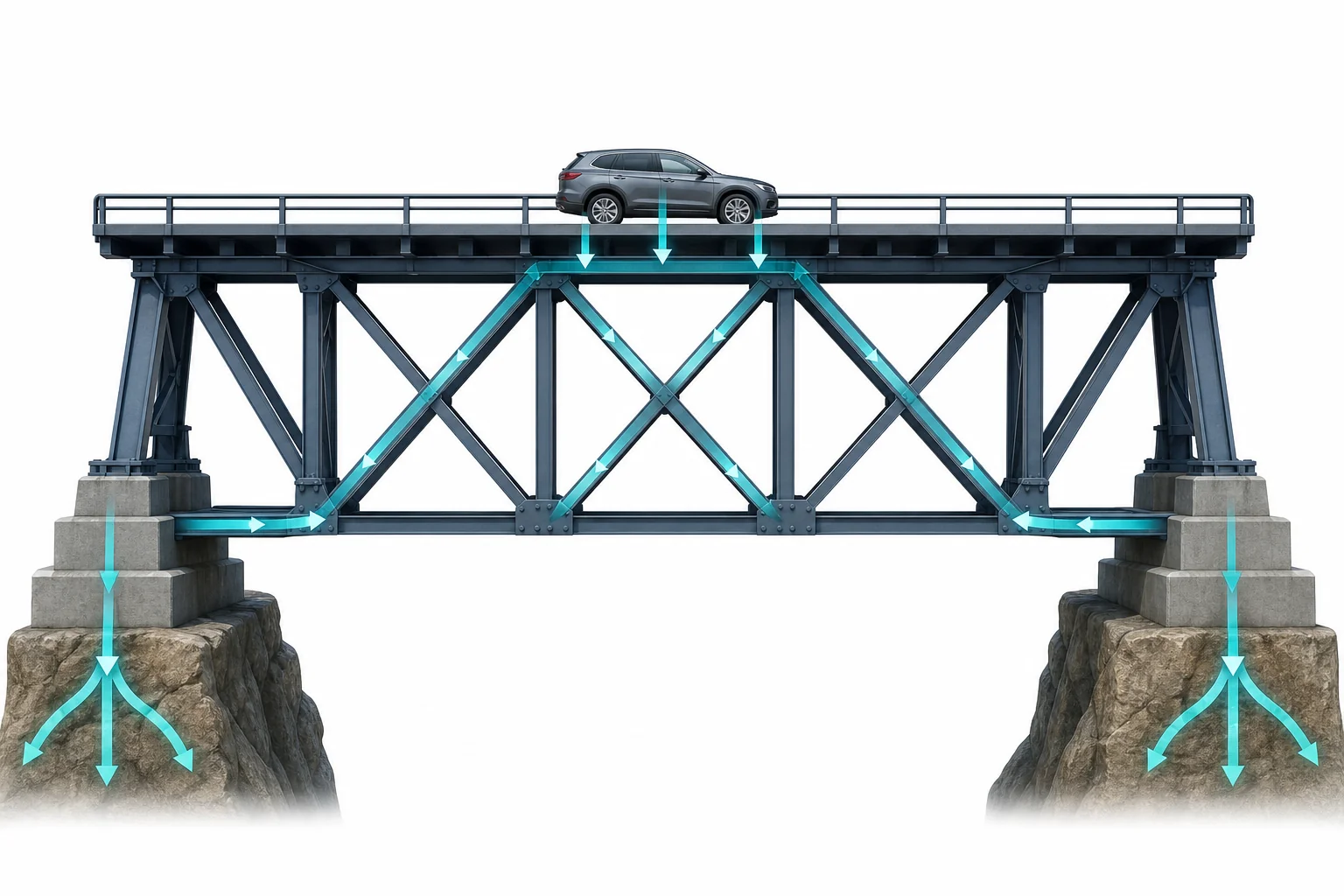
A bridge stays up because it spreads the weight of cars into its supports. Some parts get squeezed, and other parts get pulled. The bridge is shaped so those pushes and pulls are carried safely to the ground.
A car crossing a bridge does not just sit on top of the road. It pushes down on the bridge with its weight. The bridge pushes back up, and its parts pass that load along to towers, cables, beams, arches, and finally the ground. Engineers design bridges so these forces are shared instead of being focused in one weak spot. Middle-school physics helps make this visible. A force diagram can show the car’s downward weight, the bridge’s upward support, and the way bridge parts push or pull on one another. The same ideas explain why a paper strip bends under a book, why a triangle is stiff, and why a tall bridge tower must be strong in compression. Bridges stay up when forces are balanced, materials are strong enough, and the shape gives each force a safe path to the Earth.
Cars add load
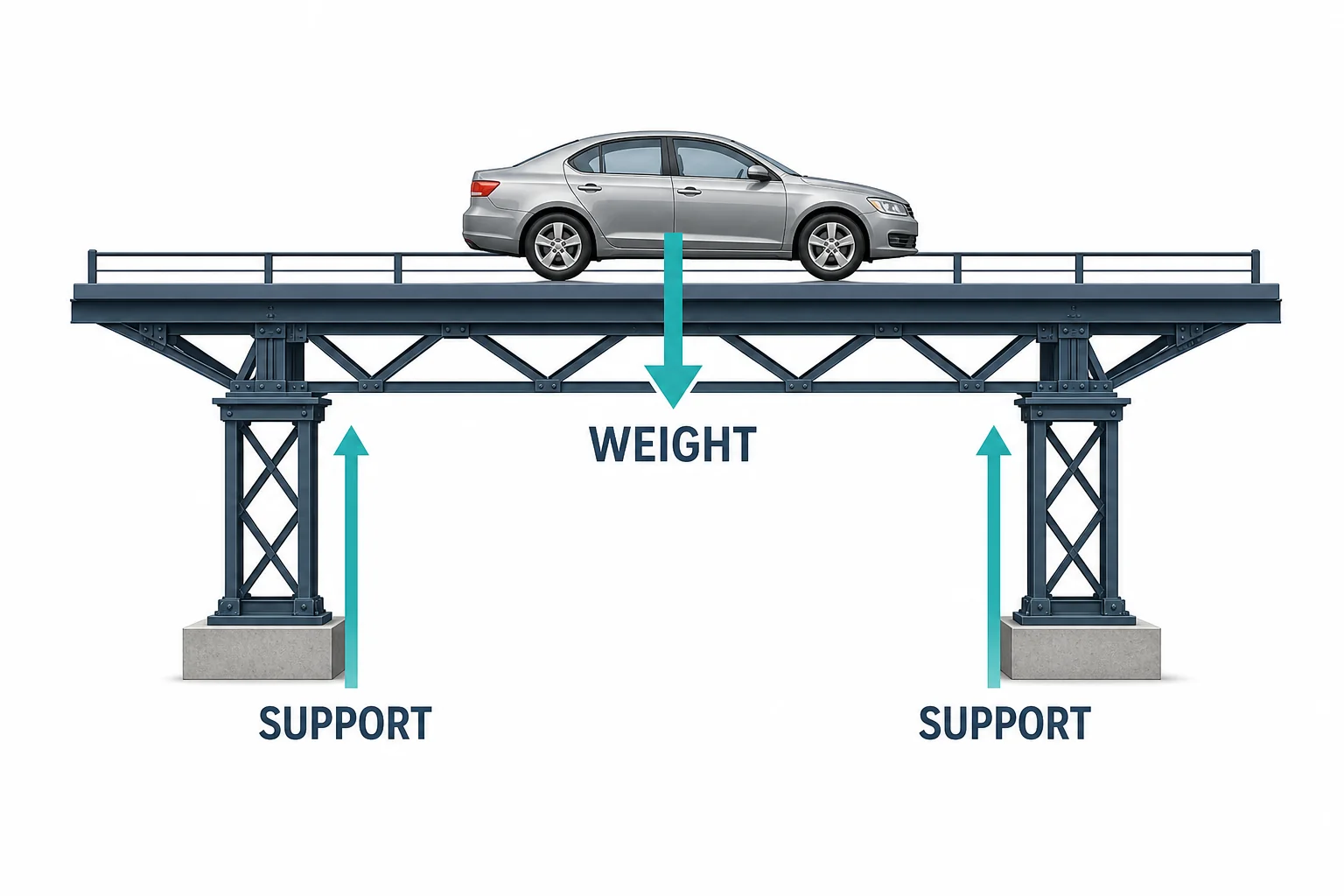
A load is a force that a bridge must carry.
Pushes and pulls
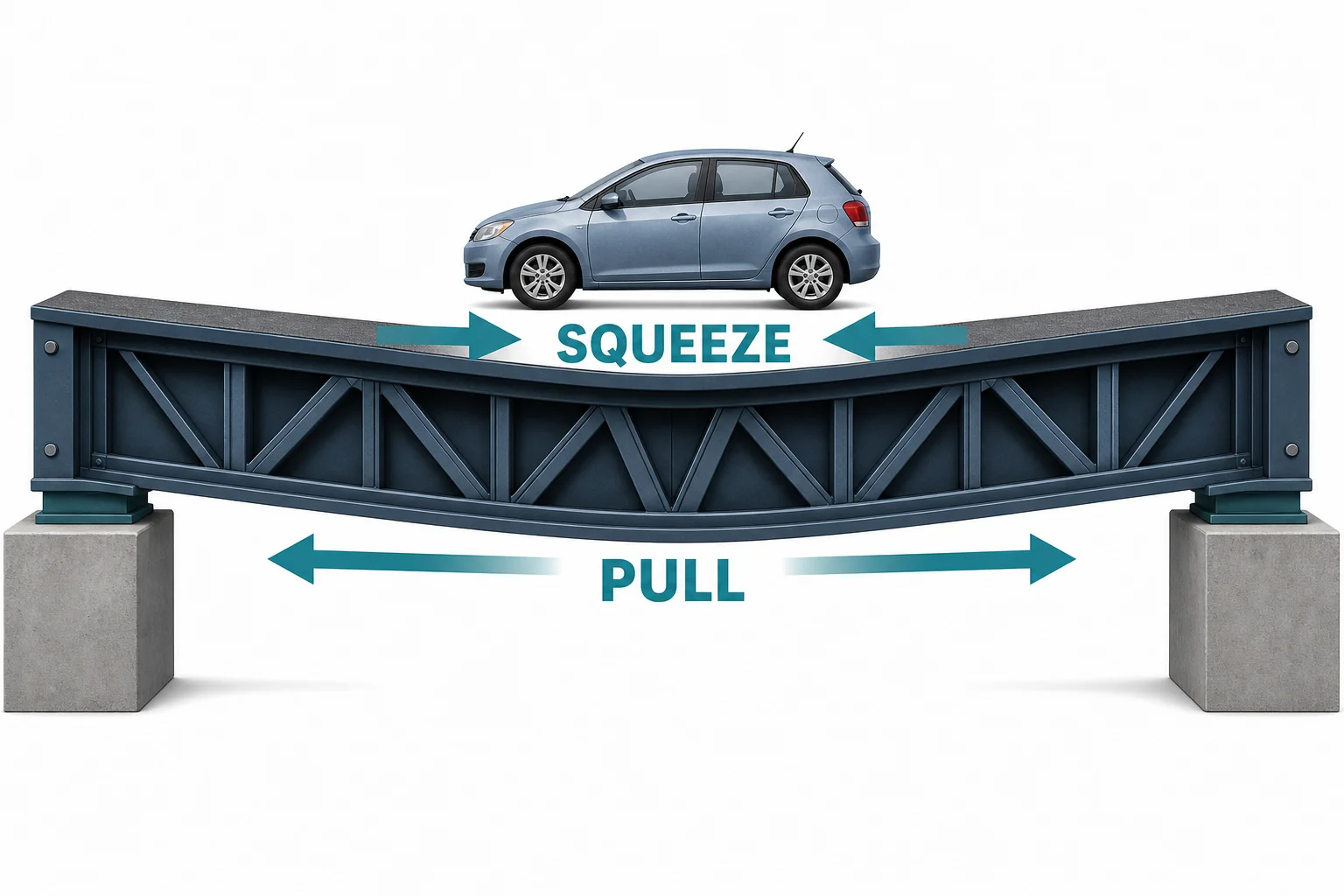
Compression squeezes, while tension pulls.
Triangles make trusses stiff
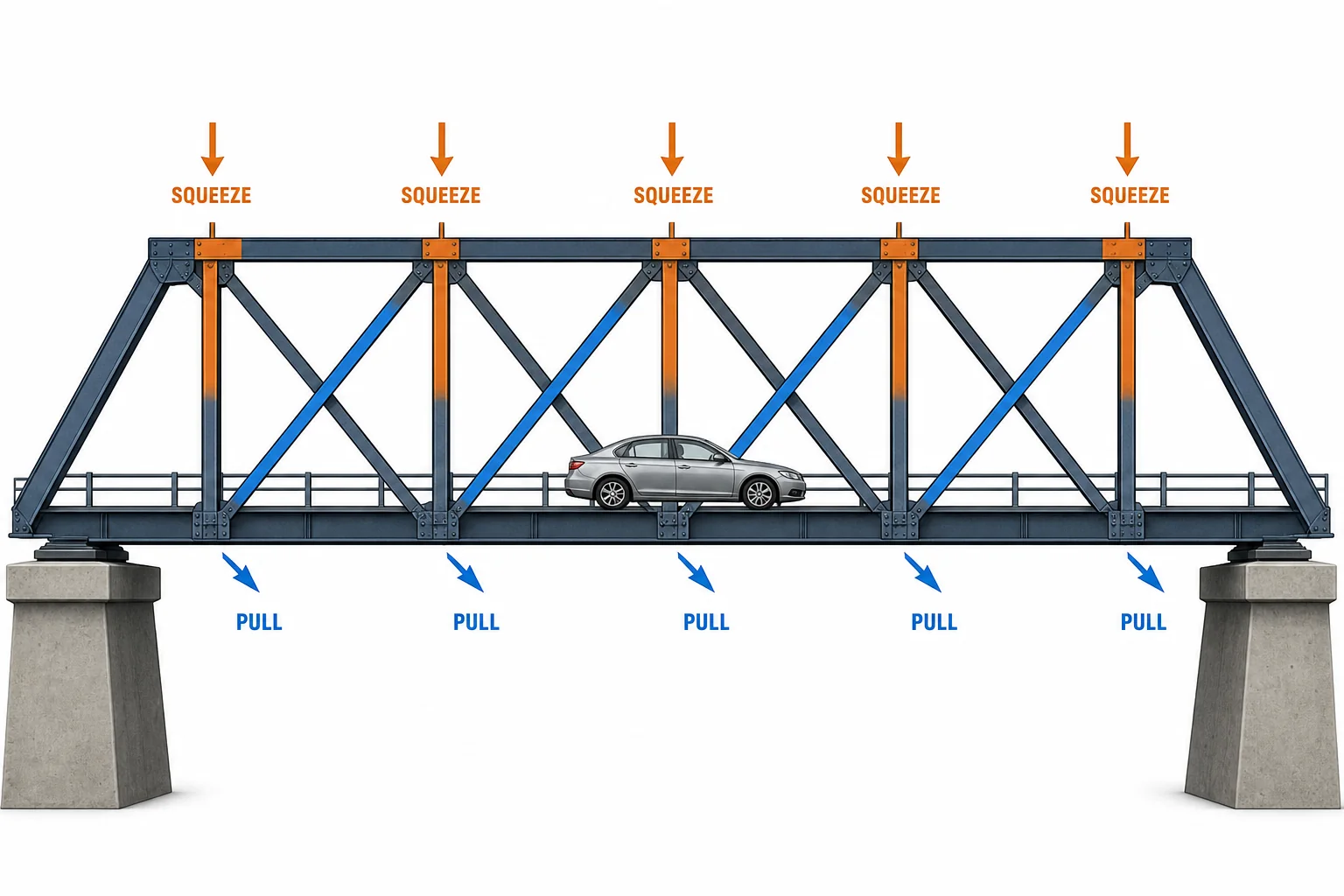
A truss turns one large load into many smaller pushes and pulls.
Arches and cables move forces
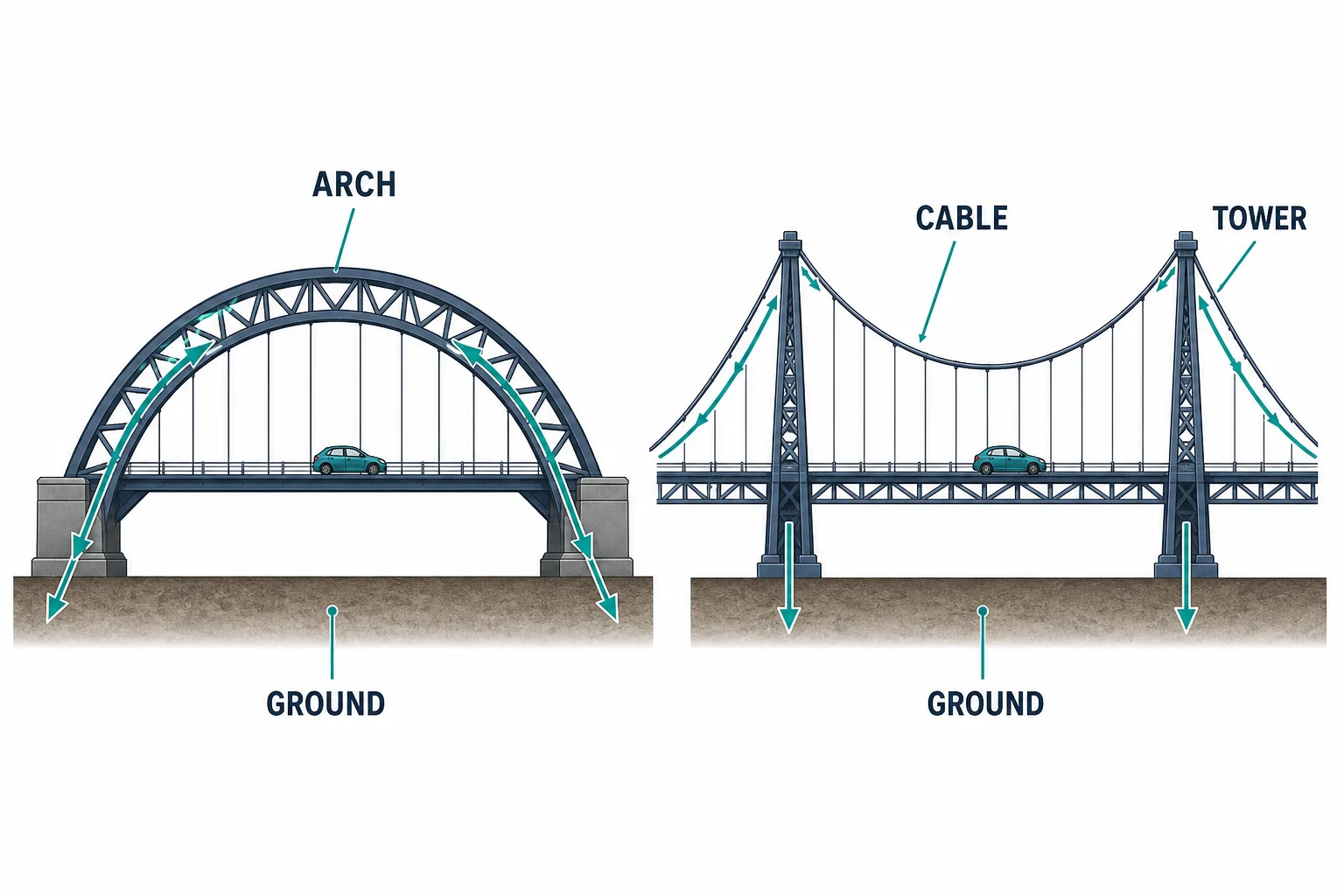
Shape controls the route that forces take.
Force diagrams show balance
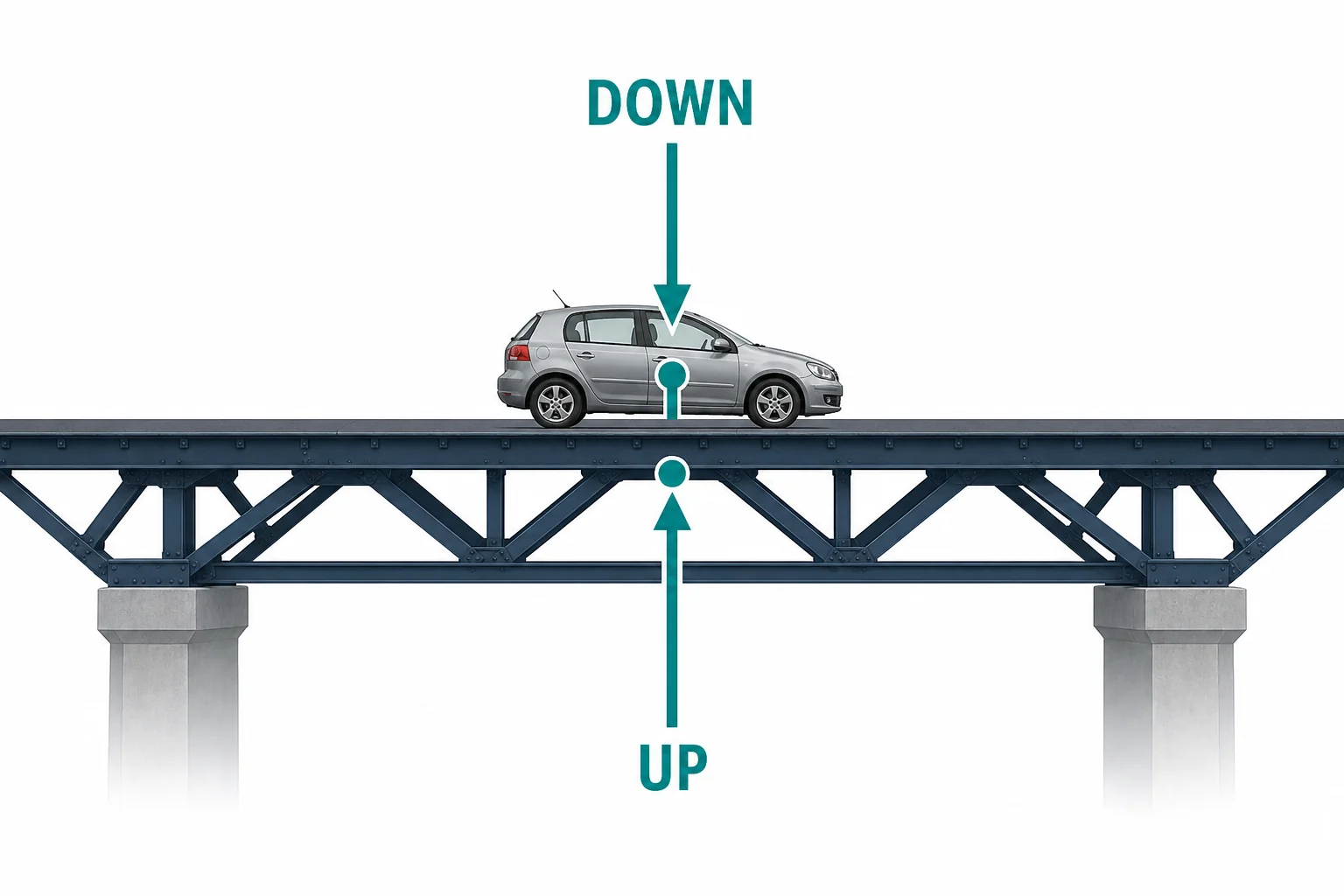
Force diagrams make invisible pushes and pulls easier to reason about.
Vocabulary
- Force
- A push or pull that can change an object’s motion or shape.
- Load
- A force that a structure must carry, such as the weight of cars, people, snow, or the bridge itself.
- Tension
- A pulling force that stretches a material.
- Compression
- A pushing force that squeezes a material.
- Truss
- A structure made of connected bars, often arranged in triangles, that shares forces across many parts.
- Force diagram
- A model that uses arrows to show the size and direction of forces on an object or part of a structure.
In the Classroom
Index Card Bridge Test
30 minutes | Grades 6-8
Students build a small bridge from index cards and tape, then test how many coins it can hold. After each test, they draw arrows to show where the load traveled and identify parts in tension or compression.
Human Truss Model
20 minutes | Grades 6-8
Students use straws, craft sticks, or their arms to compare a square frame and a triangle frame. They gently push on each shape and record which one changes shape more easily.
Bridge Force Diagram Gallery
25 minutes | Grades 6-8
Pairs choose a beam, arch, truss, or suspension bridge and sketch a simple force diagram for a car at midspan. The class compares how each design moves forces to the ground.
Key Takeaways
- • Cars push down on bridges with weight, and bridges push back up with support forces.
- • Bridge parts carry forces as pushes, pulls, or a mix of both.
- • Triangles make truss bridges stiff because they resist shape changes.
- • Arches, cables, beams, and towers guide forces along different paths to the ground.
- • Force diagrams help students model how bridge forces balance and move through a structure.