How Do Airbags Slow You Down Safely?
A crash stretched over more time
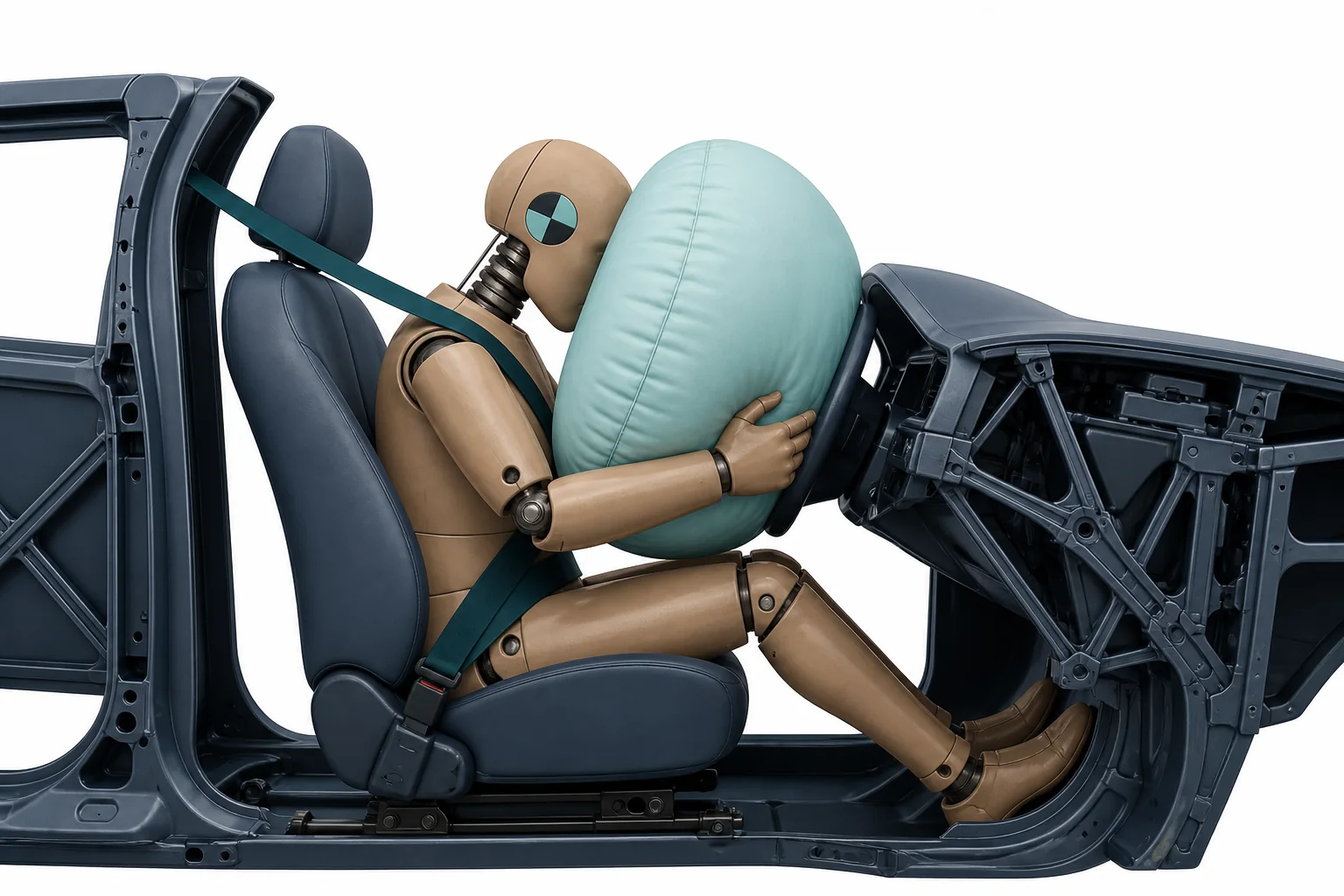
An airbag does not make a crash gentle, but it makes your stop last a little longer. That longer stopping time lowers the push on your body. It also spreads the push across your chest, head, and face instead of one small point.
In a crash, your body keeps moving forward even after the car starts to stop. A seat belt and airbag work together to bring your body to rest. The key is not stopping you instantly. It is stopping you over a longer time and distance. Physics describes this with momentum change, impulse, force, and time. Your momentum depends on your mass and speed. In a crash, that momentum must drop to zero. The airbag cannot change how much momentum you lose. It can change how quickly you lose it. A longer stopping time means a smaller average force. This same idea appears when a gymnast lands on a mat or a baseball player catches a ball by moving the glove backward. Airbags are a real safety system built around Newton's second law and the impulse momentum relationship.
Your body keeps moving
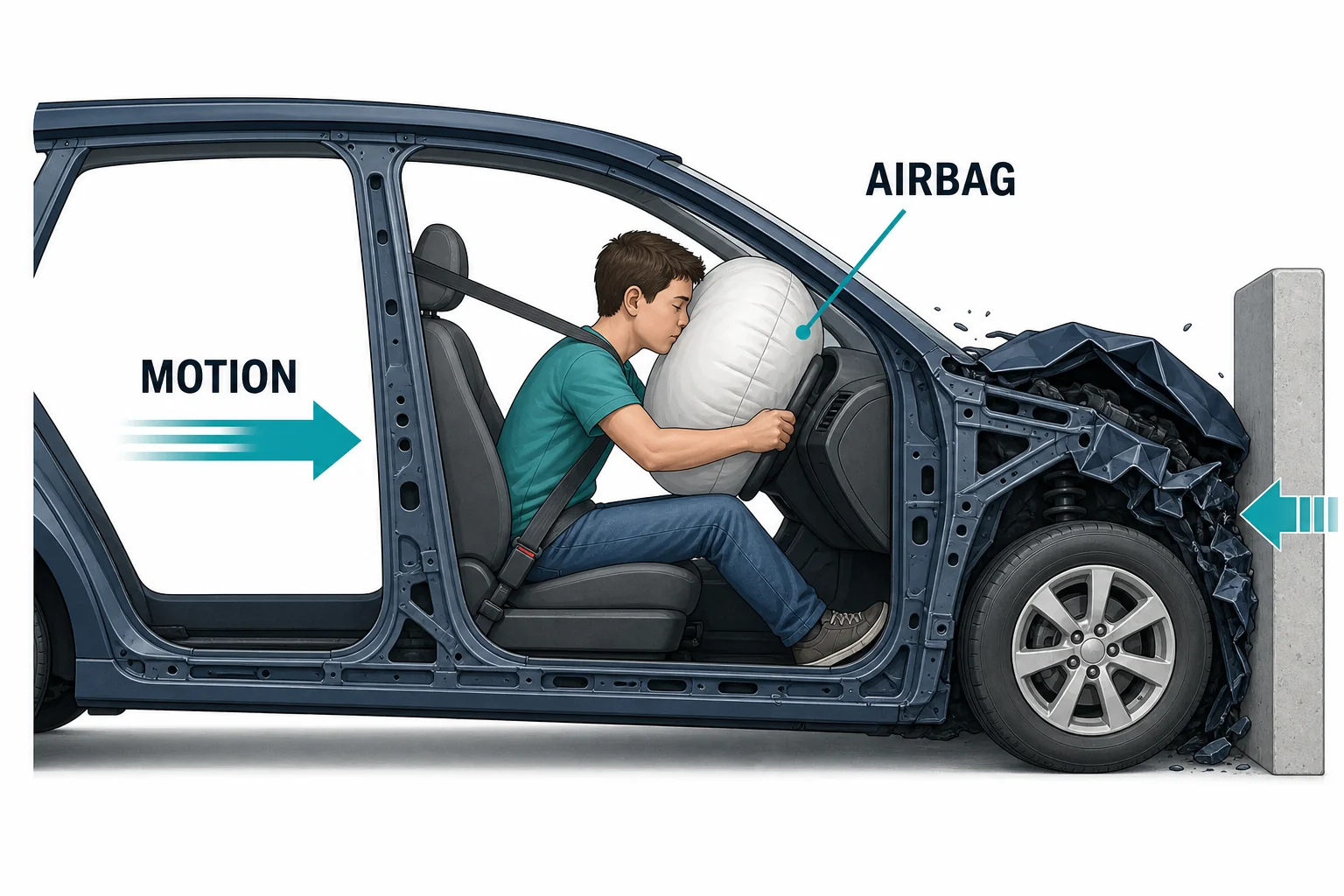
A crash changes your motion, so a force must act on your body.
Momentum must change
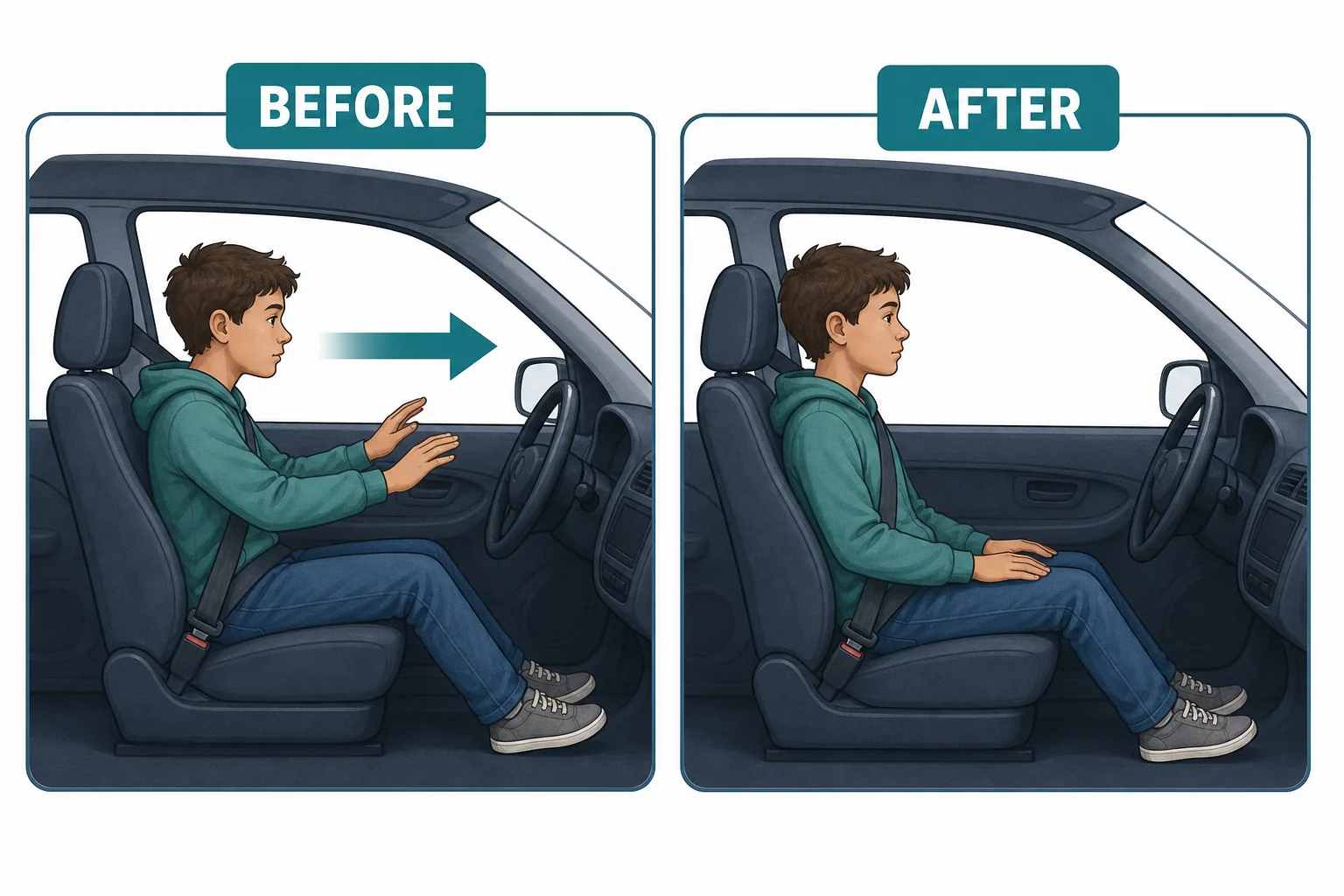
The airbag changes the timing of the stop, not the total momentum change.
Impulse spreads the stop out
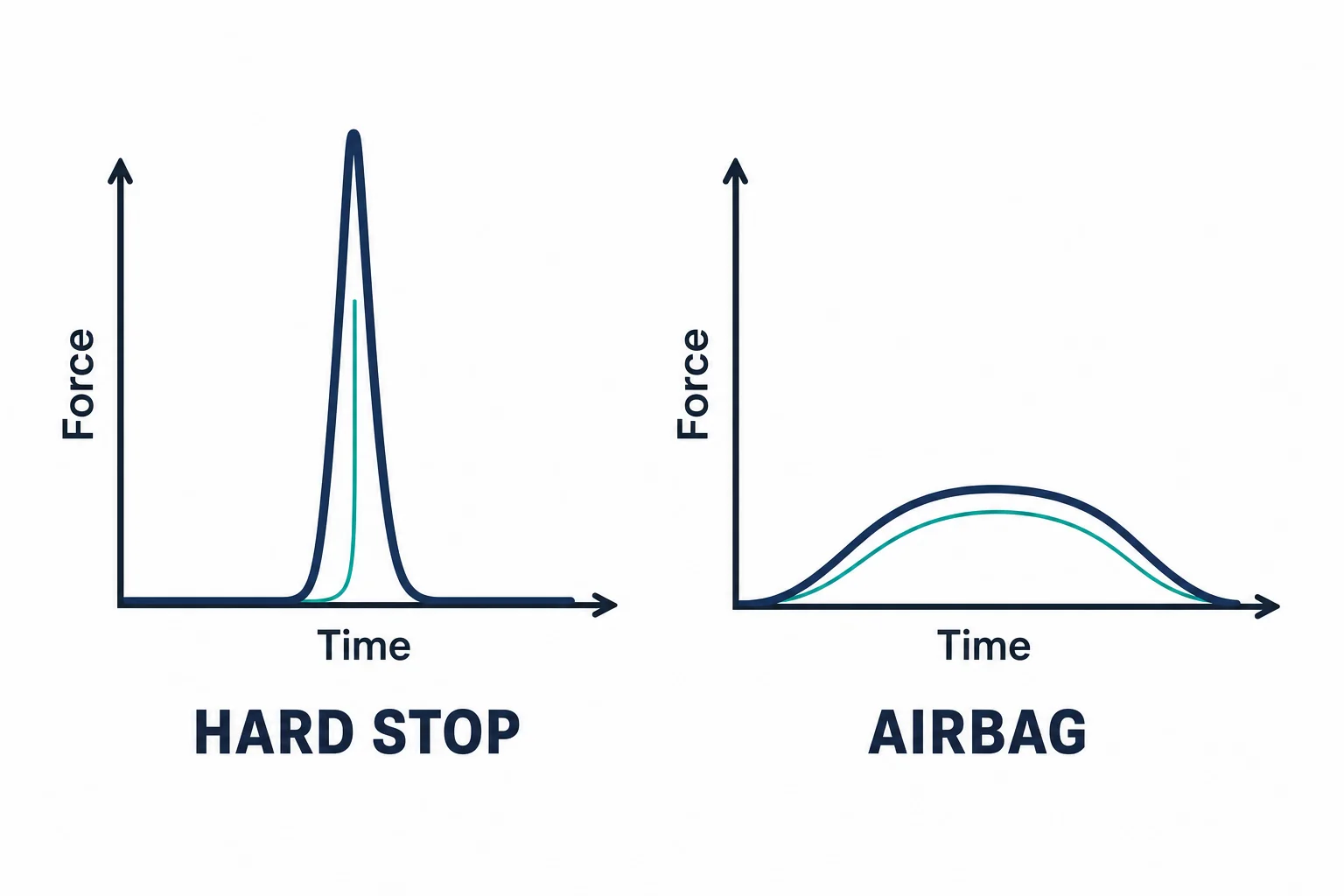
For the same momentum change, increasing time lowers average force.
Force is spread over area
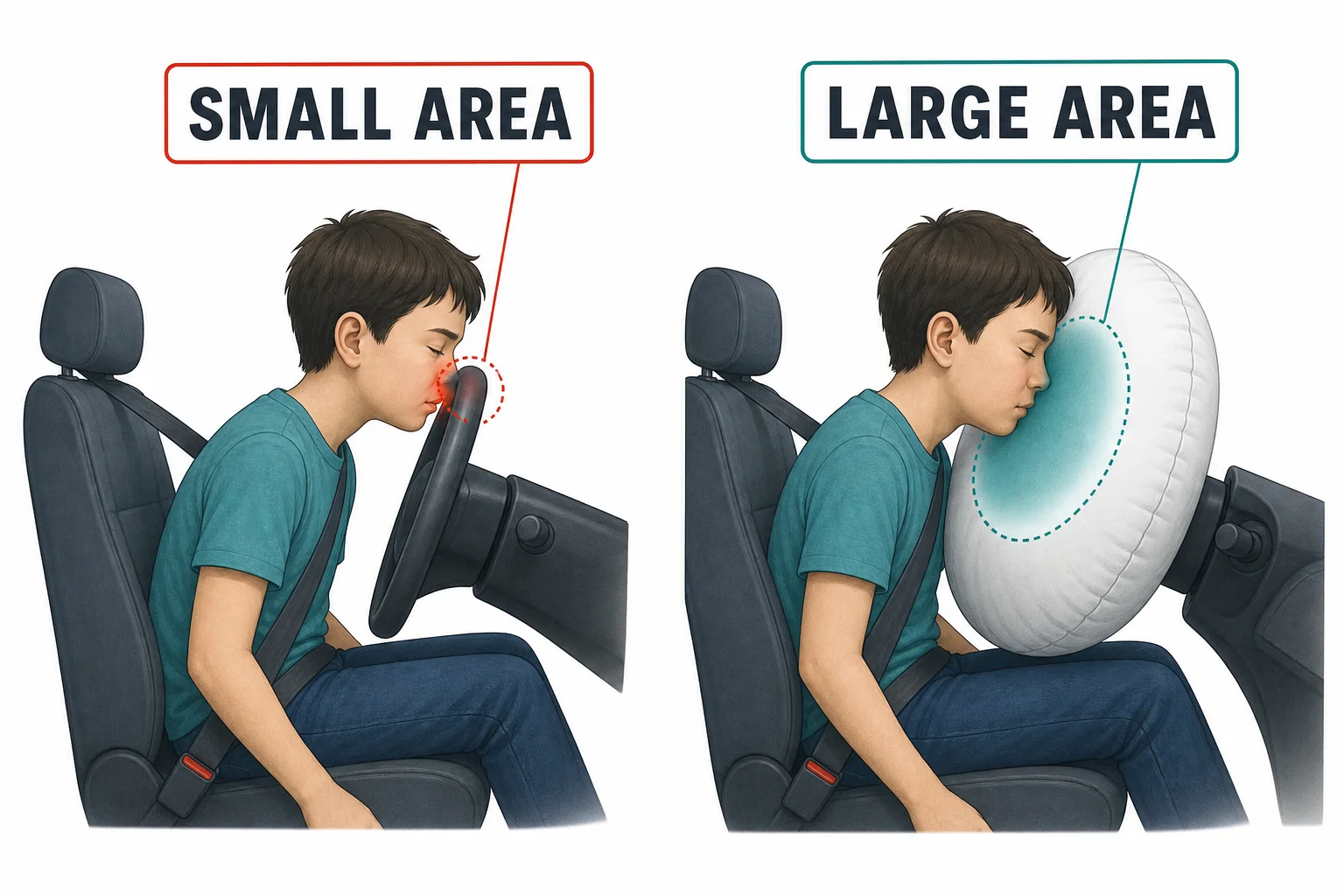
Spreading force over more area lowers pressure on vulnerable body parts.
Airbags work with seat belts
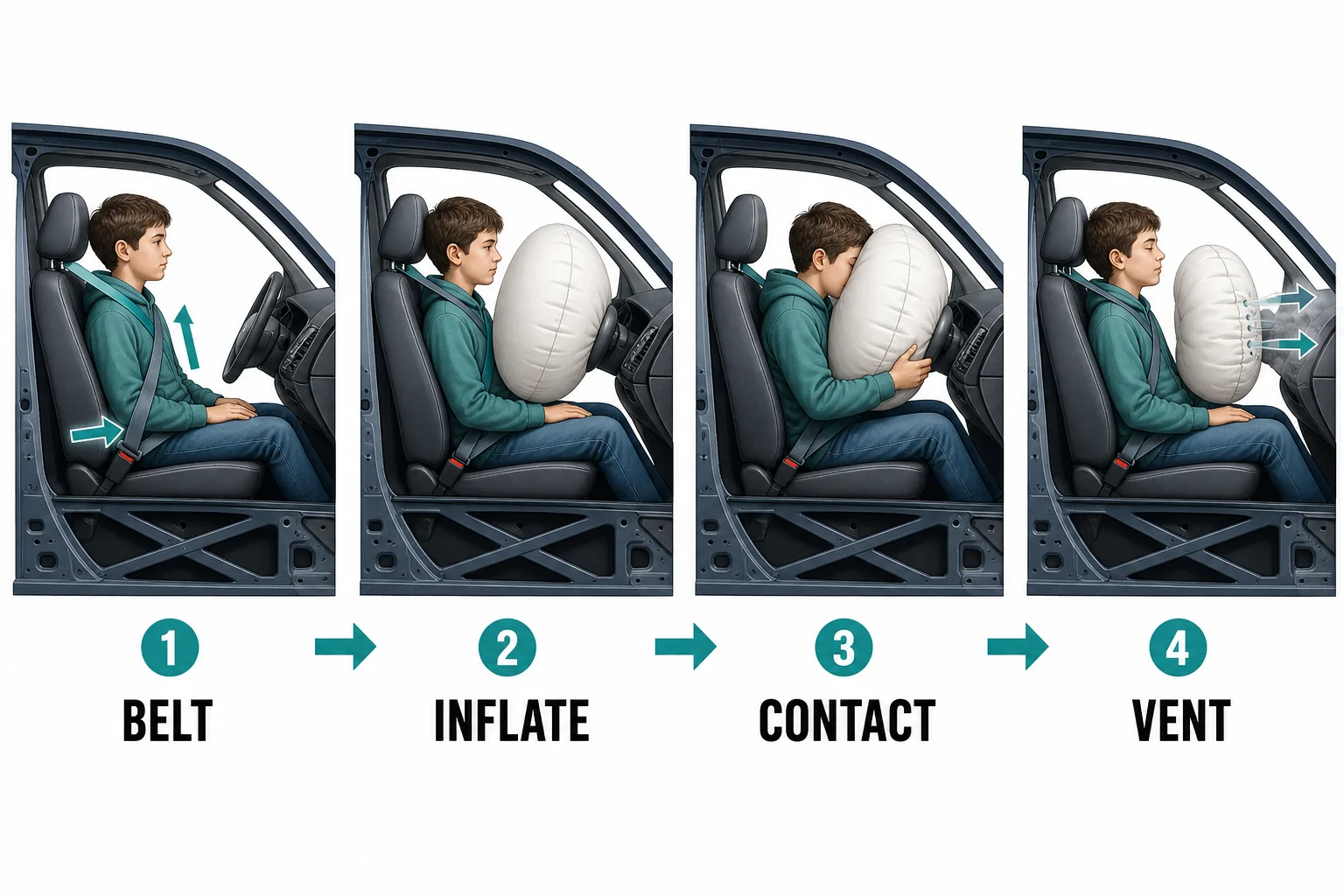
Airbags are designed to work with seat belts, not instead of them.
Vocabulary
- Momentum
- A measure of motion that depends on an object's mass and velocity.
- Impulse
- The effect of a force acting over a time interval, equal to the change in momentum.
- Average force
- The force value that would produce the same impulse over the same time interval.
- Stopping time
- The time it takes for a moving object or person to slow to rest.
- Pressure
- Force spread over area, so the same force over a larger area gives lower pressure.
- Inertia
- The tendency of an object to keep its current motion unless a force changes it.
In the Classroom
Egg drop impulse test
35 minutes | Grades 9-12
Students design two landing systems for a plastic egg or sealed container, one stiff and one cushioned. They compare how increasing stopping time changes the chance of damage and connect the result to airbag design.
Force time sketch
20 minutes | Grades 9-12
Students draw two force time graphs for the same momentum change. One graph is tall and narrow, and the other is lower and wider, then students explain why the areas represent the same impulse.
Seat belt and airbag system map
25 minutes | Grades 9-12
Students make a simple flowchart of a crash event from sensor detection to passenger stopping. They label where Newton's second law, impulse, and pressure appear in the system.
Key Takeaways
- • A passenger's momentum must drop to zero during a crash.
- • An airbag increases the time and distance over which the passenger stops.
- • For the same momentum change, a longer stopping time lowers average force.
- • Airbags spread force over a larger area, which lowers pressure on the body.
- • Airbags are safest when used with seat belts and proper seating position.