Sign in to save

Bookmark this page so you can find it later.

Sign in to save

Bookmark this page so you can find it later.

Physics middle-school May 24, 2026

Why Do Magnets Stick to Some Metals but Not Others?

It comes down to atomic alignment
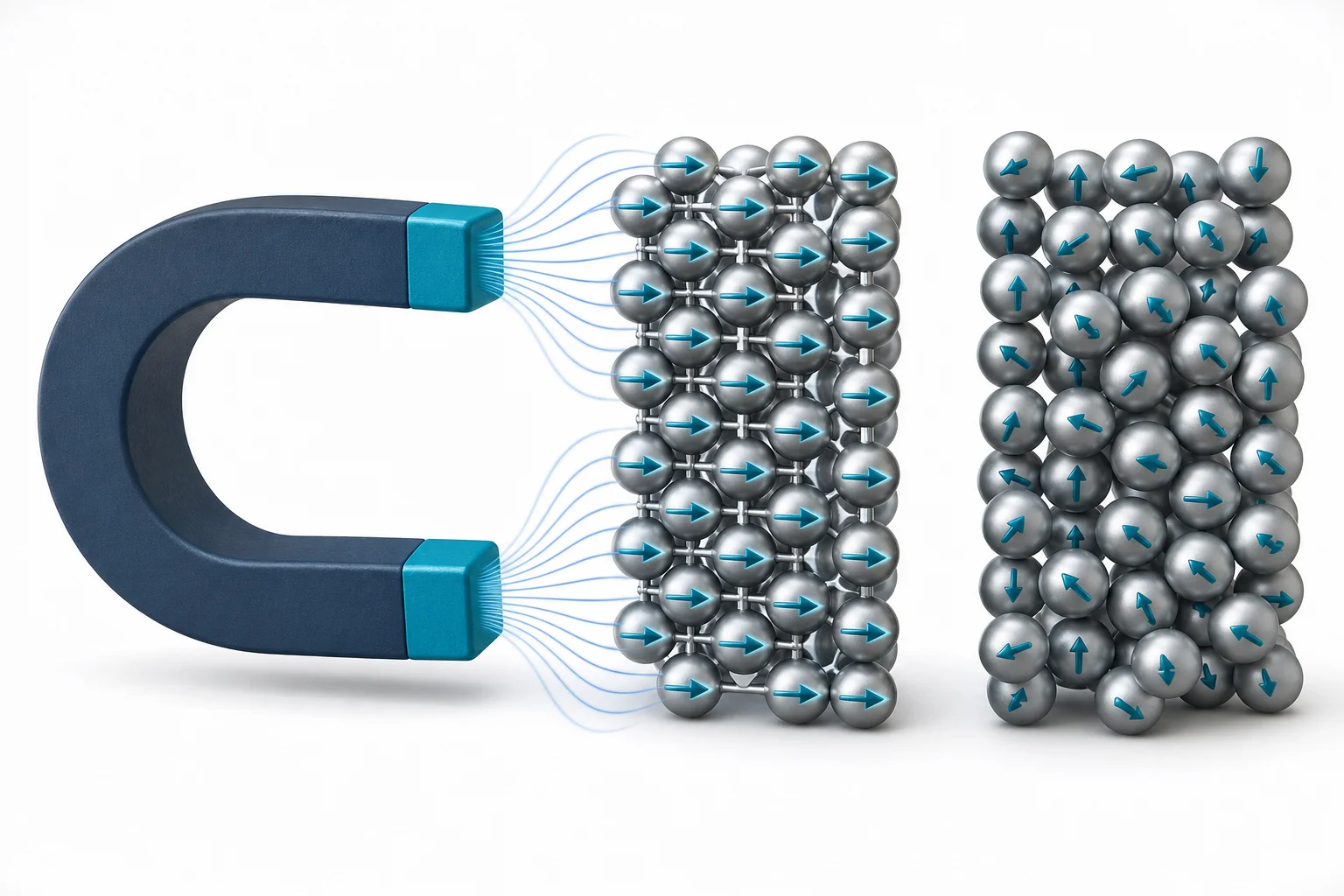
A bar magnet attracting iron nails while copper wire and aluminum foil remain nearby without sticking

Most magnets stick strongly to iron, nickel, and cobalt because tiny magnetic parts inside many atoms can line up in the same direction. In metals like copper and aluminum, those tiny parts mostly cancel out, so a fridge magnet does not grab them. A magnet can still affect these metals weakly, but the pull is usually too small to notice by hand.

Big Idea. NGSS MS-PS2-3 connects magnetic forces to how objects interact without touching.

A magnet on a refrigerator seems simple until you try it on different objects. It grabs a steel paper clip, but not a copper penny, aluminum foil, or most stainless steel spoons. The difference is not that some metals are more metal than others. It comes from how electrons behave inside the material. Electrons act like tiny magnets. In most materials, their magnetic effects point in many directions and cancel out. In iron, nickel, and cobalt, groups of atoms can line up together. When enough of those groups point the same way, the material is pulled strongly by a nearby magnet. This idea helps explain everyday objects, motors, speakers, and recycling machines that sort metals. You can connect this lesson to forces using the force calculator or compare pushes and pulls in a simple magnetic force lab.

Magnets do not attract all metals
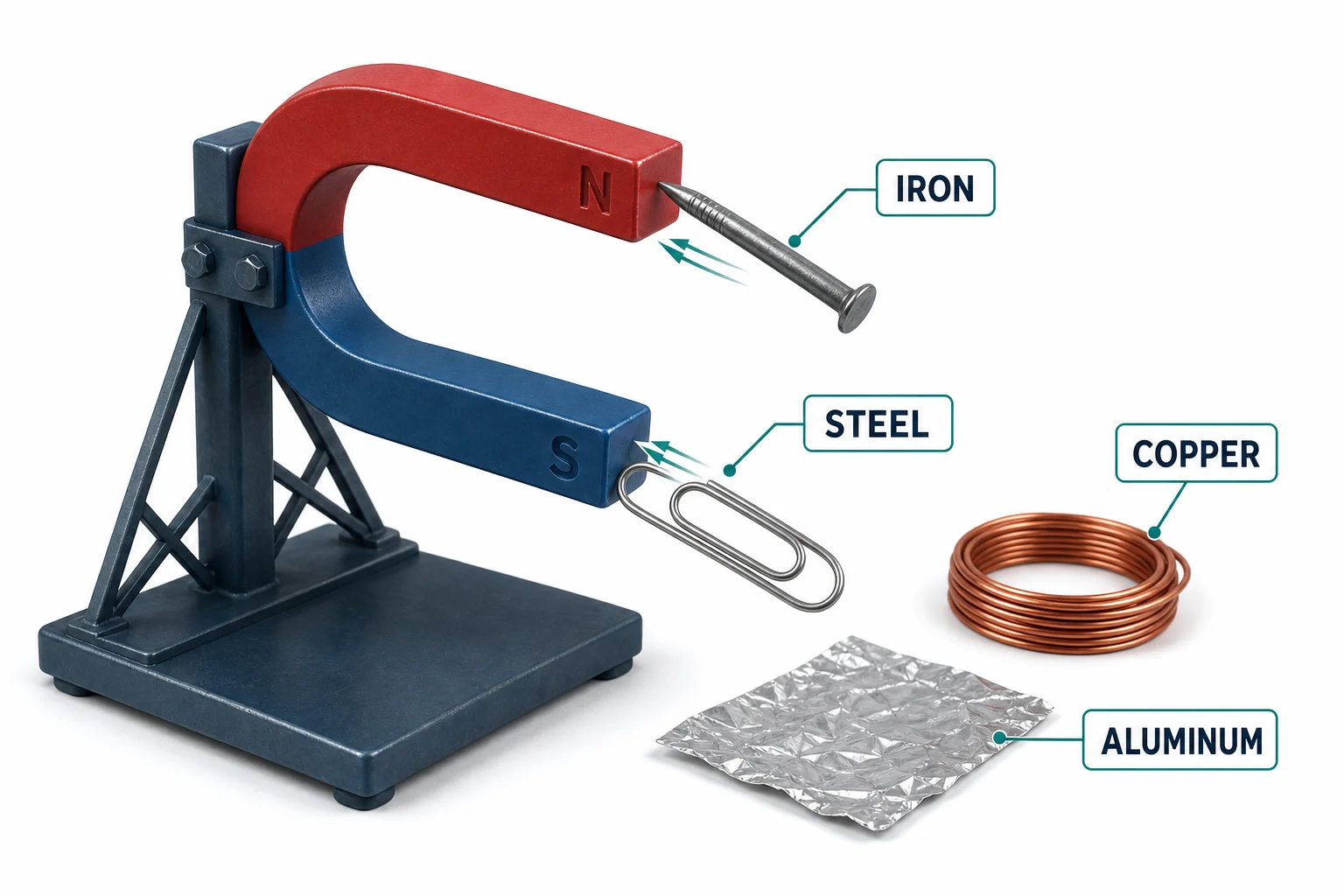
A horseshoe magnet attracting an iron nail and a steel paper clip while copper wire and aluminum foil do not move toward it
Only some metals are strongly magnetic
The word metal covers many materials. Iron, nickel, and cobalt are the main pure metals that common classroom magnets attract strongly. Steel is usually attracted because it is mostly iron mixed with small amounts of carbon and other elements. Copper, aluminum, silver, and gold are metals too, but a simple magnet will not stick to them. They conduct electricity well, but their atoms do not form strong magnetic regions that line up with a magnet. This is why a magnet sticks to a steel can but not to an aluminum drink can. It may stick to a nickel coin in some countries, but not to a copper penny. The object’s shape or shine does not decide the answer. The atoms inside the object do.

Metal is a broad category, not a guarantee that a magnet will stick.

Electrons act like tiny magnets
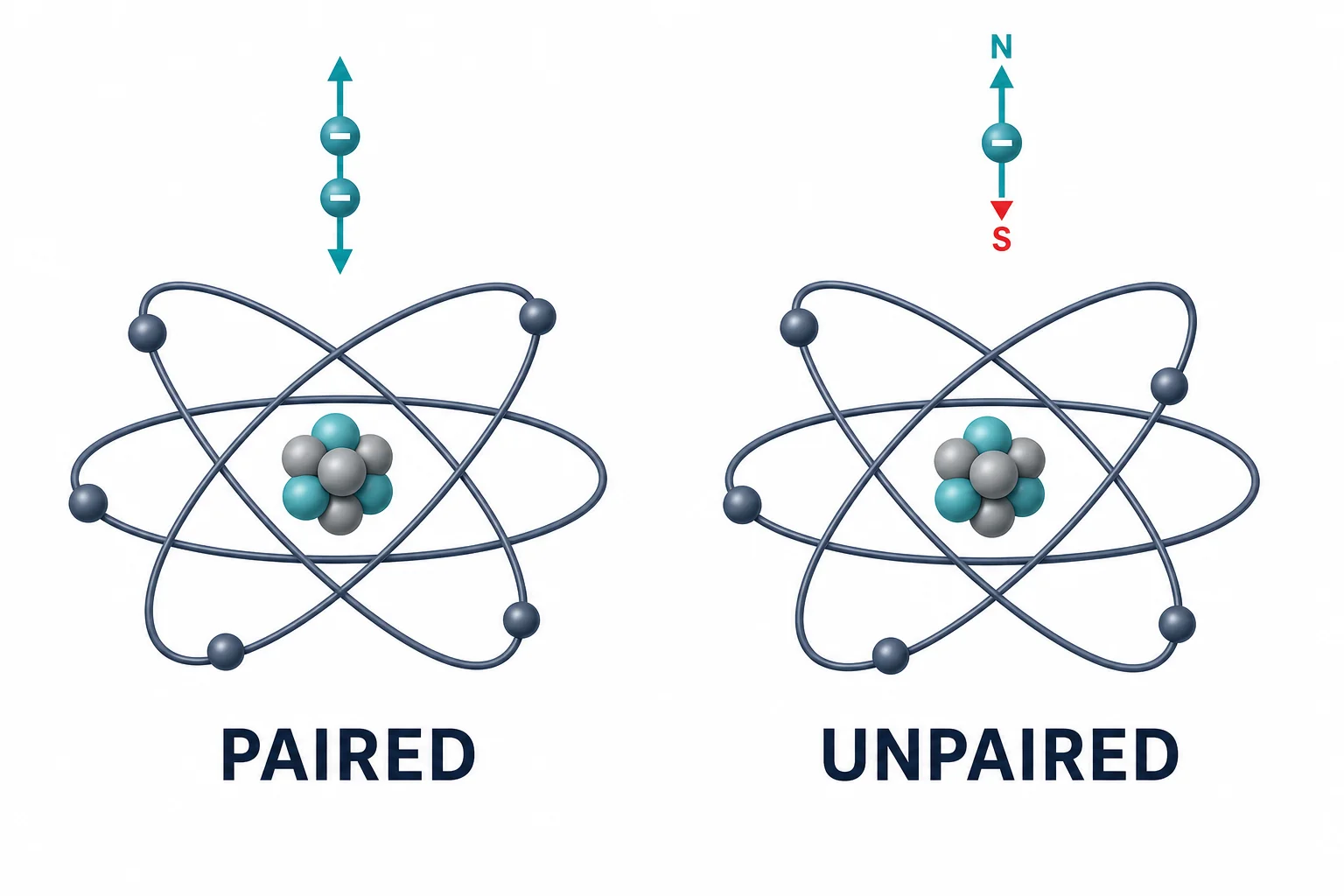
A simplified atom diagram showing paired electron arrows canceling and one unpaired electron arrow acting like a tiny magnet
Electron spin gives atoms magnetic behavior
Inside atoms, electrons have a property called spin. Spin makes each electron behave a little like a tiny magnet with a north and south direction. In many atoms, electrons are paired so that one electron’s magnetic effect cancels the other’s. When most effects cancel, the whole material has little response to a magnet. Some atoms have unpaired electrons. These unpaired electrons can give the atom a stronger magnetic effect. That still does not mean every material with unpaired electrons becomes a strong magnet. The atoms also need to interact in a way that helps many tiny magnetic effects point together. Iron, nickel, and cobalt have the right electron arrangements and interactions. Their atoms can cooperate instead of canceling out.

Magnetism starts with electrons, not with the shiny surface of a metal.

Domains line up
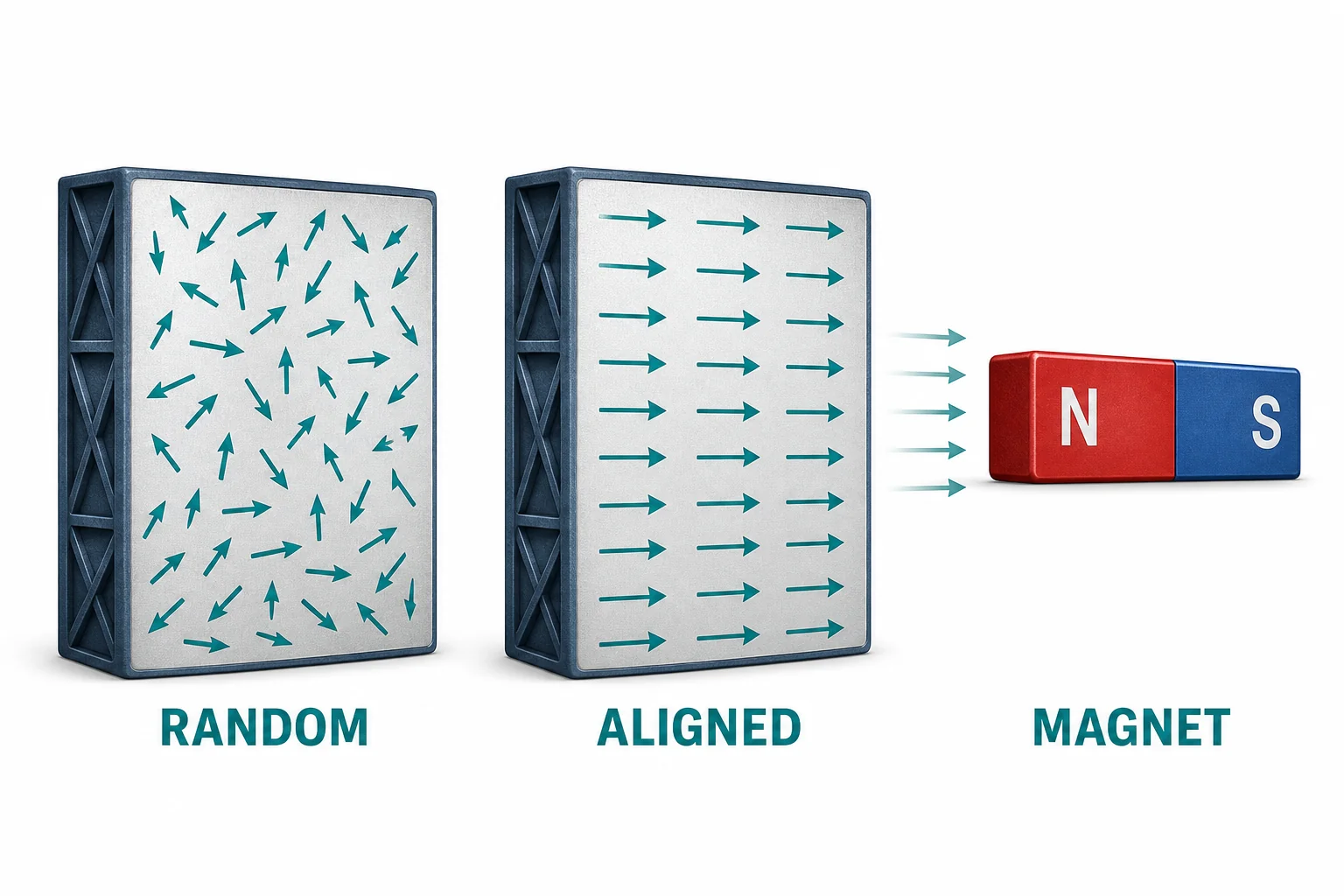
Two views of an iron sample showing magnetic domains pointing randomly before a magnet and mostly aligned after a magnet is nearby
Domains can line up in a magnetic field
A piece of iron is not one giant magnet at first. It contains many tiny regions called domains. In each domain, many atoms already point their magnetic effects in the same direction. If the domains point in random directions, the whole piece of iron may not act like a strong magnet. A nearby magnet can push many domains to line up more in the same direction. Then the iron becomes strongly attracted. In some materials, the domains stay lined up after the outside magnet is removed. That makes a permanent magnet. In other materials, much of the alignment fades after the magnet goes away. This is why some steel objects can become weakly magnetized after touching a magnet.

A magnet pulls iron strongly when many domains line up.

Why copper and aluminum do not stick
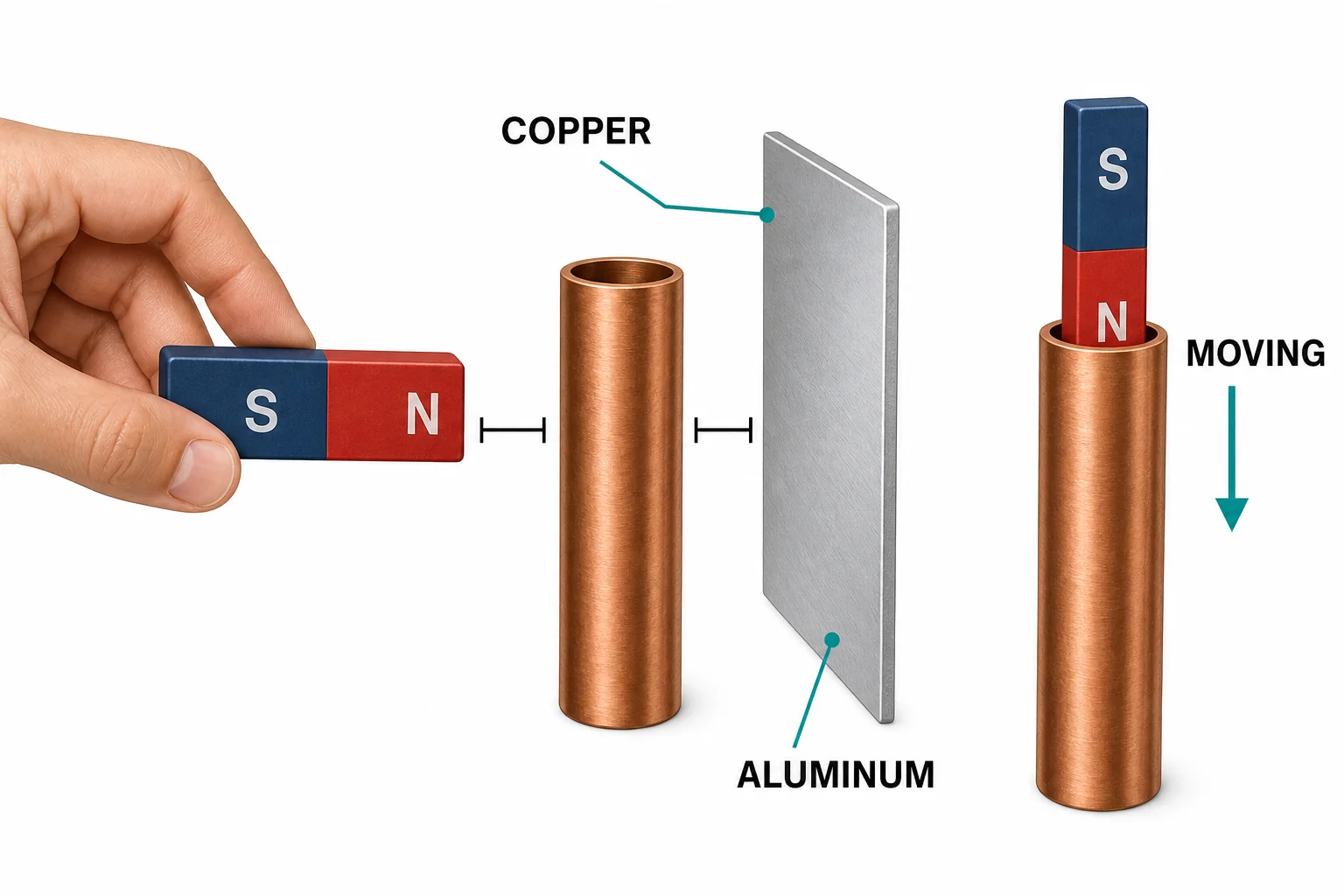
A magnet near a copper pipe and aluminum sheet showing no sticking, with a small motion arrow showing that moving magnets can still interact with conductors
Copper and aluminum respond weakly in everyday conditions
Copper and aluminum are good conductors, but they are not ferromagnetic. Their electron arrangements make most magnetic effects cancel. A fridge magnet cannot organize their atoms into strong aligned domains the way it can with iron. This does not mean copper and aluminum ignore magnetism completely. Moving magnets can create electric currents in these metals. Those currents can make weak magnetic effects of their own. This is used in braking systems and science demonstrations, such as dropping a magnet through a copper pipe. The falling magnet slows down because its changing magnetic field affects the copper. Still, the copper pipe does not stick to the magnet when both are sitting still. Attraction and magnetic interaction are related, but they are not the same thing.

Copper and aluminum can interact with moving magnets, but they do not stick like iron.

Testing objects fairly
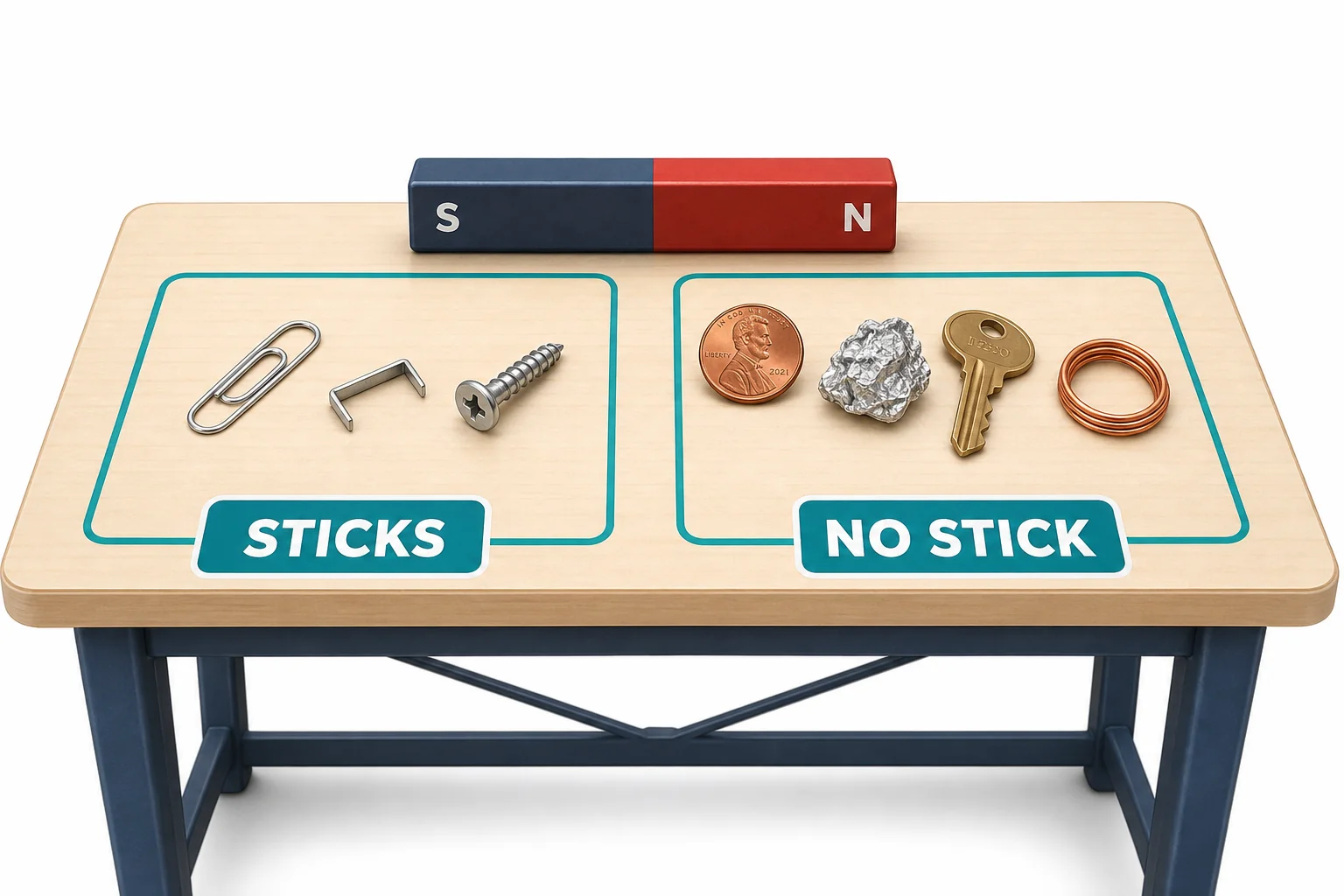
A classroom sorting chart with common objects placed into attracted and not attracted groups after testing with a bar magnet
A fair test compares one variable at a time
A classroom test works best when students separate material from shape and coating. A shiny object may be steel with a thin layer of another metal on top. A dull object may be aluminum. Test each object with the same magnet and the same distance. Record whether the pull is strong, weak, or not noticed. Then sort the results by material if you know it. Students often find that paper clips, staples, and some screws are attracted because they contain iron or steel. Pennies, aluminum foil, brass keys, and copper wire usually are not. Some stainless steels are attracted, and some are not, because stainless steel can have different internal structures. This makes a useful evidence lesson. The rule is not based on the object’s name alone. It depends on what atoms are present and how they are arranged.

A fair magnet test uses the same magnet, distance, and method each time.

Vocabulary

Ferromagnetic
Describes a material, such as iron, nickel, or cobalt, that can be strongly attracted by a magnet.
Electron spin
A property of electrons that makes them behave in some ways like tiny magnets.
Magnetic domain
A tiny region inside a material where many atomic magnetic effects point in the same direction.
Permanent magnet
A material that keeps many magnetic domains lined up after it has been magnetized.
Conductor
A material that lets electric charges move through it easily, such as copper or aluminum.

In the Classroom

Magnet sorting investigation

25 minutes | Grades 6-8

Students test a set of classroom objects with the same magnet and sort them into attracted, weakly attracted, and not attracted groups. They compare results with known materials and look for patterns involving iron and steel.

Domain model with arrows

20 minutes | Grades 6-8

Students use index cards or small arrow tiles to model magnetic domains. They first arrange arrows randomly, then align them to show how a nearby magnet can change the overall effect.

Copper pipe magnet drop

15 minutes | Grades 7-8

Students compare how a strong magnet and a nonmagnetic object fall through a copper pipe. The class discusses why the copper does not stick but can still interact with a moving magnet.

Key Takeaways

  • Common magnets stick strongly to iron, nickel, cobalt, and many steels.
  • Electron spin gives atoms tiny magnetic effects.
  • Ferromagnetic materials can form domains that line up together.
  • Copper and aluminum do not stick to a fridge magnet because their magnetic effects mostly cancel.
  • A fair test uses the same magnet and distance for every object.