Magnets & Materials Lab
Bring a virtual bar magnet near seven everyday objects and discover which materials are attracted. Sort your findings, then investigate whether distance changes the result.
Guided ExperimentMagnets & Materials Investigation
Which 3 objects do you predict will be attracted to the magnet? Why?
Write your hypothesis in the Lab Report panel, then click Next.
Controls
Bar Magnet
Click "Test Now" to bring each object near
Paper Clip
steel
Aluminum Can
aluminum
Plastic Spoon
plastic
Copper Coin
copper
Wooden Block
wood
Steel Nail
steel
Glass Marble
glass
Data Table
(0 rows)| # | Object | Material | Attracted? (Y/N) | Distance Tested | Observation |
|---|
Reference Guide
What Is Magnetism?
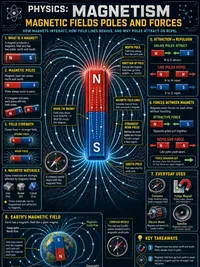
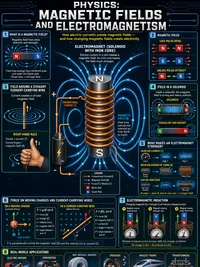
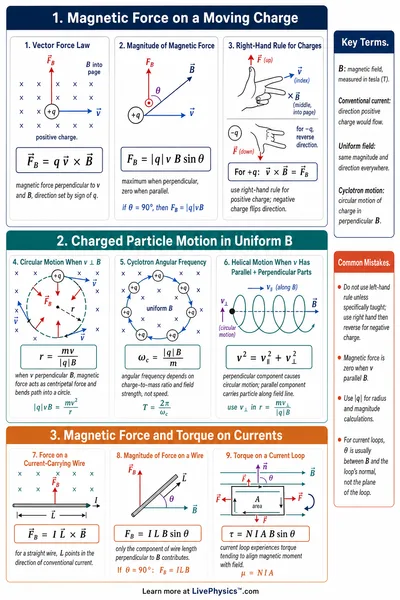
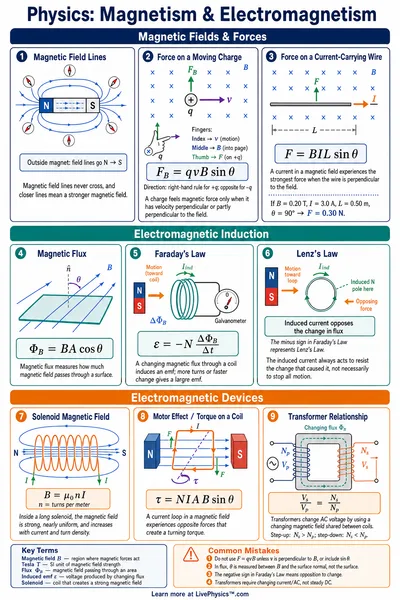
Magnetism is a force that can attract certain materials without touching them. A magnet creates an invisible magnetic field around it.
When a magnetic material enters that field, it feels a pull toward the magnet. The pull is stronger up close and weaker farther away.
Magnets are used in compasses, speakers, refrigerator doors, motors, and MRI machines.
Magnetic vs. Non-Magnetic Materials
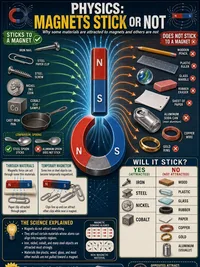
Only a few materials are attracted to magnets
- Magnetic iron, steel, nickel (and cobalt)
- Not magnetic aluminum, copper, plastic, glass, wood, rubber
Not all metals are magnetic! Aluminum cans and copper pennies are metals, but they are not attracted to a magnet.
Magnet Poles
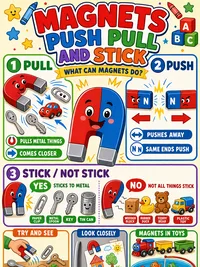
Every magnet has two ends called poles, a north pole and a south pole.
- Unlike poles attract, north and south pull together
- Like poles repel, two norths or two souths push apart
Earth itself is a giant magnet. Compass needles point north because the needle's north pole is attracted to Earth's magnetic south pole (near geographic north).
Fair Test Rules
A fair test is an experiment where you change only one thing at a time. This lets you know which variable caused the result.
When testing distance
- Use the same magnet every time
- Use the same object every time
- Change only the distance (near vs. far)
If something else changes, you cannot be sure which change caused the difference.