Practice identifying innate and learned animal behaviors, comparing examples, and explaining how behavior can affect survival and reproduction.
Read each problem carefully. Use complete sentences and include evidence or reasoning when asked.
Classifying behaviors and explaining how animals acquire them
Biology - Grade 9-12
- 1
Define innate behavior and learned behavior. Include one example of each in your answer.
- 2
A newly hatched sea turtle moves from its nest toward the ocean without being taught. Classify this behavior as innate or learned and explain your reasoning.
- 3
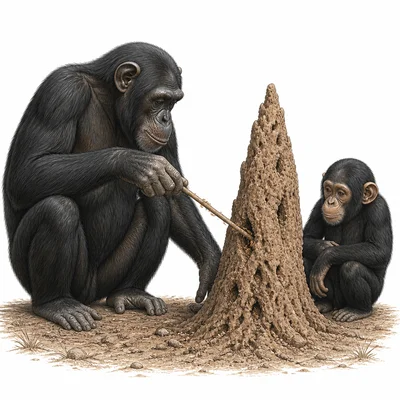
A chimpanzee uses a stick to remove termites from a mound after watching older chimpanzees do the same. Classify this behavior and explain what type of learning may be involved.
- 4
Explain how a fixed action pattern differs from a reflex. Give one example of either behavior.
- 5
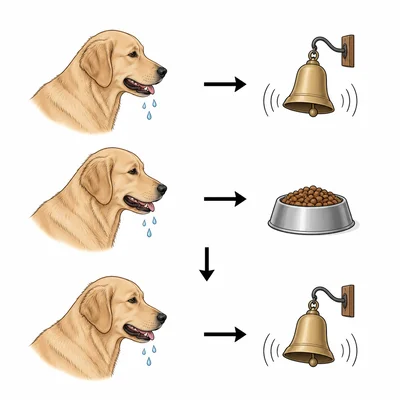
A dog begins to salivate when it hears a bell because the bell has been paired many times with food. Identify the learning process and explain how it works.
- 6
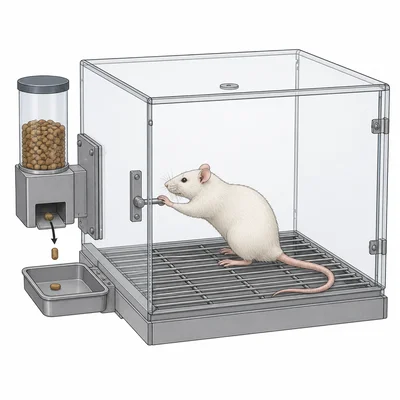
In an experiment, a rat learns to press a lever to receive a food pellet. Identify the learning process and explain why it fits.
- 7
A young bird hears songs from adult birds during a specific early stage of life. Later, it produces a similar song. What is this sensitive period of learning often called, and why is timing important?
- 8
Classify each behavior as innate or learned: a spider building a typical web, a human learning to ride a bicycle, a baby mammal nursing, and a crow dropping nuts on a road so cars crack them.
- 9
A student claims that all animal behaviors are either completely innate or completely learned. Explain why this statement is too simple.
- 10
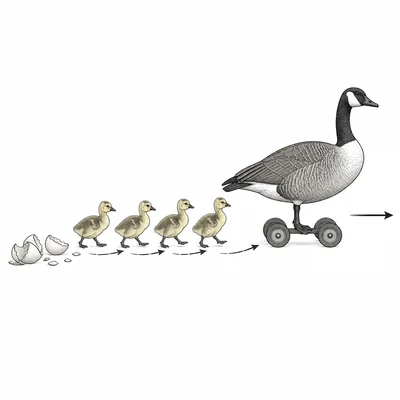
The diagram shows goslings following the first large moving object they see after hatching. Name this behavior and explain whether it is innate, learned, or both.
- 11
A squirrel hides nuts in many places during the fall and later finds some of them by using memory and smell. Explain how both innate and learned factors could be involved.
- 12
A fish stops reacting to harmless shadows that pass over its tank every few minutes. What type of learning is this, and how does it help the animal?
- 13
Compare the advantages of innate behavior and learned behavior for survival in changing environments.
- 14
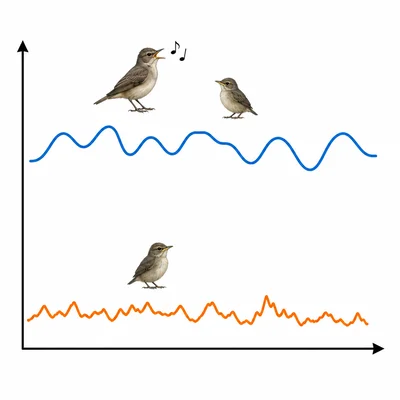
A graph shows that young birds raised without hearing adult songs produce abnormal songs, while birds raised with adult tutors produce normal songs. What conclusion can you draw about song development?
- 15
Design a simple investigation to test whether a behavior in an animal is learned rather than innate. Include a control group, an experimental group, and the evidence you would look for.