Light, Shadows & Materials Lab
Shine a light on different materials and watch what happens. Some materials let light pass through, some block it completely, and some do a little of both. Record how each material changes the shadow and find the pattern.
Guided ExperimentMaterials and Shadows Investigation
Look around the room. Do you think every thick material blocks light the same way? Predict whether all thick materials cast dark shadows, or if some still let a little light through.
Write your hypothesis in the Lab Report panel, then click Next.
Pick a Material
Watch the Shadow
Clear Glass
Controls
Reference Guide
How Light Travels
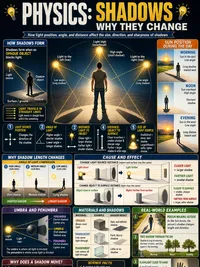
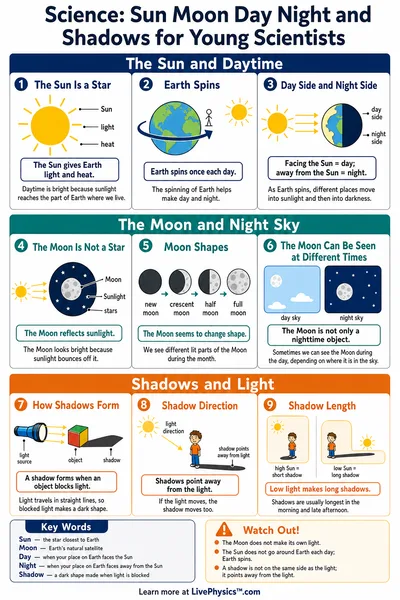
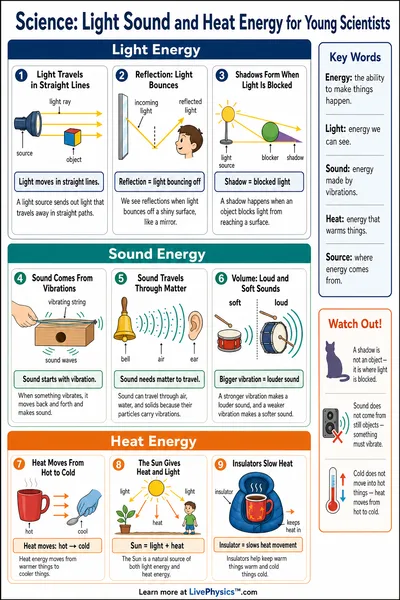
Light travels in straight lines from a source like the sun, a lamp, or a flashlight. When light hits an object, something has to happen. It can pass through, bounce off, or get stopped.
Whether a shadow forms, and how dark it is, depends on the material the light hits.
Three Kinds of Materials
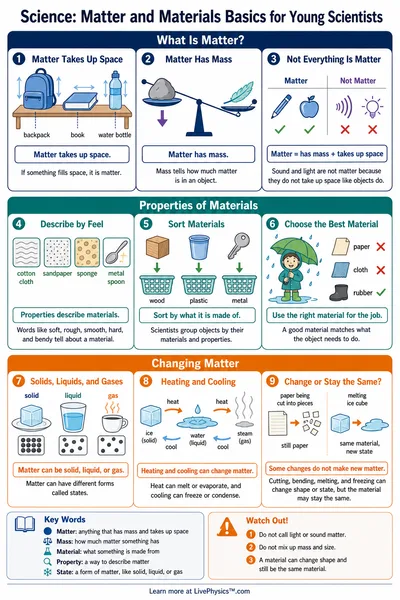
Scientists group materials by how much light passes through them. Every material in the lab is one of these three kinds.
The word transparent means you can see straight through. Opaque means you cannot see through at all.
What Makes a Shadow
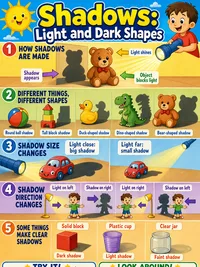
A shadow forms when an object blocks light from reaching a surface. The darker the shadow, the less light is getting through.
The shape of the shadow matches the shape of the object. Your own body makes a body-shaped shadow on a sunny day.
Try This at Home
Grab a flashlight and a few items from around the house. Point the flashlight at a wall and hold each item between the light and the wall.
Sort your items into transparent, translucent, and opaque. Add any new ones you find to the Data Table as you go.