Practice identifying mass, volume, and density using everyday objects, measurements, and simple calculations.
Read each problem carefully. Show your work in the space provided. Include units in your answers.
Measuring and comparing matter
Physics - Grade 4-5
- 1
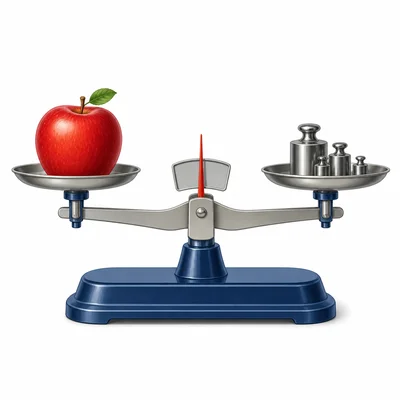
A student places an apple on a balance. The balance shows 150 grams. What property of matter is being measured?
- 2
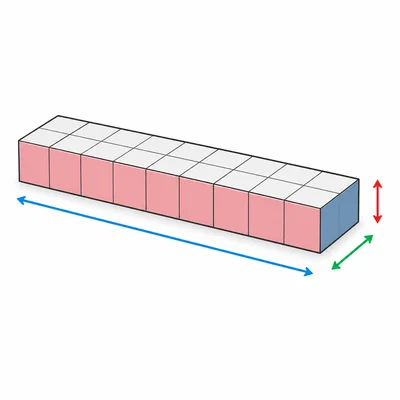
A rectangular eraser is 5 centimeters long, 2 centimeters wide, and 1 centimeter tall. What is its volume?
- 3
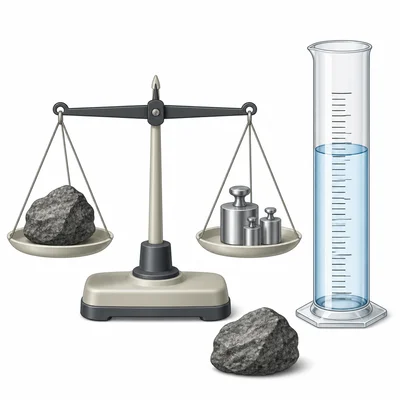
A rock has a mass of 60 grams and a volume of 20 milliliters. What is the density of the rock?
- 4
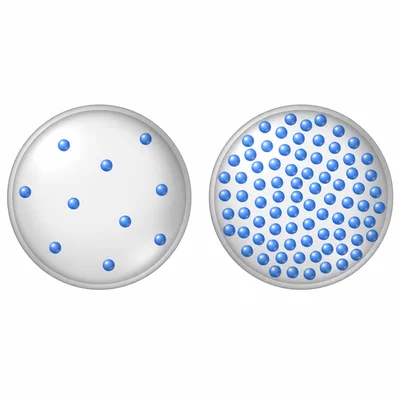
Two balls are the same size. Ball A has a mass of 40 grams. Ball B has a mass of 80 grams. Which ball is denser, and why?
- 5
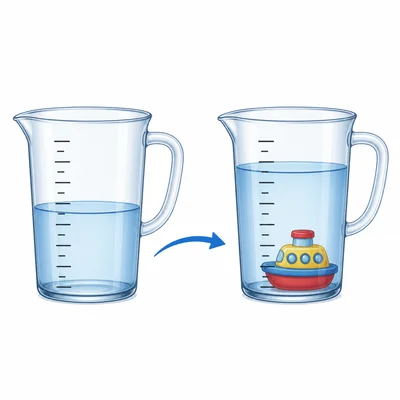
A measuring cup contains 30 milliliters of water. After a small toy is dropped in, the water level rises to 45 milliliters. What is the volume of the toy?
- 6
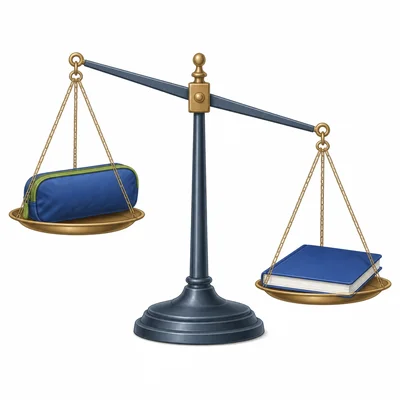
Which has more mass: a 25 gram pencil case or a 40 gram notebook? Explain your answer.
- 7
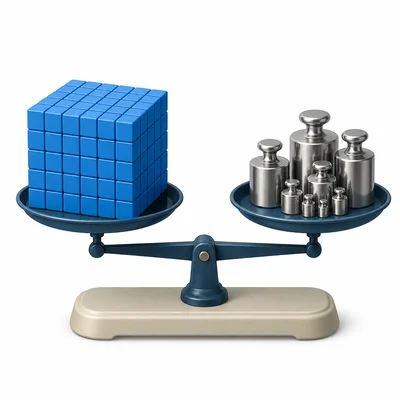
A cube has a mass of 24 grams and a volume of 8 cubic centimeters. What is its density?
- 8
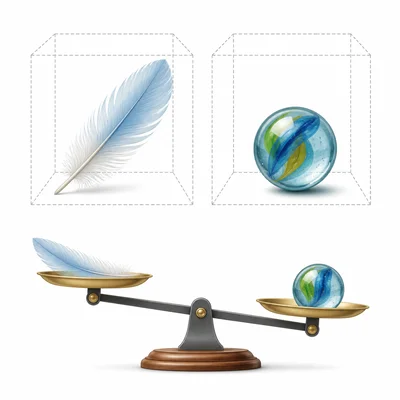
A feather and a marble both fit inside the same small box. The marble has more mass. Which object has greater density if they take up about the same amount of space?
- 9
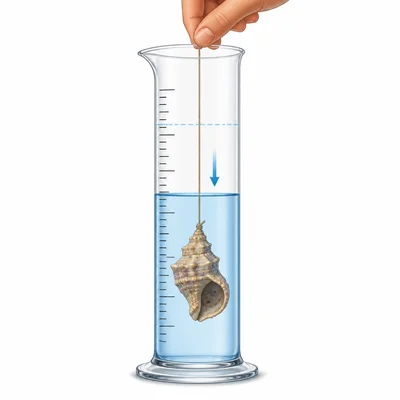
A student wants to measure the volume of an oddly shaped shell. Which tool and method should the student use?
- 10
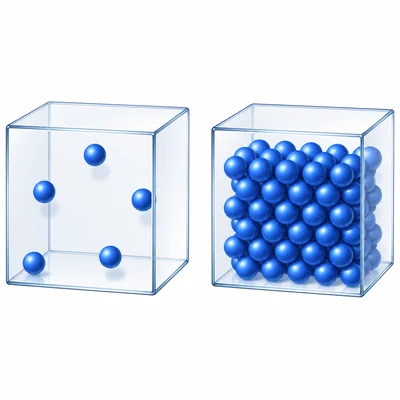
An object has a density of 1 gram per milliliter. Another object has a density of 5 grams per milliliter. Which object has more matter packed into the same amount of space?
- 11
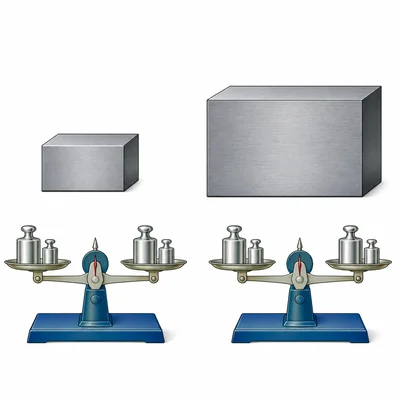
A block has a mass of 50 grams and a volume of 10 cubic centimeters. A second block has a mass of 50 grams and a volume of 25 cubic centimeters. Which block is denser?
- 12
Fill in the missing word: Volume is the amount of space an object takes up. Mass is the amount of matter in an object. Density compares an object's mass to its ____.
- 13
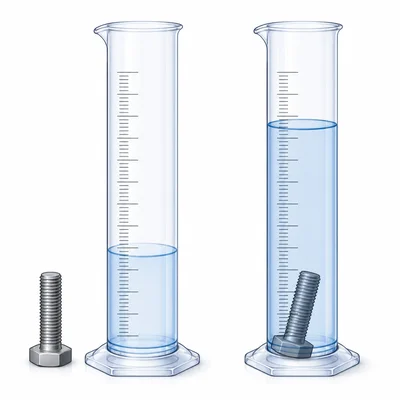
A small metal bolt has a mass of 36 grams. It is placed in a graduated cylinder, and the water level rises from 18 milliliters to 24 milliliters. What is the density of the bolt?
- 14
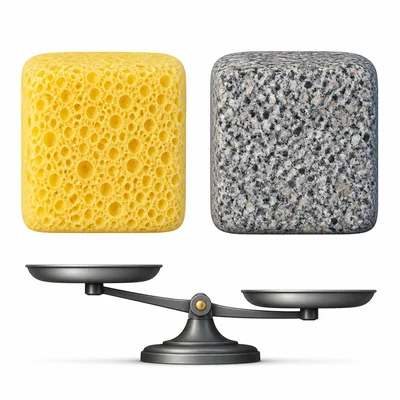
A sponge and a stone have the same volume. The sponge has a mass of 10 grams, and the stone has a mass of 100 grams. Explain which one has the greater density.
- 15
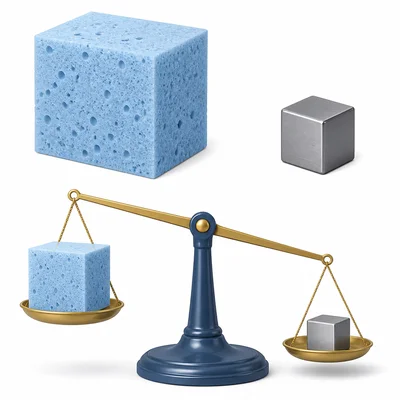
A student writes, 'A large object is always denser than a small object.' Explain why this statement is not always true.