Understanding Shadow Length Lab
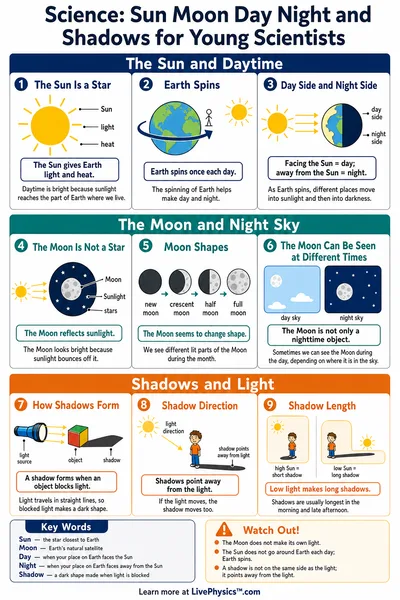
A shadow is a geometric projection of an object onto a surface. The Sun is so far away that its rays reaching a small area of Earth are nearly parallel.
A vertical stick on level ground makes a useful model because its height is easy to measure and its shadow lies in one clear direction. Near sunrise or sunset, a small change in the Sun's position can move the shadow tip by a large distance.
The important angle is the Sun's elevation, measured upward from the horizon. On level ground, the tangent of the Sun's elevation equals the object height divided by the shadow length.
This means a taller object produces a proportionally longer shadow at the same Sun angle. It also means that very low Sun angles produce extremely long shadows, so small measuring errors become much more important at those times.
Clock time does not always match the Sun's highest point in the sky. Solar noon occurs when the Sun crosses the local north to south line and reaches its greatest elevation for that day.
Its clock time changes with longitude, time zones, daylight saving time, and the slight changes in Earth's speed along its orbit. Students should expect the shortest daily shadow near solar noon, not necessarily at twelve o'clock.
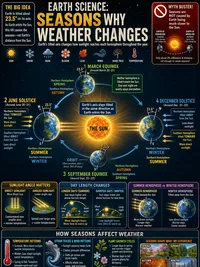
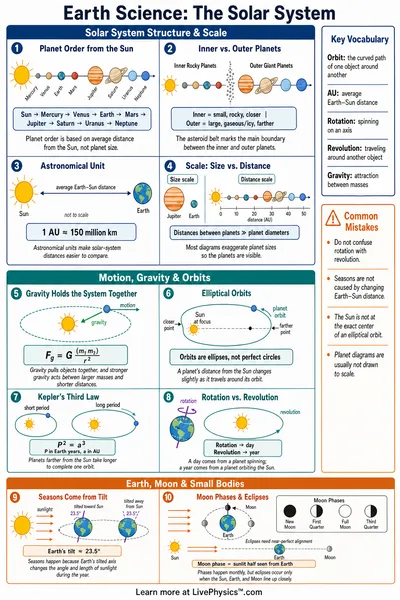
The same observation changes across the year because Earth's tilted axis changes the Sun's path. In summer, the Sun usually rises higher and shadows around midday are shorter. In winter, the lower path makes midday shadows longer.
Latitude matters too. A place closer to the equator can receive a higher Sun than a place farther north or south on the same date, even when both locations have clear skies.
Shadow measurements have practical uses beyond a classroom activity. Builders use them when planning shade from roofs, trees, and nearby buildings.
Solar panel designers check seasonal shadowing because even a small shaded area can reduce electrical output. Surveyors and scientists can estimate the height of objects that are difficult to reach by measuring a known reference object and comparing the two shadows under the same Sun.
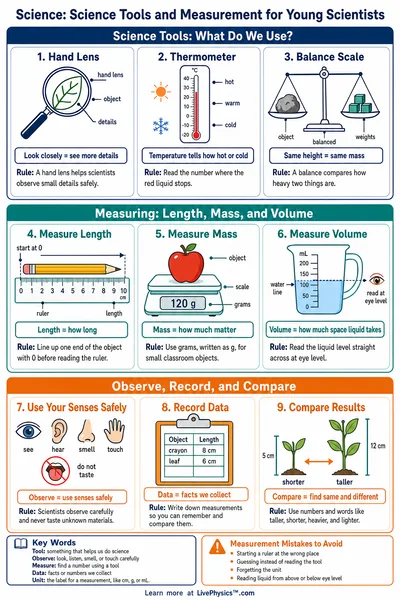
Careful setup determines whether the data tell a clear story. Keep the object upright, measure from its base to the tip of the shadow, and use the same units for every measurement.
Sloping ground can make a shadow seem longer or shorter than it really is. A fuzzy shadow edge is normal because the Sun is a disk rather than a point, so choose one consistent edge when recording each value.
A graph of shadow length against time usually makes a curved pattern, not a straight line. The values decrease toward solar noon and increase afterward, though clouds or poor measurements can interrupt the pattern.
A graph of shadow length against Sun elevation shows the relationship more directly. Looking for outliers helps students separate real physical effects from mistakes such as a tilted object, an uneven surface, or a measurement taken from the wrong shadow tip.