Practice analyzing and planning photographs using composition techniques such as framing, rule of thirds, leading lines, perspective, contrast, and visual storytelling.
Read each problem carefully. Use complete sentences when explaining your choices. Show planning sketches or notes in the space provided when helpful.
Using composition choices to create meaning in photographs
Art & Design - Grade 9-12
- 1
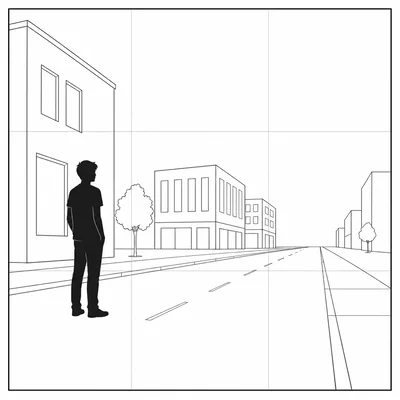
A photographer places a person on the far left third of the frame while the person looks toward an empty street on the right. Explain how this use of the rule of thirds affects the viewer's attention and the possible story of the image.
- 2

Describe one photograph you could take at school that uses leading lines. Identify the subject, the lines, and where the lines guide the viewer's eye.
- 3
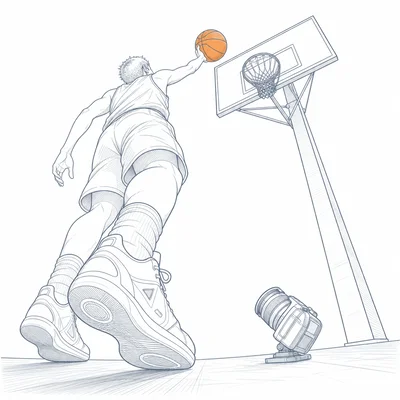
A photo of a basketball player is taken from a very low angle, looking upward. Explain how this camera angle changes the way the player appears and what emotion or message it might communicate.
- 4
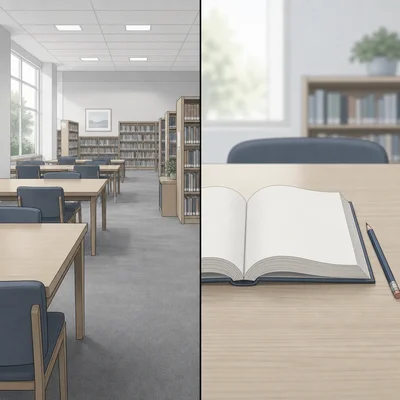
Compare these two composition choices for photographing a quiet library: a wide shot showing many empty tables, and a close-up of one open book with a pencil beside it. Explain how each choice tells a different story.
- 5
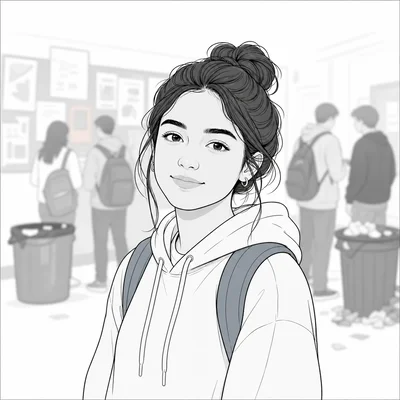
A portrait has a cluttered background with bright posters, trash cans, and other students behind the subject. Explain two ways the photographer could improve the composition so the subject becomes clearer.
- 6
Plan a photo that communicates the idea of isolation without using words. Describe the subject, setting, framing, lighting, and composition choices you would use.
- 7
Look at a planned image of a bicycle leaning against a wall. The bicycle is centered, the wall is plain, and the lighting is even. Suggest one compositional change that would make the image more visually interesting and explain why.
- 8
Explain the difference between a snapshot and a visually intentional photograph. Include at least two composition decisions that can make a photograph feel intentional.
- 9
A photographer wants to show the energy of a crowded street market. List three visual choices that could help communicate motion, noise, and activity.
- 10

Study the idea of framing within a frame. Describe a photo you could take using a doorway, window, mirror, fence, or arch to frame the subject. Explain how the frame supports the story.
- 11
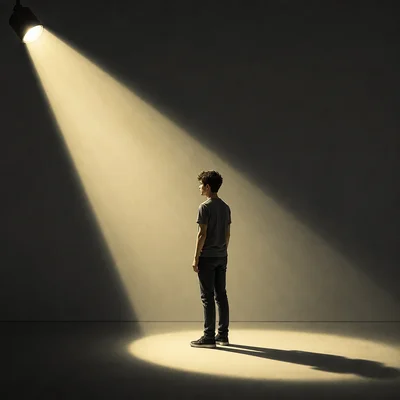
A photo uses strong contrast: a bright subject stands in a beam of light while the background is dark. Explain how contrast affects mood and emphasis in the image.
- 12
Create a three-photo sequence that tells a simple story without captions. Describe what happens in photo 1, photo 2, and photo 3.
- 13

A photographer wants to make a small object, such as a key, feel important. Explain how composition can increase the importance of a small subject.
- 14
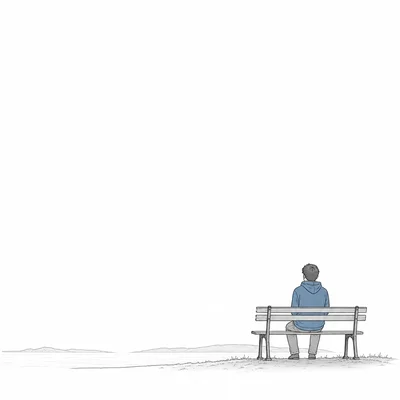
Analyze how negative space can be used in a photograph. Give one example where negative space would strengthen the message of an image.
- 15
Choose one theme: identity, pressure, friendship, change, or freedom. Plan a photograph that communicates that theme through composition rather than text. Describe the subject, camera angle, lighting, background, and one composition technique you would use.