Story Structure Builder
Map the plot of any story using the classic five-stage structure. Click each stage on the diagram, fill in what happens, then switch to Story Preview to see your complete plot summary.
Click a stage on the diagram or use the buttons below to select it.
Exposition
Introduce the setting, main characters, and background information.
Stage Guide
Reference Guide
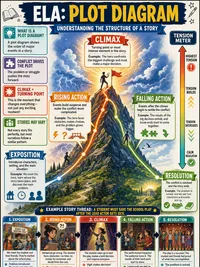
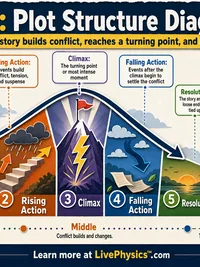
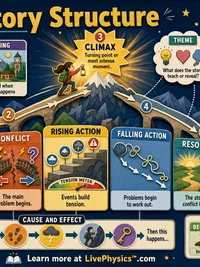
The Five-Stage Structure
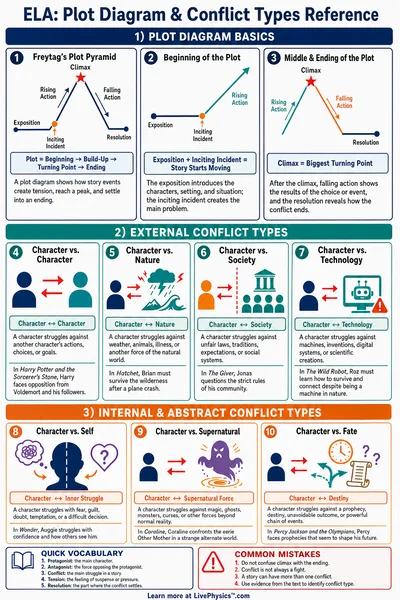
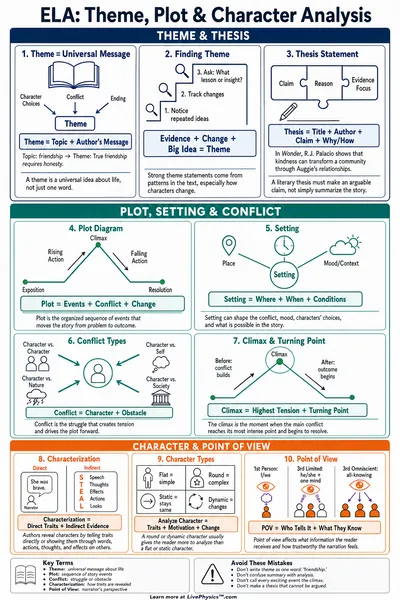
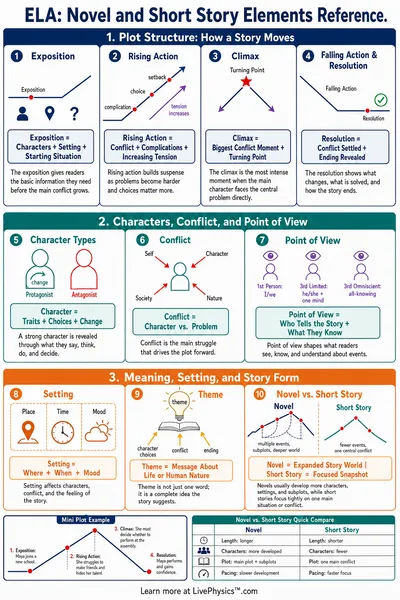
Most stories follow a recognizable shape often called Freytag's Pyramid. Tension rises from the exposition through the rising action, peaks at the climax, then falls through the falling action until it resolves.
- Exposition - background and setup
- Rising Action - complications increase tension
- Climax - the turning point
- Falling Action - aftermath and consequences
- Resolution - new equilibrium established
Writing a Strong Exposition
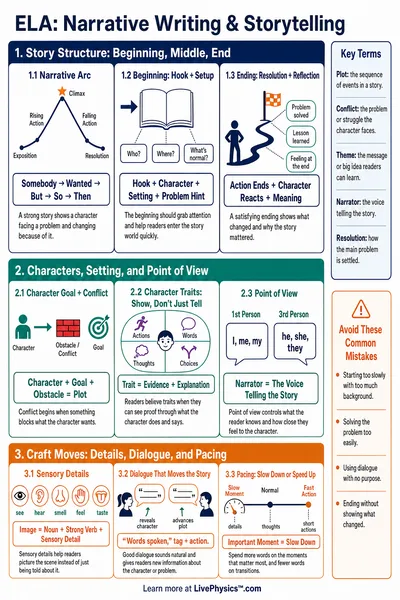
The exposition answers the reader's first questions before they have to ask them. A strong exposition covers four elements without overwhelming the story's opening.
- Who - introduce the main character(s)
- Where - establish the physical setting
- When - anchor the time period
- What's at stake - hint at the central conflict
Avoid backstory dumps. Weave context naturally into early scenes.
Identifying the Climax
The climax is the moment of highest tension where the central conflict must be faced directly. It is NOT always the most exciting scene - it is the decisive turning point.
Questions to locate the climax
- When does the protagonist have no more room to avoid the conflict?
- Which scene changes everything that follows?
- Where does the central question get answered?
Types of Resolution
Not every story ends happily. The resolution simply means the central conflict has been settled in some way. Common resolution types include