Literary Devices Explorer
Browse all 22 literary devices with clear definitions, real examples from literature, and tips for spotting each device in a text. Switch to Quiz Mode to test yourself on identification, definitions, and true/false questions.
Literary Devices Explorer
22 devices across 5 categories
Quick Reference Guide
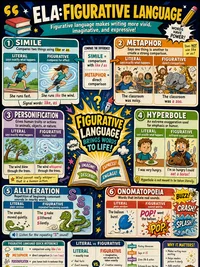
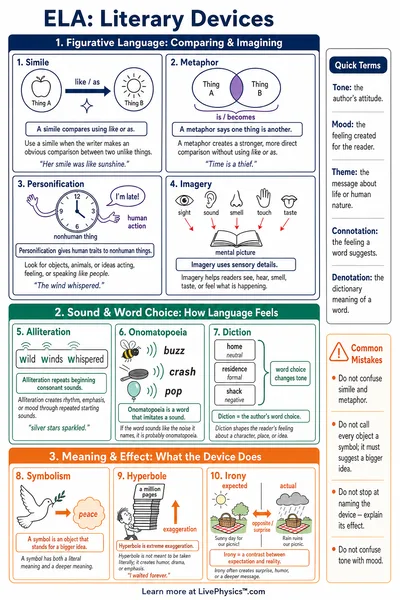
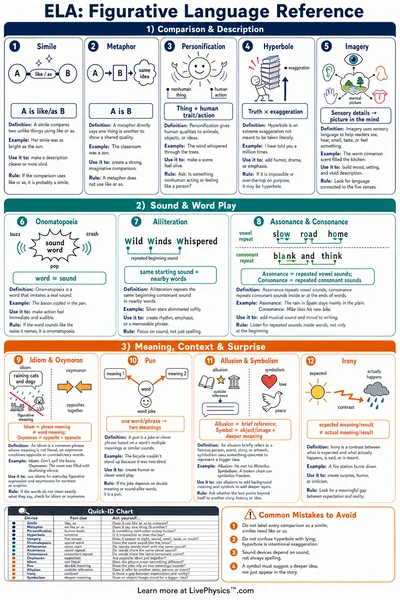
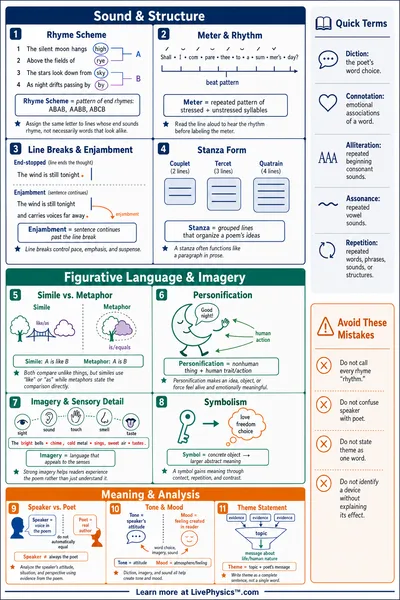
Figurative Language
Figurative language uses comparison and exaggeration to create vivid images beyond literal meaning.
- Simile - comparison using "like" or "as", "brave as a lion"
- Metaphor - direct equation, "time is a thief"
- Personification - human traits given to non-human things
- Hyperbole - extreme exaggeration for emphasis
- Allusion - indirect reference to a cultural touchstone
- Synecdoche - part stands for the whole, or vice versa
The key difference between simile and metaphor, simile says X is like Y; metaphor says X is Y.
Sound Devices
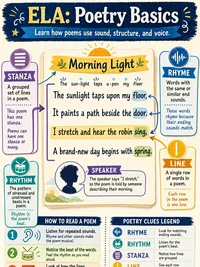
Sound devices use the sonic qualities of words to create rhythm, mood, and musical effect.
- Alliteration - repeated consonant sounds at word beginnings
- Assonance - repeated vowel sounds inside words
- Consonance - repeated consonant sounds anywhere in words
- Onomatopoeia - words that imitate the sounds they describe
Alliteration is at the start of words; consonance and assonance work throughout the whole word. Onomatopoeia is the only device where the word itself sounds like what it means.
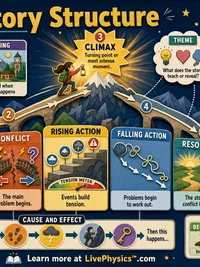
Narrative Techniques
Narrative techniques control how a story is told, who tells it, and what the reader knows.
- Point of View - first person (I), third limited, or omniscient
- Foreshadowing - hints that predict future events
- Flashback - interrupts present to show past events
- Dramatic Irony - reader knows what a character does not
- Unreliable Narrator - storyteller whose account cannot be fully trusted
- Stream of Consciousness - unfiltered flow of a character's thoughts
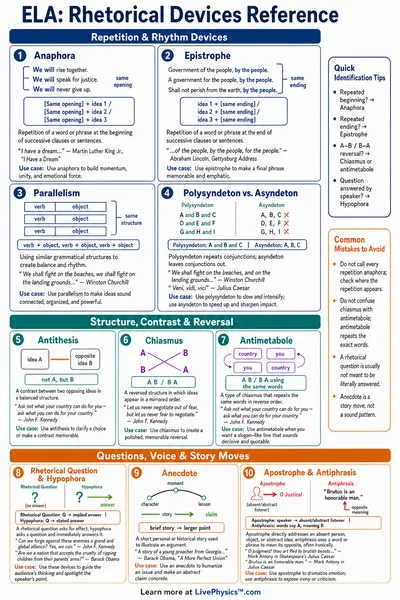
Rhetorical Devices
Rhetorical devices are tools of persuasion and style, used in speeches, essays, and literature to influence readers.
- Anaphora - same phrase repeated at the start of successive clauses
- Juxtaposition - contrasting elements placed side by side
- Rhetorical Question - question asked for effect, not an answer
- Understatement - deliberate downplaying of something significant
Churchill's "We shall fight on the beaches" and King's "I have a dream" both use anaphora to build powerful, cumulative emotional force.