Practice explaining ATP structure, ATP hydrolysis, energy coupling, and the role of ATP in cellular processes.
Read each problem carefully. Answer in complete sentences and show your reasoning when calculations are included.
How cells store, transfer, and use energy
Biology - Grade 9-12
- 1
ATP is often called the energy currency of the cell. Explain what this phrase means in terms of how cells use ATP.
- 2
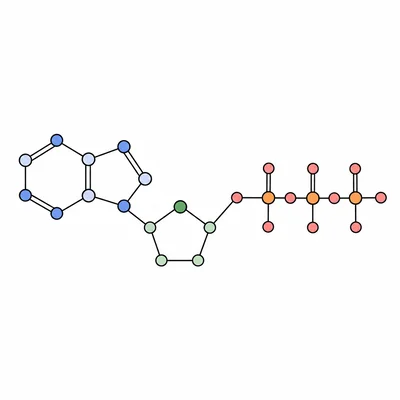
Name the three main parts of an ATP molecule.
- 3
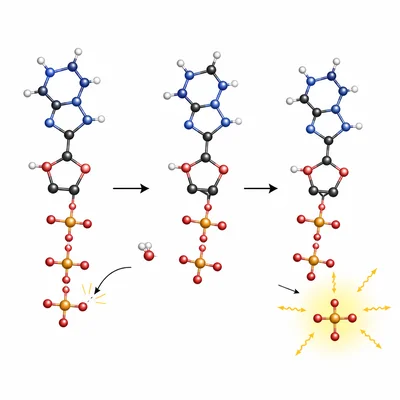
Write the general equation for ATP hydrolysis and explain what happens to the energy.
- 4
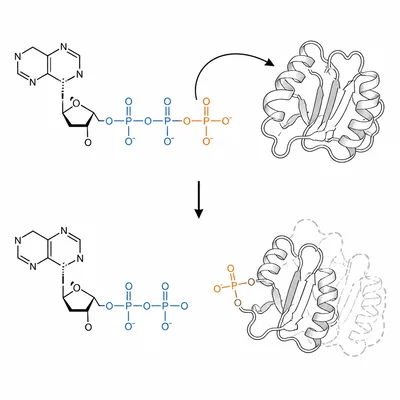
What is phosphorylation, and how can it help a cell do work?
- 5
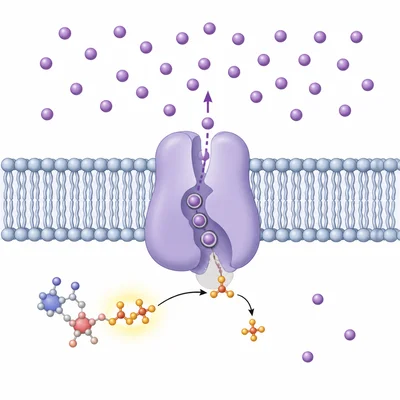
A cell uses ATP to pump sodium ions out of the cell against their concentration gradient. Explain why ATP is needed for this process.
- 6
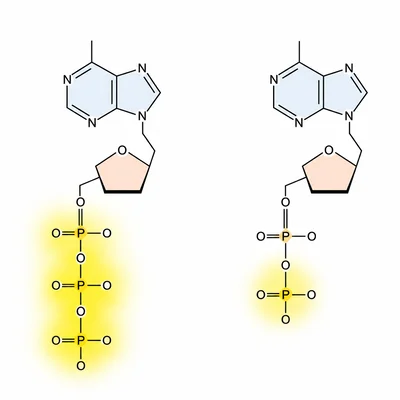
Compare ATP and ADP in terms of phosphate groups and stored energy.
- 7
During cellular respiration, glucose is broken down and ATP is produced. Explain why cells do not release all of glucose's energy at once.
- 8
Glycolysis uses 2 ATP molecules at the beginning and produces 4 ATP molecules by the end. What is the net gain of ATP from glycolysis?
- 9
Explain how ATP helps connect exergonic reactions and endergonic reactions in a cell.
- 10
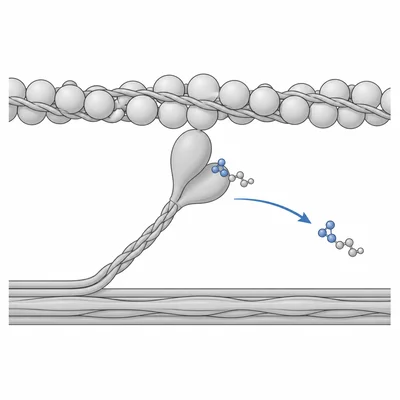
A muscle cell needs ATP during contraction. Describe one way ATP is involved in muscle movement.
- 11
Why is ATP not a good molecule for long-term energy storage compared with fats or starches?
- 12
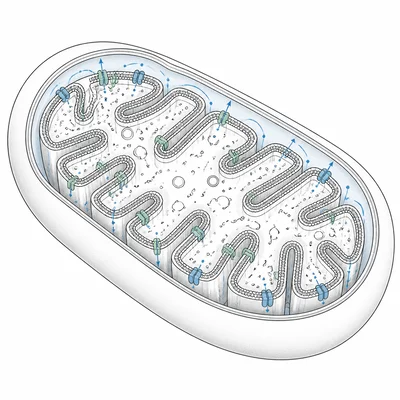
In aerobic respiration, most ATP is made during oxidative phosphorylation. Identify the cell structure where this process occurs in eukaryotic cells.
- 13
Explain why fermentation allows glycolysis to continue when oxygen is not available.
- 14
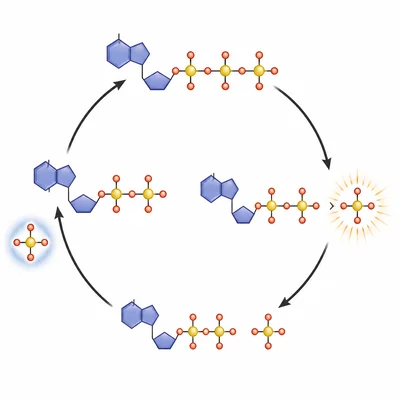
A diagram shows ATP changing into ADP plus phosphate, then ADP plus phosphate changing back into ATP. Describe what is happening in this cycle.
- 15
Compare the roles of ATP and NADH in cellular respiration.